Showing posts with label Sustainability. Show all posts

Friday, November 28, 2008

Thoughts From a Full Stomach

An over-full stomach always seems to set me ruminating on how I can share my blessings with those in need. If you're anything like me, you want to help make a difference in the world, but you don't have unlimited resources. I love the idea of service but I hate the boring and meaningless service projects that are available about this time of year. Somehow I can't get into sending lip balm to the soldiers in Iraq. (Though I'm sure their mouths do get awfully dry over there.)

Tuesday, October 7, 2008

It's Time to Pencil "White Sugar" into the Margin of Section 89

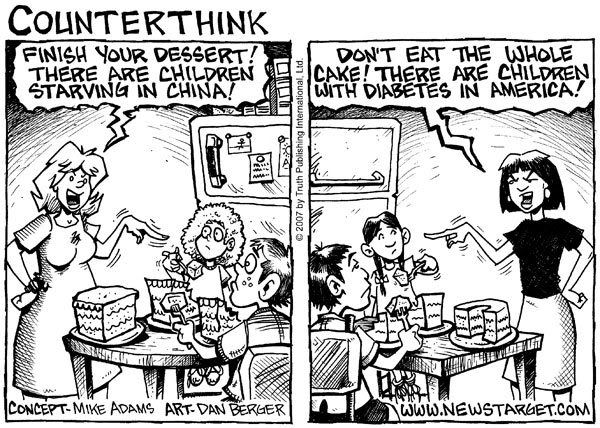
Latter-day Saints are exceptionally good at following our health code which we call "the Word of Wisdom." Hundreds of thousands of members have found a way to live without tobacco, alcoholic beverages, and coffee and tea. But does our adherance to this code make us less vigilant in identifying other substances which are also unhealthy and should be eliminated from our diet? Besides the avoidance of the above-mentioned substances, American Mormons follow a diet which is quite similar to that of the rest of the country. It is high in unhealthy fat and refined sugars and flours. The world is beginning to realize that this diet is slowly poisoning us.

by permission of www.NaturalNews.com


I have recently discovered some additional information that has made me seriously consider adding white sugar, and products which contain sugar and corn syrup to the list of substances of which I never partake. Mike Adams at Natural News reports:
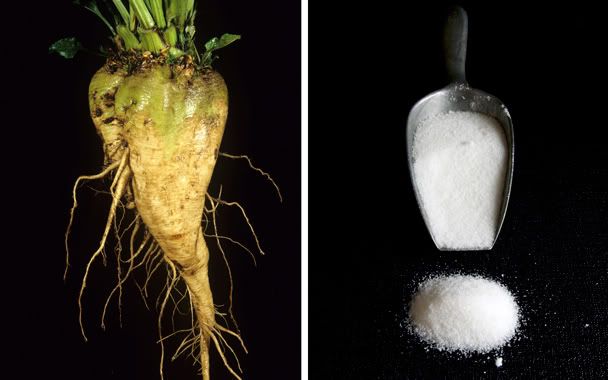
Farmers across the country will soon be planting Monsanto's Roundup Ready (RR®) sugar beet, genetically engineered for resistance to Monsanto's herbicide glyphosate (marketed as Roundup). John Schorr, agriculture manager for Amalgamated Sugar, estimates that 95 percent of the sugar beet crop in Idaho will be of the new GM variety in 2008, or a total of 150,000 out of 167,000 acres.

The RR® sugar beets are designed to be the only living plants (if that’s life) that survive spraying of Roundup. Genetically modified (GM) sugar beets will have a significant effect upon human health, agriculture and the environment. These crops encourage increased chemical use, with glyphosate, which is a toxic poison, leaving dangerous residue on the plants. Since sugar is extracted from the beet's root, it poses a great health risk to consumers. Additionally, the GM sugar beets allow for application of strong doses of Monsanto's Roundup up to five times a year, contaminating soil and water, and killing earthworms and microorganisms. Overuse of the product Roundup has encouraged the development of resistant "superweeds." In the corn belt, farmers have already been forced to rely on even more toxic herbicides to control those weeds. Finally, pollen from genetically modified crops is almost sure to contaminate similar species. Agriculturalists consider this contamination a major risk to organic crops grown in the United States.


GM sugar beets will save farmers a whopping $80 per acre, and the hassles of hiring questionable laborers to hand weed their fields. But unfortunately they do not realize that initial increases in production will inevitably begin to shift as the soil is depleted. Farmers will find themselves paying more and more to try to offset the hidden costs of using chemical fertilizers and pesticides rather than composts and other traditional ecological farming practices.

What can we do about this situation? Nothing. Consumer groups have been unsuccessful in regulating this crop. A few companies which had agreed to boycott the use of GM sugar have now quietly withdrawn their opposition. In the United States, food containing this sugar will not be labeled as a genetically modified product. The biotechnology-enhanced sugarbeet has also been approved for human and animal consumption in the European Union, allowing unrestricted imports.

Genetically modified sugar will enter the food supply in early 2009. By then, I hope to have successfully added this substance to the list of Word-of-Wisdom-banned foods that my family no longer consumes.
Wednesday, October 1, 2008

Fearlessly Facing the Latter Days

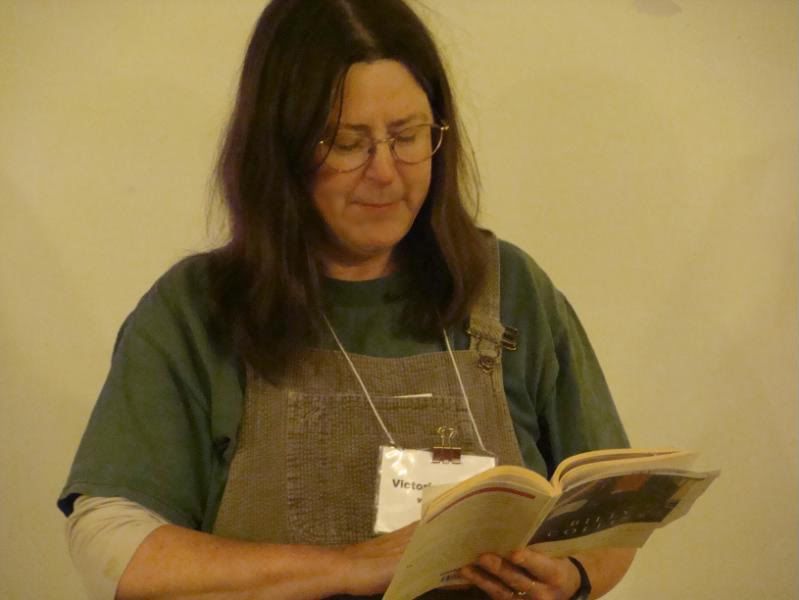
One of my favorite topics at the Exponent II feminist retreat was introduced by Victoria Grover of Maine. Victoria's workshop was intended to provide "the keys to surviving and thriving in the unknowable future." In this session, fifty women were entranced by Victoria's portrayal of the economic realities of the day. She explained pointedly the conditions of the U.S. economy since World War II and the exponential growth of debt.

The Bretton Woods agreement of was an attempt to stabilize money. After the Great Depression, developed countries met together to plan a post-war economic order. The United States wanted to make the dollar the standard in a world economy. In exchange for this, we agreed that foreign countries could exchange their dollars at a fixed rate for gold. This worked for a number of years. In 1971 in response to the Vietnam War and accelerated inflation, Nixon abolished the gold standard. Thus the dollar became unrestricted. U.S. debt has gone up dramatically since then, until we now have a deficit of over 9 trillion dollars. (Please follow this link to better understand just how much a trillion dollars is!) Victoria convinced us all that every civilization that has faced this type of situation has responded by inflating currency (devaluing the dollar). Societies can go through depression, she warned, but do not survive hyperinflation.

In addition to these problems, Victoria addressed the issue of finite resources. Peak oil is the rate at which oil producers can extract oil at the maximum level possible. U.S. oil production reached a peak in 1970. Some people believe that world oil production peaked in 2005. From now on, there will be less oil available for an increasing population. Victoria briefly covered each of the remaining options (Ethanol, Coal, Hydrogen, Nuclear, Solar, Wind, Animal energy, Firewood, and others) and why each of these will soon be exhausted or are not feasible at the present time.

This may all seem like doom and gloom to you. But Victoria actually presented this very matter-of-factly and with the idea that the decline of the U.S. was a foregone conclusion. After all, from 1900 to 1970, we had all the oil, and that was why we had all the power. Now our position is not so secure. It actually made me feel better to just accept that we are in for a depression. Now we can decide how to handle things spiritually and physically.

Victoria's conclusion is that the seeds of our present decline began in the early 1800's. This is when population began to grow exponentially, when we began to rely on industrialization, and when humans began to be the only species on earth who are a detriment to the planet. She sees the Restoration as the Lord's answer to how to navigate the problems that await us. The disasters will come slowly, a bit at a time, and we have time to learn how to conserve, to grow things, to form networks, to learn how to produce commodities.

As an illustration of her suggestions for us, she told of her family and a group of her neighbors who got together to buy an oil press from Europe. It fits in someone's barn, and the group plans to grow canola and rapeseed and make oils out of the plants. Right now these oils are mostly imported. By starting this business they will have a commodity to trade when the economy fails and a necessary food product made locally.

I appreciate Victoria's concise and valuable history lesson and her leadership in showing us how to be wise stewards and to navigate the Anthropocene epoch.