Please, please listen to this link. KRCL Radio allows Willie Jessop and attorney Rod Parker to tell their side of the story of the FLDS UEP Trust. Learn how the Trust was started, who has contributed, the FLDS position on the Lost Boys.
Sunday, August 2, 2009
FLDS Leader Explains UEP Trust Issues
Wednesday, July 29, 2009
An Outsider's Look at the United Effort Plan
This was originally posted at Mormon Matters.
What is happening to the financial affairs of the FLDS right now seems completely inexplicable, but I need to try to understand what is going on. And it seems to me to behoove every citizen of the United States to do the same.
This is going to be a vastly simplified version of events, as I understand them:
Friday, September 19, 2008
Church Handbook of Instructions, Disciplinary Councils, and Prop 8
It has come to my attention that a member of the Church may soon face a disciplinary council for his opposition to Prop 8 in California. I thought it would be interesting to review what the Church Handbook of Instructions has to say about disciplinary councils:
Disciplinary Councils
Because formal Church discipline is ecclesiastical, not civil or criminal, court procedures of the state or nation do not apply. However, procedures in a Church disciplinary council must be fair and considerate of the feelings of all who participate.
When a Disciplinary Council Is Mandatory
A disciplinary council must be held when evidence suggests that a member may have committed any of the following transgressions.
Murder
As used here, murder refers to the deliberate and unjustified taking of human life. It requires excommunication. Abortion is not defined as murder for this purpose. If death was caused by carelessness or by defense of self or others, or if mitigating circumstances prevail (such as deficient mental capacity or wartime conditions), the taking of a human life might not be defined as murder. Bishops refer questions on specific cases to the stake president. He may direct questions to the Office of the First Presidency if necessary
Incest
As used here, incest refers to sexual relations between a parent and a natural, adopted, or foster child or stepchild. A grandparent is considered the same as a parent. Incest also refers to sexual relations between brothers and sisters. It almost always requires excommunication. Bishops refer questions on specific cases to the stake president. He may direct questions to the Office of the First Presidency if necessary.
Child Abuse
As used here, child abuse refers to a sexual offense against or serious physical abuse of a child. If priesthood leaders learn of or suspect child abuse, they should follow the instructions on pages 157-58.
Apostasy
As used here, apostasy refers to members who:
1. Repeatedly act in clear, open, and deliberate public opposition to the Church or its leaders.
2. Persist in teaching as Church doctrine information that is not Church doctrine after they have been corrected by their bishops or higher authority
3. Continue to follow the teachings of apostate sects (such as those that advocate plural marriage) after being corrected by their bishop or higher authority.
In such cases, excommunication may be necessary if repentance is not evident after counseling and encouragement.
Priesthood leaders must take disciplinary action against apostates to protect Church members. The Savior taught the Nephites that they should continue to minister to a transgressor, but "if he repent not he shall not be numbered among my people, that he may not destroy my people" (3 Nephi 18:31; see also Mosiah 26:36).
Total inactivity in the Church or attending or holding membership in another church does not constitute apostasy.
Serious Transgression While Holding a Prominent Church Position
A disciplinary council must be held for a member who commits a serious transgression while holding a prominent Church position, such as Area Authority Seventy; temple, mission, or stake president; patriarch; or bishop. As used here, serious transgression is defined as a deliberate and major offense against morality. It includes (but is not limited to) attempted murder, rape, forcible sexual abuse, spouse abuse, intentional serious physical injury of others, adultery, fornication, homosexual relations, deliberate abandonment of family responsibilities, robbery, burglary, theft, embezzlement, sale of illegal drugs, fraud, perjury, and false swearing.
Transgressor Who Is a Predator
A disciplinary council must be held for a member who commits a serious transgression that shows him to be a predator with tendencies that present any kind of serious threat to other persons.
Pattern of Serious Transgressions
A disciplinary council must be held for a member who demonstrates a pattern of serious transgressions, especially if prior transgressions have resulted in Church discipline.
Serious Transgression That Is Widely Known
A disciplinary council must be held for a member who commits a serious transgression (as defined under "Serious Transgression While Holding a Prominent Church Position" on this page) that is widely known.
When a Disciplinary Council May Be Necessary
Serious Transgression
Formal Church discipline may be necessary for any member who commits a serious transgression as defined under "Serious Transgression While Holding a Prominent Church Position" on this page.
Abortion
Presiding officers review carefully the circumstances of members involved in abortions. Formal Church discipline may be necessary for members who submit to, perform, encourage, pay for, or arrange for abortions. However, Church discipline should not be considered for members who were involved in an abortion before they were baptized or because (1) the pregnancy resulted from forcible rape or incest, (2) the life or health of the mother was in jeopardy, or (3) the fetus was known to have severe defects that would not allow the baby to survive beyond birth (see page 157). Bishops refer questions on specific cases to the stake president. He may direct questions to the Office of the First Presidency if necessary.
Transsexual Operation
Church leaders counsel against elective transsexual operations. If a member is contemplating such an operation, a presiding officer should inform him of this counsel and advise him that the operation may be cause for formal Church discipline. Bishops refer questions on specific cases to the stake president. He may direct questions to the Office of the First Presidency if necessary.
Request for Name Removal
If a member requests that his name be removed from the records of the Church, a disciplinary council may still be necessary if he has committed a serious transgression. Name removal should not be used as a substitute for or alternative to Church discipline. For instructions in these circumstances, see page 130.
When a Disciplinary Council Is Not Necessary
A disciplinary council normally is not necessary in the following instances.
Failure to Comply with Some Church Standards
A disciplinary council should not be held to discipline or threaten members who do not comply with the Word of Wisdom or whose transgressions consist of omissions, such as failure to pay tithing, inactivity in the Church, or inattention to Church duties.
Business Failures or Nonpayment of Debts
Leaders or members should not use the threat of Church discipline as a form of harassment or as a device to settle business controversies. Business failures and nonpayment of debts are not reasons for convening a disciplinary council. However, a disciplinary council may be held for deceptive practices, false representations, or other forms of fraud or dishonesty in business transactions.
Civil Disputes
Disciplinary councils should not attempt to resolve disputes over property rights or other civil controversies. However, if such a dispute involves accusations that a member has committed acts that would justify Church discipline, the accusations should be treated like any other accusations of transgression.
IF Church leaders are asked to help settle civil disputes, they should act as unofficial, private advisers and should not involve the Church.
Passage of Time
If a member voluntarily confesses a serious transgression that was committed long ago and his faithfulness and service in the intervening years have demonstrated full reformation and repentance, a disciplinary council often is unnecessary.
From your reading of the above instructions, do you feel that local Church leaders are justified in convening a Church court in cases of opposition to Prop 8 in California? For the purposes of our discussion, let us assume that the member has been quite active in his dissent, writing letters to Stake Presidents and Bishops expressing his disagreement with the Church's stance on this issue, and also being involved in collecting signatures online. Let us also assume that the member has been inactive in the Church for some time but has no other issues or transgressions which need to be addressed. Why do you think the Church should or should not hold a Disciplinary Council against such a person?
The Church Handbook gives three purposes of such discipline:
(1) to save the souls of transgressors
(2) to protect the innocent
(3) to safeguard the purity, integrity, and good name of the Church.
Do you think that holding a Church court in this instance would accomplish any of the above purposes?
Thursday, September 11, 2008
I Will Remember Them No More
This is the great promise the Lord gives to those who repent of their sins, "Behold, he who has repented of his sins, the same is forgiven, and I, the Lord, remember them no more." What's more, he tells us that he is the one to decide if someone has repented, not us: "I, the Lord, will forgive whom I will forgive, but of you it is required to forgive all men." Finally, we are promised great blessings if we will forgive our fellow man. "To whom ye forgive any thing, I forgive also: for if I forgave any thing, to whom I forgave it, for your sakes forgave I it in the person of Christ."
On this September 11, it saddens me that so many nationalists are unwillling to forget and forgive the great tragedy which happened 7 years ago. I found this on the blog of someone I respect a great deal, and I wonder what it is he wants to remember about the infamous day:
I've saved the special edition newspapers that came out that day, and the day after. I've laminated them and now I hang them up in my classroom every year on September 11th. They are a dramatic reminder of the horrific images and the magnitude of that day. And I'm determined never to forget. I won't forget what happened that day or the days following. I won't forget what a great land we live in. I won't forget the sacrifices of those who have gone before to make America great. And I'll try to do all that I can so that my students won't forget either.
Why would we want to hang on to the memory of the destruction which happened at the Twin Towers in 2001? Do we not wish that the supporters of the Fancher party would forget and forgive what happened on September 11 in 1857? Can we not feel wonder and gratitude for the great land we live in without attaching it to a hatred or mistrust of another country or people?
Some of you may wish to remember the bravery of the rescue workers who worked tirelessly to save their fellow humans trapped in the building. You may wish to remember the loved ones you had who you lost that day. But I would urge you not to attach these things to the terrible and misguided actions taken by a few lost souls. Remember that people of other lands have courage in their hearts. Remember that children of God die tragically from our actions, too. Pray for peace.
This is my song, O God of all the nations,
a song of peace for lands afar and mine;
this is my home, the country where my heart is;
here are my hopes, my dreams, my holy shrine:
but other hearts in other lands are beating
with hopes and dreams as true and high as mine.
My country's skies are bluer than the ocean,
and sunlight beams on cloverleaf and pine;
but other lands have sunlight too, and clover,
and skies are everywhere as blue as mine:
O hear my song, thou God of all the nations,
a song of peace for their land and for mine.
Sunday, August 31, 2008
BiV's Blog of the Month
This weekend just happens to be the perfect time to showcase a blog that I have recently discovered. It's called:
PoliticaLDS
The blog is made up of Amy, Joel, KWS, and Stephanie from the right, and bigbaldDave, Mike, Rick, and the Wizzle from the left. The blog has been up since January, and averages maybe ten posts a month. This leaves time for plenty of discussion, and they've had anywhere from 9 to 188 responses to the posts. As one would expect, there is commentary on health care, California's Proposition 8, abortion, and the U.S. Presidential elections. But the group also includes fun and interesting posts such as Fat America and The Value of Not Cheating on Your Flippin' Wife.
The posts are imbued with an LDS viewpoint, whether liberal or conservative. One of the recent posts introduces all of the permabloggers. They have fascinating stories and it's interesting to see how they came to develop their particular political views. If you love politics and debate, head on over and make a few comments.
Friday, August 29, 2008
McCain's Gal Pal
John McCain's shocking choice of a running mate, Alaska governor Sarah Heath Palin, is unlikely to garner supporters from the Democratic side of the fence. She brings a strong anti-abortion stance to the ticket and opposes gay marriage. Recently photographed for an issue of Vogue magazine, she describes how she was first dressed in "a bunch of furs." (Furs?? Are you kidding me? Do people still tolerate this?) Although she made a point of noting that she wasn't the high-society, fur-wearing type, she tellingly let the political incorrectness of fur-wearing slide. In fact, she has spoken up to prevent environmentalists from naming the polar bear as an endangered species. She is a proponent of petroleum development and favors drilling in Alaska's protected Arctic National Wildlife Refuge. So I don't expect many Obama supporters to suddenly change their vote on account of McCain's new running mate.
But as I've read about this little-known candidate, I've gained some respect for her and I now believe that she will be a dynamite addition to the Republican ticket. Says pundit William J. Dyer, "Sarah Palin is walking, talking, governing proof that feminism, motherhood, and conservatism aren't inconsistent." He has been championing her cause on the Beldar Blog, where you can read about some of her more impressive accomplishments, and follow video links for a peek inside her family life. (Great links, really--you must check them out, ESPECIALLY the ones in the 7th paragraph.)
Palin has been a natural leader since she led her high school basketball team to the state finals as "Sarah Barracuda." I admire her initiative in overturning her own party's ethics-violating leadership to become governor and clean house in our country's largest State. She has taken on Alaska's powerful oil industry and has increased the state's treasury.
I respect her pro-family position after seeing that she puts her money where her mouth is. When her last pregnancy was discovered to be a Down's Syndrome child, she never considered termination. "We understand that every innocent life has wonderful potential," Palin told AP when her fifth child, Trig, was born in April. By all accounts she has negotiated family life in an exemplary manner while performing strongly as a politician. Her pro-life stance did not keep her from exercising a veto that granted benefits to gay state employees and their partners in Alaska. Bloggers consider her weak on foreign affairs, but she's been shown to be sharp on the issues. She recently visited her troops from the Alaska National Guard in the Middle East.
Most interestingly to me, she's climbed through local and state politics on her own--not based on her parents' or her husband's influence. Her father, Chuck, would rather be moose-hunting than be involved in politics. "Holy cow," he exclaimed when he found out she'd been chosen as McCain's running mate. Palin's husband, Todd, does not have a college degree, and had spent nearly 20 years as a blue-collar employee in the oil fields of the North Slope. His grandmother is an elder of the Curyung tribe of the Yup'ik Eskimos.
Some may look askance at the 72-year-old McCain's choice of VP. Because of his age, his choice of a running mate is rightly scrutinized more than usual. I predict that after Americans get to know the engaging personality and solid qualifications of Sarah Palin, they will greatly approve. No review of this 44-year-old female would be complete without mentioning her attractive good looks. Palin was Miss Wasilla in 1984 and remains highly photogenic. She is certain to enliven the McCain candidacy for voters who are currently fence-sitting.
Tuesday, July 1, 2008
Peace in Israel
The truce deal between Israel and Palestinian terrorist groups being brokered by Egypt went into effect a little over a week ago, and did not receive much attention. Perhaps this was because it was seen as very fragile. Indeed, it wasn't long before rocket attacks by Gaza militants and the beating of Palestinian journalist Mohammed Omer who was returning to his home after receiving an award in Great Britain occurred. Under the terms of the ceasefire, Israel was supposed to increase the amount of goods being transferred across the border, but due to the violations Israel instead closed most of the Gaza crossings. Today Israel has told Hamas it will fire "warning shots" at Palestinians who enter an area west of the Gaza Strip border fence, extending for several hundred meters. This announcement is expected to further raise tensions and weaken the truce.
It pains me to see that these groups are unable to beat their swords into plowshares. My time in the Middle East has shown me the volatility that exists in the region. There is much religious fervor on both sides. Jews and Muslims both have an ancient heritage which is tied to the land, and neither will back down. It is absolutely necessary that they learn to peacefully coexist.
I am not sure what could possibly bring about this change of heart on both sides. Perhaps education and personal exposure to other cultures could have an effect. I am not anti-Zionist, but I believe that the gathering of the Jews is more idealogical than physical at this point. The Jews' physical possession of the land of Israel may only come to fruition at the literal appearance of the Messiah. In fact, I am beginning to think that the Jews embracing their "tainted" diaspora natures could in fact be the means for them to approach peace with their neighbors.
Thursday, May 22, 2008
When The Constitution Hangs By A Thread--Part Three
(Please note that this post is informed by views expressed in Part One and Part Two of the series.)
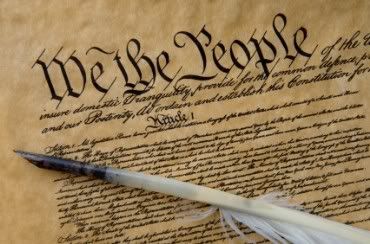
In Part 3 of this exploration, I would like to examine not the morality of Gay marriage, but the Constitutionality. At the heart of this issue lies the intention of the Constitution of the United States to "...secure the Blessings of Liberty to ourselves and our Posterity." (Preamble) The Church teaches that same-sex marriage is immoral and therefore should not be allowed. This religious argument is contrary to the First Amendment, which states "Congress shall make no law respecting an establishment of religion, or prohibiting the free exercise thereof…" The framers thus sought to protect all Americans from the religious zealotry of a few. Some religious groups do not allow same-gender marriages, and others now recognize those marriages, even allowing clergy in local areas to perform same-gender marriage ceremonies. Should Americans be made to honor a conception of the Creator they don’t agree with? Of course not! This is why we have separation of Church and State.
The LDS Church has thrown a lot of time and money into supporting amendments to the federal and to state Constitutions which would preserve "traditional" marriage. An amendment to the U.S. Constitution is not feasible, as such decisions are clearly left up to the states to decide (Tenth Amendment). Besides, the blatant discrimination would violate Amendment Fourteen, which states: "No state shall make or enforce any law which shall abridge the privileges or immunities of citizens of the United States; nor shall any state deprive any person of life, liberty, or property, without due process of law; nor deny to any person within its jurisdiction the equal protection of the laws." Such an Amendment is as laughable as the first proposed Constitutional Amendment on the subject of marriage (1912):
Congressional Record, 62nd Cong., 3rd sess., Dec. 11, 1912. Vol 49, p. 502
Mr. RODDENBERY. ( ... ) The resolution to which I make reference is one already introduced by me, providing for an amendment to the Constitution of the United States, with the usual resolving clause, and the article is as follows:
That intermarriage between negroes or persons of color and Caucasians or any other character of persons within the United States or any territory under their jurisdiction, is forever prohibited; and the term "negro or person of color," as here employed, shall be held to mean any and all persons of African descent or having any trace of African or negro blood.
This proposed amendment was unconstitutional because it denied one group of people the equal protection of law (Article Four, Amendment Nine and Fourteen).
The Federal Marriage Amendment, which is supported by the Church treads upon the same shaky ground. It's been very confusing to me to see how the Church feels free to step in to this "moral issue," even though it is one which threatens the Constitutional rights of a large group of people. Perhaps what bothers me the most is the wording of the proposed amendments to both Federal and various state Constitutions, which would define marriage in the United States as a union of one man and one woman. By supporting this, is the Church burning all of its bridges and more or less making a declaration that it will never again practice or support polygamy? It feels like a repudiation and denial of our past.
Though I don't believe the Church as an institution should directly interfere in these matters, it seems to me that if they were to support a course of action to reinforce the moral stand they have taken, they should look at how the issue was handled in Vermont. This state allows same-sex couples to enter into civil unions or domestic partnerships that provide some of the rights and responsibilities of marriage under state law. This protects the unique institution of conjugal marriage and does not force any religious group to change its theology or traditions, as well as preserving Constitutional rights.
Readers, do you think the Church's involvement in the proposed marriage amendments is supportive of the Constitution (our Heavenly Banner)? Do you think that by supporting marriage for one man and one woman the Church is repudiating plural marriage as an eternal principle?
My brethren and sisters, I hope that we will go home from this conference determined as a great body of people, to stand for law, order, righteousness, justice and peace on earth and good will among all men. I believe as the Prophet Joseph has written, that the day would come when there would be so much of disorder, of secret combinations taking the law into their own hands, tramping upon Constitutional rights and the liberties of the people, that the Constitution would hang as by a thread. Yes, but it will still hang, and there will be enough of good people, many who may not belong to our Church at all, people who have respect for law and for order, and for Constitutional rights, who will rally around with us and save the Constitution. I have never read that that thread would be cut. It will hang; the Constitution will abide and this civilization, that the Lord has caused to be built up, will stand fortified through the power of God, by putting from our hearts all that is evil, or that is wrong in the sight of God, by our living as we should live, acceptable to him. (Charles W. Nibley, Conference Report, October 1922, p. 40.)
It was Joseph Smith who has been quoted as having said that the time would come when the Constitution would hang as by a thread and at that time when it was thus in jeopardy, the elders of this Church would step forth and save it from destruction.
Why the elders of this Church? Would it be sacrilegious to paraphrase the words of the Apostle Peter, and say that the Constitution of the United States could be saved by the elders of this Church because this Church and this Church alone has the words of eternal life? We alone know by revelation as to how the Constitution came into being, and we, alone, know by revelation the destiny of this nation. The preservation of “life, liberty and the pursuit of happiness” can be guaranteed upon no other basis than upon a sincere faith and testimony of the divinity of these teachings. (Harold B. Lee, Conference Report, October 1952, p. 18.)
Wednesday, May 21, 2008
When The Constitution Hangs By A Thread--Part Two
Let us very quickly review two of the Constitutional Amendments which apply to the FLDS situation in Texas:
- First Amendment: addresses the rights of freedom of religion (prohibiting Congressional establishment of a religion over another religion through Law and protecting the right to free exercise of religion), freedom of speech, freedom of the press, freedom of assembly, and freedom of petition.
- Fourth Amendment: guards against searches, arrests, and seizures of property without a specific warrant or a "probable cause" to believe a crime has been committed. Some rights to privacy have been inferred from this amendment and others by the Supreme Court.
And here are two other Amendments which may very likely come into play before the trial has run its course:
- Fifth Amendment: among other things, forbids punishment without due process of law; and prohibits government from taking private property without just compensation.
- Sixth Amendment: guarantees a speedy public trial for criminal offenses. It requires trial by a jury, guarantees the right to legal counsel for the accused, and guarantees that the accused may require witnesses to attend the trial and testify in the presence of the accused. It also guarantees the accused a right to know the charges against him.
These form part of the Bill of Rights, which consists of the first ten Amendments to the Constitution. In addition, I would like to provide a definition of statutory rape:
The criminal offense of statutory rape is committed when an adult sexually penetrates a person who, under the law, is incapable of consenting to sex. Overt force or threat need not be present. The age of consent and other differentials are to be determined by the state. In Texas, for instance, the age of consent is 17 and the minimum age of child is 14 with an age differential of 3 years; thus, individuals who are at least 14 years of age can legally engage in sexual activities if the defendant is less than 3 years older than the accuser. In addition, Texas stipulates an exception to their statutory rape laws if the adult and child are legally married during the time of commission of sexual conduct.
I must point out that the state has yet to uncover a single case of statutory rape. They are unable to show that any law has been broken. They rely on rumor, bigotry, and the assumption that all the FLDS are equally guilty. Perhaps there will be a few cases which could better, more cheaply, and with less psychological damage be investigated by observing the few girls between the ages of 14 and 17 in their own environment, with the men removed from the situation. On the other hand, those who have been following recent news reports are aware that
- Texas CPS is violating the First Amendment by their disregard for the religious practices of the FLDS. Parents have said their children's copies of the Book of Mormon were removed because photographs of Jeffs were taped inside. Caseworkers also have said collections of sermons by Jeffs and other FLDS prophets need review before they are given to the children. There's a slight problem with this line of reasoning. Under the Constitution, parents can teach their children ANYTHING, with no exceptions. Even parents' teaching children to revere a convicted criminal is NOT grounds for terminating parental rights. Jesus was a convicted criminal in the eyes of the law. We don't terminate the parental rights of Christians.
- Texas CPS was aware of the fraudulent nature of the phone call reporting abuse before entering the YFZ ranch and seizing children and evidence and desecrating their temple; violating the Fourth Amendment..
- Texas officials have been directed to investigate the possibility of using the assets of the ranch to pay for the costs of the debacle (Fifth Amendment).
- The Texas court system is punishing innocent parties who have no connection to statutory rape by considering the entire community of over 700 people as one household (Fifth and Sixth Amendments).
There are many, many other problems happening in this case. One wonders what the specific individual charges against each family could be that would keep them from their children until next April; and why issues such as homeschooling, location of residence, educational and vocational training and religious affiliation should be addressed in the plans for their reunification. The families were legally schooling their children, and all were self-supporting. None were found to be on government assistance.
Let us look at but one example. Louisa Barlow Jessop is age 22. She is one of the three girls who were found to be pregnant at the time of the seizure. CPS would not initially accept her legal documentation as proof of her age, but tried to classify her as a minor. She and her husband Dan are not polygamists. They have two children ages 2 and 3; and she gave birth to another on May 12. The couple is subject to the same plans as the other families, meaning the earliest they might hope to regain custody of their children is next April. Judge Thomas Gossett said a "wide loop" had been thrown around the FLDS community that might not fit all parents. If those allegations prove unfounded, "I'll be the first to apologize to you if it turns out you're not a person who has abused your child," the judge told Dan Jessop, who was in the courtroom. "There is no proof of abuse in your case. That gives you a leg up." I'm sure this apology appeases a family who has been separated for over 6 weeks already, and has no hope of being together or back in their home for at least a year. Reading case after case of similar stories breaks my heart.
Because this case is so very similar to the violations perpetrated against the Latter-day Saints in the nineteenth century, I find it incomprehensible that the Mormon Church has done nothing but distance themselves from the case. For a people who considers themselves the defenders of the Constitution, even the very ones who will save it when it is dangling by a thread, I cannot understand this position.
LDS attachment to the Constitution has been encouraged by an important oral tradition deriving from a statement attributed to Joseph Smith, according to which the Constitution would “hang by a thread” and be rescued, if at all, only with the help of the Saints. Church President John Taylor seemed to go further when he prophesied, “When the people shall have torn to shreds the Constitution of the United States the Elders of Israel will be found holding it up to the nations of the earth and proclaiming liberty and equal rights to all men” (Encyclopedia of Mormonism, Vol. 1, CONSTITUTION OF THE UNITED STATES OF AMERICA.)
The Prophet Joseph told us that he saw the day when even the Constitution of the United States would be torn and hang as by a thread. But, thank the Lord, the thread did not break. He saw the day when this people would be a balance of power to come to its defense. (Melvin J. Ballard, Conference Report, October 1928, p. 108)
I have two questions for my readers.
Do you agree that the way this case has been handled weakens the Constitution?
Do you feel that Joseph Smith's prophecy compels us to respond? If not, why? And if so, what can we do as an institution and/or individuals?
Tuesday, May 20, 2008
When The Constitution Hangs By A Thread--Part One
In a 1991 address, BYU President Rex E. Lee noted that compared to any other kind of law--including statutory, regulatory, or judge-made common law--constitutional law is very difficult to make or change.
"The central feature of the American Constitution is that with only one exception [the Thirteenth Amendment, prohibits slavery], its provisions are confined to limiting the powers of government... The Constitution contains some fairly obvious, though not always specific, prohibitions concerning what government--federal, state, or local--can do to its citizens. Some of the most prominent are protections for the criminally accused, such as the privilege against self-incrimination, protection against unreasonable searches and seizures, the right to counsel, and jury trial."
Lee goes on to discuss how spreading the powers of government among several separate entities and by making each a competitor with the others makes it less likely that these entities can gain the power to become oppressive. Without the Constitution and the rights that were guaranteed to us, the Mormons would not have survived as a people. This was the only nation and the only set of laws under which the Lord could have restored his Church.
Despite its strength, Latter-day Saints have been warned that one day the Constitution would be found in danger. The Prophet Joseph Smith thus prophesied in his famous "hanging by a thread" speech; and more than half of his successors repeated the admonition. I am well aware that Joseph's declaration has been quoted every time a tax increase comes along, or a failure to collect the garbage on time, or during a boundary dispute with a neighbor, as Lee so humorously puts it.
But today we have before us two Constitutional issues which deeply concern the Latter-day Saints. The first is the actions of the Texas legal system against the FLDS at the Yearning for Zion ranch. The second is the ruling of the California Supreme Court that a ban on gay marriage violates its constitution.
These two issues are of extreme importance to Mormons as they strike to the heart of the Proclamation on the Family. In the coming week I plan to discuss each issue, examine the Constitutional issues at stake, and probe the responsibilities of Mormons to engage these topics. I find it interesting that despite their relevance, the Church hierarchy has seen fit to combat one, while doing everything possible to distance themselves from the other.
How deeply should the Church be involved in these Texas and California legal battles? There are at least two perspectives. One view points out that the Church represents itself as non-partisan and should not throw its weight and the tithing money of its diverse membership into political issues. Another position is that the Church must take a stand on moral matters. The Joseph Smith prophecy is instructive in this regard:
"When the Constitution of the United States hangs, as it were, upon a single thread, they will have to call for the Mormon elders to save it from utter destruction; and they will step forth and do it." –Brigham Young, JD 2:182, February 18, 1855
"I believe that it is the destiny of the Latter-day Saints to support the Constitution of the United States. The Prophet Joseph Smith is alleged to have said—and I believe he did say it—that the day would come when the Constitution would hang as by a thread. But he saw that the thread did not break, thank the Lord, and that the Latter-day Saints would become a balance of power, with others, to preserve that Constitution. If there is—and there is one part of the Constitution hanging as by a thread today—where do the Latter-day Saints belong? Their place is to rally to the support of that Constitution, and maintain it and defend it and support it by their lives and by their vote. Let us not disappoint God nor his prophet. Our place is fixed." -Melvin J. Ballard, Conference Report, April 1933, p. 127.
What part will we have in the coming days and months, in supporting the Constitution of the United States? What form might this support take? Please comment with your opinion, and come back for Parts 2 and 3 of this discussion.
Sunday, April 20, 2008
Both Sides Now---Legal Ramifications of YFZ Case
So many things I could have done---but worry over the YFZ Ranch got in the way. Now that this case is in court, I've been looking the issue from two legal points of view:
The Fourth Amendment
The right of the people to be secure in their persons, houses, papers, and effects, against unreasonable searches and seizures, shall not be violated, and no Warrants shall issue, but upon probable cause, supported by Oath or affirmation, and particularly describing the place to be searched, and the persons or things to be seized. See also the Fifth Amendment on Due Process.
Is this case based on a fraudulent phone call to authorities? One commenter said:
If these kids are actually being abused the government has stepped on their dicks so badly they won't be able to do anything about it.
I think this is an accurate summation of the legal problems in the case. If law enforcement searches, seizes, or incarcerates a person under false pretenses, it doesn't matter what is found after the fact, it is inadmissable. It now appears that the phone call upon which this is all based is fraudulent. If so, the only way the children can be taken away from their parents will blatantly violate the rights of U.S. citizens. It will set a dangerous precedent for many groups including Mormons, Muslims, homeschoolers, and the Amish (who have a very isolated lifestyle and the practice of young marriages).
THE FACTS:
- No complaining victims exist and the original abuse allegations were fraudulent, pumped up in the media by anti-polygamist activists.
- No pregnant girls were found at the YFZ Ranch who were under 16 (the legal marriage age in Texas, with parental consent).
- 10 women between the ages of 16 and 19 were listed as married to older men. Five were listed as having children.
- Angie Voss from the Texas Department of Family and Protective Services has testified that the supposition that abuse may happen some day in the future justifies the removal of over 400 children of both sexes and all ages from their environment.
Read More:
In Distressed About the FLDS Situation, J. Max Wilson writes about his experiences reporting abuse to CPS in Texas and being told that "unless there is physical evidence of abuse, the chances of getting abused children removed from their parents into the safety of state care are practically nil." He questions why his experience was so different from what happened to the FLDS, and wonders what the implications may be for homeschoolers.
D and E Grounds
§ 161.001. INVOLUNTARY TERMINATION OF PARENT-CHILD RELATIONSHIP.
The court may order termination of the parent-child relationship if the court finds by clear and convincing evidence: (1 that the parent has:(D knowingly placed or knowingly allowed the child to remain in conditions or surroundings which endanger the physical or emotional well-being of the child; (E) engaged in conduct or knowingly placed the child with persons who engaged in conduct which endangers the physical or emotional well-being of the child. See also Texas Family Code, Chap. 262.
Ron in Houston puts it this way:
There was once a good mother. She loved her kids. She took pretty good care of them and they loved her. She was by no means was a perfect mother, but then again, who among us is the "perfect" parent?
Mom's only flaw as a parent was that she allowed older men around her 14 [let's change this to read 16, since we have no evidence of 14-year-old YFZ brides] year old daughter who wanted to have sex with her daughter. She was so addicted to the approval of these older men that she would forget about her daughter to obtain the approval of these men she admired.
Mom went before a judge who said that since she was so dependent on the approval of these older men that she could not protect her child and therefore her children needed to be placed in foster care.
The judge never knew what the mother's religion was. The judge just acted on the facts of the case.
Ron's parable will appeal to those who see sex between 16-19 year old girls and much older men as just plain wrong no matter what religious views might dictate. Since the plural marriages are unrecognized by the state, these relationships can be labeled statutory rape, regardless of whether or not the parents supported the union. Those who take this view will likely agree that the younger children on the compound should be removed from a home and religion that will teach these principles.
Now, I've got some leading questions to ask you. I'd love to hear the opinions of some of our Bloggernacle lawyers!
--Is it legally justified to remove ALL women and ALL children from their homes based on a warrant for the arrest of ONE man and in looking for ONE young woman described by the 9-1-1 caller as an abused vicitm?
--Do you think that the that the sealed affidavit that triggered the investigation at the ranch listed sufficient evidence to search "each and every residence, structure, school, vehicle, place of business, temple or other facility" of an "unincorporated city or neighborhood of 300 to 400 residents that includes single and multiple family homes, a doctor's office, a cheese manufacturing plant, a cement plant and other buildings spread over 1,691 acres"?
--Is it legally justified to order DNA evidence from all families based on one allegation?
--Do the Fourth Amendment rights will override the D and E statute and the Texas Family Code? Or does it not apply since this is a civil and not a criminal case?
--Do you think the religion of the parents should be taken into account in this case?
--Is religious indoctrination currently a legal justification for removal of a child from a family?
--Do you think the families are being presumed guilty until proven innocent?
*Please attempt to confine your remarks here to your thoughts on the legal issues, and refrain from expressing your personal moral outrage on either side of the question.

Tuesday, April 15, 2008
FLDS Petition--Something I Can Do
Since reading of the most recent developments in Texas, I have been wishing there was something I could do! Thank you, Connor, for putting together this petition where we can sign our names against the violations which are now taking place in separating these small children from their mothers. It's just one little thing I can do to possibly make a difference. None of us wants to see child abuse, but the way the Texas authorities are handling this is wrong. The men at the ranch have offered to leave if the children and mothers are allowed to return home. If you feel you can support this effort, please go to
Free the Innocent FLDS sponsored by Connor Boyack.
Sunday, March 9, 2008
His Hand is Stretched Out Still--Musings on Doctrine, Apostasy, and Gay Marriage
For all this his anger is not turned away, but his hand is stretched out still.
When you read the words of the prophet Isaiah that [the Lord's] hand is stretched out still, does it give you comfort, or does it cause you to tremble?
The phrase is a picturesque one, occurring four times in Isaiah chapters 9 and 10 (9:12, 17, 21; 10:4). These chapters are included in the Isaiah passages found in the Book of Mormon. The refrain has been interpreted in two different ways in biblical exegesis.
The Lord's Arm Stretched Out in Mercy
In the consensus of LDS thought, it is explained that although the House of Israel has sinned and the Lord's anger is not turned away, yet his hand is stretched out to forgive and redeem his people. A footnote to Isaiah 9:12 clarifies the phrase as follows: "In spite of it all, the LORD is available if they will turn to him," and refers the reader to the Topical Guide heading "God, Access to."
In his Oct 2006 Conference address "Prophets in the Land Again," Jeffrey R. Holland reflected this interpretation of the phrase when he stated,
To all of you who think you are lost or without hope, or who think you have done too much that was too wrong for too long, to every one of you who worry that you are stranded somewhere on the wintry plains of life and have wrecked your handcart in the process, this conference calls out Jehovah’s unrelenting refrain, “[My] hand is stretched out still.” ...His is the pure love of Christ, the charity that never faileth, that compassion which endures even when all other strength disappears. I testify of this reaching, rescuing, merciful Jesus, that this is His redeeming Church based on His redeeming love..."
LDS audiences are most familiar with this interpretation of Isaiah's poetic chorus. After watching BYU Broadcasting "Insight into Isaiah," Kelly Miller wrote her own verses on the subject. Part of Kelly's poem reads:
As He extends mercy and assurance
His softly flowing waters fill,
Ever offering hope and guidance.
Where e'er we turn, His hand is stretched out still.
The Lord's Arm Stretched Out in Judgment
Little do most Mormons realize there is another way of looking at this familiar phrase. Note the context in Nephi's quotation of Isaiah 5:
Therefore, is the anger of the Lord kindled against his people, and he hath stretched forth his hand against them, and hath smitten them; and the hills did tremble, and their carcasses were torn in the midst of the streets. For all this his anger is not turned away, but his hand is stretched out still. (2 Nephi 15:25)
In this interpretation the Lord's hand is stretched out in judgment against a rebellious nation. Moeller's commentary on Isaiah 9 reads:
Here God declares himself as the one who is bringing these calamities. The reason: because the punishments have not turned the people to him. Since they continue in their abandonment of the source of their help he will allow further calamities to overtake them. ...There was more to come from the hand of a wrathful God. This series will only end with the complete destruction of the northern kingdom of Israel and their extinction as a political entity.
As I've read the details of the Danzig case, I can only repeat Isaiah's words, over and over, in my mind. I've been reflecting upon these verses as compared to the Church's reactions toward perceived "apostasy" by its members. The hierarchy seems to see itself as the outstretched hand of the Lord, always there with mercy to welcome back the repentant sinner. Yet, members who struggle with reconciling their consciences with Church policies are recipients of the harsher treatment of the refrain. To these, the Church's hand continues to stretch forth in judgment and punishment rather than mercy and healing.
What I have seen of these very public cases over the years are members who sincerely believe in the Church yet struggle with ambiguity. I relate to the Danzig's dilemma since I was present in California when the Church became involved in helping to pass Proposition 22. As members, we were asked to participate in making phone calls supporting the initiative, and to place signs in our front yards. Much pressure was placed upon members in this effort. A few years later, having moved to Texas, a similar situation presented itself. This time, members of the ward sat through a fifth-Sunday combined PH/RS meeting where the position of the Church regarding gay marriage was delineated and members were pressed to spend time and money in passing the legislature. I am strongly in favor of the Church's official position on political neutrality, and believe that on the gay marriage issue this position is being strongly violated.
In an LDS press release, Church representatives stated,
"In his Tribune letter-to-the-editor, Mr. Danzig said he 'was troubled that my church requested I violate my own conscience to write in support of an amendment I feel is contrary to the constitution and to the gospel of Christ.' In reality Church leaders had asked members to write to their senators with their personal views regarding the federal amendment opposing same gender marriage, and did not request support or opposition to the amendment."This may be the official position of the Church, but it has not been the case in my personal experience, either.
The release also contained this: "Church leaders are always saddened when an individual, whether through his or her actions or personal choices, decides to leave the Church. A welcoming hand of fellowship is always extended to those who wish to return at anytime."
For all this his anger is not turned away, but his hand is stretched out still.
UPDATE!! Come join an interesting discussion on these issues at George's blog Periginatioanimae!
Sunday, March 2, 2008
Utah Midwifery--Why You Should Care
Utah has a long history of midwifery as a well-respected profession. In 19th century Utah, midwives not only delivered babies, but often cared for any health care concerns of the citizens, since physicians were scarce. Midwifery was a calling in the early LDS church, and leaders sent midwives "back east" for extensive training. Utah had the best midwives in the country because of that commitment.
When the Medical Practice Act was written and codified in Utah law, it was not intended to limit or even affect midwifery, because midwifery was clearly considered a separate profession. Over the years, the laws of the state began to change as there became a distinction between the "Certified Nurse Midwife," who had medical training and licensing, and the "Direct-Entry Midwife," or "Lay Midwife," whose training is done outside of the nursing field.
Here's a tidbit of which my blog friends are unaware: I personally have had midwives for three of my births, and home births for two of these. My first child was born in 1985 with a CNM at Orem Community Hospital, my third child was born in 1988 with a lay midwife at home in Provo, and my fifth child was born in 1991 with the same midwife at my home in Fayette, Missouri. This woman was a second-generation midwife and part of a group of trained and competent direct-entry midwives then active in the Utah Midwives Association.
Shortly thereafter, in 1993, a statute which once excluded midwifery from the practice of medicine was quietly removed. Many lay midwives were not even aware of the change until October of 2000 when Liz Camp, direct-entry midwife in St. George was charged with four felony counts of practicing medicine without a license. These charges centered on two basic offenses: 1) using Pitocin to stop a postpartum hemorrhage and 2) cutting an emergency episiotomy. She faced 20 years (5 year max penalty for each of 4 charges). She plea bargained down to 2 misdemeanor counts of practicing medicine without a license, and received 18 months probation and a $250 fine.
Because midwifery had now been found illegal in Utah, The Utah Midwives Association formed a Legislative Committee to address the issue. Along with other home birth supporters they created a bill that legally defined direct-entry (non-nurse) midwifery. This bill was furiously opposed by the Utah Medical Association and the Certified Nurse-Midwives, and it took several years and many concessions to enact. Finally, the Direct-Entry Midwife Act was passed on May 2, 2005. Under this bill, direct-entry midwives were allowed to practice, perform prenatal care and to legally administer some few life-saving medicines if they certified with the state to do so.
However, the opposition by the medical field to lay midwifery continues. Last year (2007), the UMA introduced a bill to amend the Direct-Entry Midwife Act. The bill did not pass, but was sent to an interim committee for further study. The interim committee did not choose to study it because the bill is unnecessary given the excellent outcomes for Licensed Direct-Entry Midwives (2006, 2007). These reports show that midwives practicing in Utah are very safe, and consistently produce better results than hospital providers. Now the UMA has brought forth its second legislative attempt to re-write the circumstances under which a direct-entry midwife (licensed or not) can practice.
This year’s version (SB 93) is sponsored by Sen. Margaret Dayton, a former labor and delivery nurse. She says that she and the Utah Medical Association want to stop midwives from attending "high-risk" pregnancies that could result in the harm or death of baby or mother. The bill includes a myriad of restrictions that would exclude a woman from the care of a direct-entry midwife. Some of the exclusions are valid and already addressed in rules approved by DOPL (HIV positive women, premature babies, etc.). Most of them, however, are not. In fact, over 90% of the women who currently choose the care of a direct-entry midwife would no longer be able to qualify as "normal." The bill goes beyond the definition of normal birth, and is clearly a restraint of trade.
In just one example, multiple gestations, line 226, are precluded. One midwife writes:
This one really steams me. When you look at home born twins vs. hospital born twins you find a very drastic difference in treatment and outcomes! Home born twins are commonly born at term–many even go a full 40 weeks or longer! Home born twins are generally larger–some are even 8 or 9 lbs. each! Home born twins are born vaginally. Hospital born twins are commonly born prematurely. Sometimes this happens spontaneously, other times mothers are induced or c-sectioned early, often without a clear medical indication. This results in premature babies that could have been born as healthy full-term infants. Hospital born twins are usually much smaller as well, and suffer the complications small and early babies are subject to. Given this information, I would not at all feel comfortable giving birth in a hospital with twins unless they came prematurely on their own.
Also affected in the exclusions are women who have had miscarriages, women who have had infections during pregnancy, women with diabetes, women over 35, and women who have had previous cesaerean births. Utah Midwives Association President Jules Johnston said Dayton has gone overboard. "If they sneeze, they're risked out." SB93 also removes one of the midwife positions on the state midwife board and adds three members who are either a licensed physician or certified nurse midwife. There is one member of the public on the board.
Elizabeth Smith, CPM, LDEM, is very concerned about how SB93 has been presented. She writes:
The Utah Medical Association has very sneakily and dishonestly proposed a bill to the Utah Senate, much like last year's bill, that will take away the rights of most mothers to birth at home. At the Senate committee, both sides were ordered to work out a compromise. The UMA met with midwife representatives and came up with compromises to everything except a few items. Yesterday, the UMedA sent their own bill, without the agreed compromises to the Senate floor saying that it was the "Compromise" bill. They totally lied and all but one Senator bought it and voted for it. Now the bill SB93 has gone to the house to be voted into law.
Women of Utah have become very heated on the issue. An anonymous commenter said:
"The bill Dayton is trying to amend took a very long time to come to. It was a miracle the groups involved could come to such compromises and articulate boundaries that all sides could agree to and support. This is becoming a war on an idea, a promotion of personal feelings rather than fostering freedom and providing appropriate healthcare. No one should be forced into care another feels comfortable with but they, themselves, are not. A family should be supported in birthing at home, in the hospital, or in a birthing center without fear of stigma. It's time for Mrs. Dayton to remove her hands from the wombs of all the women in Utah and allow them to birth the way their studies and conscience determine. Women have proven to do whatever it takes to acheive what they're looking for. Scaling down this already thin bill allowing for freedom of choice may well increase the likelihood of traumatic outcomes because women who abhor hospitals could move toward unassisted birth rather than submit themselves to the perceived emotional and physical raping of their rights that they may fear. It's time to leave well enough alone."
I believe that our LDS emphasis on the family requires us to care about this and similar issues. My research has convinced me that midwife assisted home birth is safer than hospital birth. In many countries, home birth is considered the first choice for healthy women. The countries with the lowest mortality and morbidity rates are those countries where midwifery is an integral part of maternity care and where homebirth is commonly practiced. The home birth debate has been carried out in many places. I am aware of many studies which indicate that home birth is safer than hospital birth and that fewer complications occur at home (see, for example, the Mehl study. Feel free to link to other studies in the comments to this post.) If this is indeed the case, shouldn't Utah women maintain the legal right to have access to this service? Our Utah lay midwives are well trained and knowledgeable. They attend and assist in many more births than CNM's when they are undertaking their training. I feel that legislation should support what they are doing and assist them to become even more qualified in their field of specialization. We should not set them back in their efforts. Because of the excellent outcomes obtained by Direct-Entry Midwives, this bill seeks to solve a problem that doesn't exist.
SB93 has now gone to the House and is now going through several substitutions. I will be watching this issue carefully to see how Utahns will respond.
*
Friday, February 8, 2008
Immigration Policy Based on 2 Nephi 1
Warning: Do not discuss in Sunday School Lesson #6
As a hard core pacifist, I've always wondered why Mormons don't put greater faith in Second Nephi, chapter 1. In this chapter, Lehi tells his sons that he has obtained a promise from the Lord. Whoever has been led out of the land of Jerusalem and brought to the land of promise (which we are told is the American continent) will prosper as long as they keep the commandments. In fact, no other nations will be able to molest them or take them into captivity. They will not be overrun by other nations, and they will always have a place for an inheritance.
A more careful reading of these verses reveals that this promise applies to more than just the Book of Mormon peoples. "None shall come into this land," prophesies Lehi, "save they shall be brought by the hand of the Lord." God promises to give the American continent to ALL THOSE who in the future shall be led out of other countries by his power. Thus, the promise found in verse 7 is quite comprehensive. Anyone who lives here, who is keeping the commandments shall be protected. The land is a land of liberty, and as long as we are righteous, we will never be brought into captivity.
In the past, I've wondered why Latter-day Saints who live in the U.S. support war as a necessity for protecting and defending our country. If we really believe this promise, wouldn't it be much more effective to protect our country, our homes, and our families by concentrating on our personal righteousness rather than espousing military action?
Today in Sunday School, I realized the scripture has an additional application. Lehi is told in verse 8 that the Lord is keeping the Promised Land from the knowledge of other nations, so that they will not overrun the land and keep the branch of Israel which has been led there from having place for an inheritance. Should we not apply these verses to ourselves also? Does a careful reading of this chapter suggest that we should allow the Lord to bring to this land whom he will? Will he not keep them from overrunning the land if we are righteous? If we keep the commandments, shall we not maintain an inheritance, be safe and protected, and even be blessed and prosper upon the land?
What applications does 2 Nephi 1 have to the immigration policies now being discussed in the United States?
"Give me your tired, your poor,
Your huddled masses
yearning to breathe free,
The wretched refuse of
your teeming shore.
Send these, the homeless,
tempest-tost to me,
I lift my lamp
beside the golden door!"
Emma Lazarus, 1883
Thursday, January 24, 2008
How Would Cancer Affect Your Presidential Candidacy?
Did you see John Edwards on David Letterman the other night? He was in fine form, cheerful and upbeat. I couldn't help but wonder what was going on with Elizabeth and how she was holding up.In a heartbreaking discussion on Oprah last March, Elizabeth Edwards spoke about the cancer which has metastitized and spread to her ribs. She will have the cancer as long as she lives, she said. Yet her husband John has continued his presidential candidacy, with Elizabeth fully supporting him. Elizabeth told the public that her expectations about the future were unchanged.
"I expect to do next week all the things I did last week. And the week after that, and next year at the same time," she said at the time.
It's true, as Elizabeth said, that many people go on with their lives after a diagnosis of terminal cancer. They do go on teaching, parenting, going to work. But to have your most significant "other" so involved in such a time-consuming endeavor! It made me wonder what I would do--first of all if I were the one with a terminal illness, and second if I were the partner of such a one.
In Saving Graces, the book she wrote about the life trials she has overcome, Elizabeth's advice to others was, "Live until you die, however long that is, and that's my advice to people who are facing this diagnosis and to everybody else listening to it: Live until you die." But how will we live? If it was me, I think I would be a little bit selfish. I would use those moments left to me to do the things I always wanted to do but never had time for. Before I leave this world, I would want to see Italy and the art there. I would want to drink hot chocolate in a chalet after skiing the Alps. And then I'd spend as much time as I could with my loved ones. I would play many hands of pinochle with my mom and dad. I'd walk on the beach and collect seashells with my children. I'd discuss books, life, and religion with my friends. But especially I'd want my husband to be at my side. I have to be honest, I would want him to put his career on hold for a while. Spend more time with me. Would I want to see my husband debating on TV and joking around with David Letterman? Not so much. I don't think even that a triumph on inauguration day could make up for all the time away.
Elizabeth Edwards has made a different choice, and I admire her for a brave woman. I wish she could know that while John had his moment in front of the camera I was thinking of her.
Monday, January 14, 2008
Just Saw the President...
...or rather his cavalcade as he passed the snarl of traffic in which our bus was entangled. We had to wait 3 hours at the outside of our compound. Helicopters were buzzing overhead. Women swathed in abayas were begging armed guards to let them in to their homes so they could care for their children. Men were honking maniacally, and riots were only stemmed by army Rambos stationed every 25 yards along all major highways. We'd been told that George Bush was coming this week, but information was carefully guarded, and we had no idea when he would arrive or why he was here. We certainly had no idea of this! Tomorrow school will be cancelled and businesses will be closed as all routes to anywhere will be cordoned off. Really, I just wish "W" would sit around and watch TV until November. The last thing the Middle East needs is $20 billion in weapons.
Sunday, November 25, 2007
Political Confession
Although I have no intention of voting for either Mitt Romney or Hilary Clinton, I have a confession to make. Sometimes I entertain the thought of supporting Romney, just to see what it would be like to have a Mormon president. And at times I am tempted to seriously consider Clinton, just to see what it would be like to have a woman president. And there are times when I daydream just a bit about a Mormon woman President of the United States.
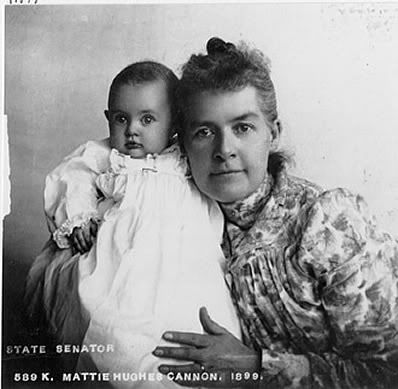
One of my heroines is Mormon woman politician Martha Hughes Cannon. Her story fascinates and intrigues me. She is best known as being the first woman ever elected as a state senator in the United States on November 3, 1896. She ran as a Democrat, handily defeating her husband, Angus Cannon, the Republican candidate. (Did I mention she was his fourth polygamous wife?) You can read more about this fascinating woman here,and many other places on the web if you know how to use google. As I've learned about Martha and her life, I've pondered several questions:
- How was Martha, a lifelong career woman and mother of three, able to gain political support from predominantly Mormon Salt Lake County residents?
- Was the Church's position on careers for mothers less defined in the late 1800's than it now is?
- What kind of relationship did Martha have with her husband after living in a polygamous marriage, living in exile in Europe for two years, and running against him as a member of a different political party?
- Why aren't YW and RS manuals packed with stories from the lives of women like Martha, Ellis Shipp, and Minerva Teichert, women who combined successful family life with accomplishments of their own?
- Within Mormon culture today, is there a possibility for a Mormon woman president? Do we provide enough encouragement to our young girls for them to believe that this is attainable and/or desirable?
"Somehow I know that women who stay home all the time have the most unpleasant homes there are. You give me a woman who thinks about something besides cook stoves and wash tubs and baby flannels, and I'll show you, nine times out of ten, a successful mother."
I identify with this quote because, even though I spent many years as a stay-at-home Mom, the best times were those times I had something to think about, something I was involved in beyond the home. These causes energized me so that I was able to be a better mother. When I had "something to think about" I did a better job at the cookstove and the baby nappies. I don't think a woman must have a paying job to find motivating interests. I also think there are many women who are quite different from me and Martha Cannon in that they can find satisfaction without competing commitments to their wife and mother role.
We are all very diverse, yet I continue to wonder: can we celebrate the accomplishments of LDS women today if they fall outside the umbrella of traditional wife and mother? Would you vote for a Mormon woman President?
Wednesday, October 10, 2007
A Powerful Voice
All of my adult life I have longed for a powerful voice. There is a small soprano sound which my vocal cords emit, and this voice does not serve me well. As a swim coach, I need a powerful sound which carries over the splashing. With such a voice as I have, I must earn my authority as a coach slowly and painfully. When I answer the telephone, even today as a woman of a certain age, people ask me if my mother is at home. I have wished for a voice that would command attention and respect.
Here's the comment fmhLisa made when she met me:
And as long as we’re being scary mean uber feminists, can I just say that I’m still a little blown away by how supremely feminine Bored in Vernal is. Her blog voice in my head sounds a lot like a super firm Eleanor Roosevelt, but in person she this tiny little thing, with a very very feminine way about her, and a tiny little girl voice. I was just following her comments around the nacle and trying to read them with her actual voice in my head rather than the “Roosevelt esque Bored in Voice” I’d created for her, and I couldn’t do it. Is that weird?
I was so flattered that my blog voice was commanding.
With my "tiny little girl voice" and less than statuesque height, I have throughout my life confronted and pondered issues of respect and authority. And lately I have wondered what I would do if placed in such a position. My recent blog post, "If You Were a (Female) Speaker At General Conference" was my effort to see what other Mormon women would do given an authoritative placement in the LDS Church. Although this post was read by over 200 people, I tellingly only received 4 willing speculators. Perhaps many are uncomfortable with "aspiring" to a calling. I can sympathize with this feeling, since I have been hurt by accusations in the Bloggernacle of wanting to be a Bishop or usurping the Priesthood. In addition, after I had put the post up, a furor arose over Julie Beck's talk in Conference, and I think many were reluctant to seemingly denigrate her remarks. However, I think it's important for us to define our personal philosophies regarding this issue. The probability that each LDS woman will at some time in our lives hold a position of some small authority is quite high.
The first thing I would do as a high-profile woman would be to choose one or two specific platforms. I think for everyone from political candidates to Apostles it is extremely effective to become known for one or two strong stances. I'd choose something that was meaningful to me and something I think that women could have a strong influence over. I'd strive diligently both for revelation and to get to know the concerns of LDS women worldwide. I'd eschew platforms such as modesty or homemaking in favor of education or literacy or saving the earth. I'd strongly consider service as a platform, though it would have to be more specific and defined than the broad category we now invoke. I think a woman leader must select causes which are universal to women in every circumstance, which cause a great good for the entire world, and have eternal implications.
Finally, I would travel widely and attempt to make Mormon women everywhere aware and accepting of other cultures. The Salt Lake Tribune reported that the General RS presidency recently met for lunch with 17 women from African nations. The visitors included a Muslim from Djibouti with whom Beck fasted in honor of Ramadan. I was extremely impressed by her willingness to experience cultural and religious diversity in her calling to serve the women of the world.
With that, I'll give all you readers a second chance: tell us what you'd do with a powerful voice!
Wednesday, June 6, 2007
Effects of Prophetic Endorsement
One of our late-night conversations at the Retreat has been on my mind ever since returning home. We were discussing the response of Latter-day Saints to the Prophet's admonition that women wear only one pair of earrings. I have seen a huge response to this all over the United States. Many women have not only removed their extra earrings, but have borne their testimonies about it! An address given by Elder Bednar has reinforced the teaching with the story of a young man who was considering marriage with a girl who had multiple piercings. When President Hinckley asked women to wear only one set of earrings, he patiently waited for her to remove them. She did not, so he stopped dating her. She had failed to respond to prophetic counsel. In our discussion, we marveled at the general obedience in the Church to this teaching. Then one woman wondered what would happen if, at the next Conference, President Hinckley approached the stand and said, "Brothers and Sisters, I've been thinking about this, and I think we should all recycle!"
Can you imagine what a difference the Prophet's endorsement of this would make in our world? I've noticed that in Vernal and in other places in Utah, it is very difficult to recycle. There are not accessible places to bring your recyclables. In Boston, where my sister lives, everyone recycles, because on trash day, there is a day for the pickup of your glass, a day for your plastics, and a day for your paper. Table scraps and yard detritus are placed in a compost bin or pile. I'm thinking that if the Prophet told us to recycle, a similar program might suddenly find support in Utah.
Elder Bednar says that the earring issue might seem minor, trivial, or silly, but that in following the prophet we learn to become "quick to observe." My question is why can't we learn the same lesson and meanwhile accomplish something positive and make a difference in the world?