Tuesday, September 9, 2008

Why Does God Help You Find Your Keys?

Admit it! You've prayed for God to help you find your keys, or something equally as trivial. You opened your eyes and there they were. Then you've wondered why a loving God would answer your prayer and not those of the millions of starving people in Africa. Perhaps you begin to feel like the following blogger:

"If God is an interventionist, He's doing a piss poor job. He helps middle-class americans find their keys while thousands suffer and die in other parts of the world. If God is an interventionist, I don't think He's worthy of worship. If God isn't an interventionist, and we are on our own, what practical difference does it make if we believe in Him or not? Either way, I just don't see the point in worrying about God anymore. Either what He is like, what He wants, or even if He exists."

If so, you need to review your Mormon Doctrine. God allows suffering in this life to help us develop all the things that we need in order to become purified and return to live with him someday. No one can live in the presence of Deity unless they have become sanctified. Trials are part of the sanctification process. This does not mean an interventionist God personally hands you every bit of suffering you experience here. (Didn't you read my Good, Bad, and Ugly Adversity post?) But God will allow the suffering that is a mortal condition of this world so that we can develop our agency and become holy.

So why does he sometimes help us find our keys? He won't interfere in the vicissitudes of life which help us to grow and attain glory. But perhaps our lost items aren't enough of a trial to teach us anything. Maybe we've already developed the small amount of patience necessary to deal with lost keys. If so, God can help us out a bit without interfering with the learning process.


...or maybe they were just there the whole time.

Monday, September 8, 2008

Battle of the Two Straw Men


After a few days of engagement on the issue of being saved by grace/works, I have concluded that the Mormons and evangelicals have simply been setting up strawmen consisting of what they imagine the other believes about salvation. Then they gear up to fight with all their might against what they have constructed.

Mormons do not believe that a person can be saved by works. Neither their scriptures nor their leaders advocate any such doctrine. However, we tend to preach the importance of works, probably as a reaction to the evangelicals' "saved by grace" emphasis. The LDS assume that the Christian rejects any commitment of action, which is also an unfair portrayal.

I've been trying to promote an interfaith dialogue wherein each group would accept at least the basic idea that we believe in the same Christ. Is this even possible? Sure, guys, we have a few differences. But c'mon. How many white-robed bearded men had a mother named Mary, a father named God, lived in Judea and Jerusalem around 0-33 AD, claimed to be the Messiah, rose from the dead and founded a world religion based on his teachings?

Sunday, September 7, 2008

Good Works: God Hath Ordained That We Should Walk In Them

The majority of thinking Christians of all stripes have recognized the tension between the saving grace of the Savior Jesus Christ and the necessity of good works and have made their peace with the issue. It is quite obvious that both grace and works play an important role in salvation. Two key scriptures from the New Testament are cited:

1. Ephesians 2:8-9 For by grace are ye saved through faith; and that not of yourselves: it is the gift of God: Not of works, lest any man should boast.

2. James 2:14, 17 What doth it profit, my brethren, though a man say he hath faith, and have not works? can faith save him? Even so faith, if it hath not works, is dead, being alone.

To me it is very apparent from the New Testament scriptures that there are at least two essential components of salvation. We learn that sin has caused a situation where mankind will be eternally separated from God. No amount of working on the part of the human can change this. But through the atonement of Christ, humans are offered an opportunity to return to the presence of God and have eternal life. If we would like to accept this opportunity, we must first believe that Christ's atonement can save us. Then we must try our best to follow the commandments that he asks of us. Faith comes as a response to the grace of God and must have content. If one has faith, there will be evidence of it in deeds of obedience. Or in other words, "That as sin hath reigned unto death, even so might grace reign through righteousness unto eternal life by Jesus Christ our Lord." (Romans 5:21)

If seekers for salvation will read the New Testament scriptures which proclaim this glorious doctrine, they will see that interspersed with the promise of grace is the exhortation to works. Let us return to Ephesians 2. Following the assurance that we are saved through faith, verse 10 states: "For we are his workmanship, created in Christ Jesus unto good works, which God hath before ordained that we should walk in them." 2 Timothy teaches of the importance of the scriptures in teaching us the relationship between faith and works. Says Paul, they are "able to make thee wise unto salvation through faith which is in Christ Jesus. All scripture is given by inspiration of God, and is profitable for doctrine, for reproof, for correction, for instruction in righteousness: that the man of God may be perfect, thoroughly furnished unto all good works. Hebrews 5:5-10shows the relationship of the obedience that Christ learned through his submission to the Father's plan for him to the obedience he asks of us: "Though he were a Son, yet learned he obedience by the things which he suffered; And being made perfect, he became the author of eternal salvation unto all them that obey him."

Addressing a different but related issue, the Bible teaches that the outward "works" or performances of the Law of Moses are not effective in gaining salvation. In Hebrews 10, the believer is told that sacrifice and burnt offerings of the Mosaic law are done away in Christ. These sacrifices can never take away sins, and we are "sanctified through the offering of the body of Jesus Christ once for all." In our day the law shall be put in our hearts, and we should perform good works (vv. 24-26), "for if we sin wilfully after that we have received the knowledge of the truth, there remaineth no more sacrifice for sins."

The Book of Mormon makes it even more clear that the performances of the Mosaic law were for the purpose of pointing Israel's minds toward the coming Messiah, and that salvation can not be achieved by obedience to this law. The Book of Mormon prophet Abinadi explained that a time would come when the people would no longer be expected to keep the law of Moses.
"And moreover, I say unto you, that salvation doth not come by the law alone; and were it not for the atonement, which God himself shall make for the sins and iniquities of his people, that they must unavoidably perish, notwithstanding the law of Moses. And now I say unto you that it was expedient that there should be a law given to the children of Israel, yea, even a very strict law; for they were a stiffnecked people, quick to do iniquity, and slow to remember the Lord their God; Therefore there was a law given them, yea, a law of performances and of ordinances, a law which they were to observe strictly from day to day, to keep them in remembrance of God and their duty towards him. But behold, I say unto you, that all these things were types of things to come. And now, did they understand the law? I say unto you, Nay, they did not all understand the law; and this because of the hardness of their hearts; for they understood not that there could not any man be saved bexcept it were through the redemption of God."

Alma 25 speaks of a people who had learned the proper relationship between the law of Moses and the atonement of Christ:
...they began to be a righteous people; and they did walk in the ways of the Lord, and did observe to keep his commandments and his statutes. Yea, and they did keep the law of Moses; for it was expedient that they should keep the law of Moses as yet, for it was not all fulfilled. But notwithstanding the law of Moses, they did look forward to the coming of Christ, considering that the law of Moses was a type of his coming, and believing that they must keep those outward performances until the time that he should be revealed unto them. Now they did not suppose that salvation came by the law of Moses; but the law of Moses did serve to strengthen their faith in Christ; and thus they did retain a hope through faith, unto eternal salvation, relying upon the spirit of prophecy, which spake of those things to come. (Alma 25:14-16)

This is the same doctrine that Paul endeavored to teach throughout the entire book of Romans. We see it especially in chapter 3. "For all have sinned," Paul explains, "and come short of the glory of God; being justified freely by his grace through the redemption that is in Christ Jesus...Therefore we conclude that a man is justified by faith without the deeds of the law [of Moses]." But Paul concludes the chapter with the same thoughts as the prophets of the Book of Mormon: "Do we then make void the law through faith? God forbid: yea, we establish the law."

In this vein, we encounter one of the better-known Book of Mormon scriptures on faith and works. It is found in 2 Nephi 25:23, and reads: "...for we know that it is by grace that we are saved, after all we can do." The passage is found in the middle of Nephi's sermon on the scattering and gathering of Israel and the law of Moses. "There is none other name given under heaven save it be this Jesus Christ, of which I have spoken, whereby man can be saved," Nephi proclaims. The law of Moses was given to help the people look forward to Christ. But for Nephi's people, this event is still in the future. So they are instructed to continue to keep the law of Moses while recognizing its purpose: to lead them to Christ. They know that when Christ comes, the law will be fulfilled and done away with. Thus, after all the ordinances and burnt sacrifices of the law of Moses which they do, they know that in the end it is by grace that they are saved.

Over and over, the Book of Mormon preaches the necessity of being saved through grace and faith in the Savior, meshing perfectly with the teachings of the New Testament. A quick glance at the following representative scriptures is enough to demonstrate this:

  • And he commandeth all men that they must repent, and be baptized in his name, having perfect faith in the Holy One of Israel, or they cannot be saved in the kingdom of God. (2 Nephi 9:23)

  • And moreover, I say unto you, that there shall be no other name given nor any other way nor means whereby salvation can come unto the children of men, only in and through the name of Christ, the Lord Omnipotent. (Mosiah 3:17)

  • And he shall come into the world to redeem his people; and he shall take upon him the transgressions of those who believe on his name; and these are they that shall have eternal life, and salvation cometh to none else. (Alma 11:40)

  • And thus he shall bring salvation to all those who shall believe on his name; this being the intent of this last sacrifice, to bring about the bowels of mercy, which overpowereth justice, and bringeth about means unto men that they may have faith unto repentance. (Alma 34:15)

  • ...remember that there is no other way nor means whereby man can be saved, only through the atoning blood of Jesus Christ, who shall come; yea, remember that he cometh to redeem the world. (Helaman 5:9)

  • ...nothing can save this people save it be repentance and faith on the Lord Jesus Christ, who surely shall come into the world, and shall suffer many things and shall be slain for his people. (Helaman 13:6)

  • ...men also were saved by faith in his name; and by faith, they become the sons of God. (Moroni 7:26)

  • And what is it that ye shall hope for? Behold I say unto you that ye shall have hope through the atonement of Christ and the power of his resurrection, to be raised unto life eternal, and this because of your faith in him according to the promise. (Moroni 7:41)


The Savior invites us to come unto him and partake of his atonement. This we do by making a sincere effort to obey his commandments and follow him. We do not rely on our good works for salvation. Neither the Book of Mormon nor the Bible teaches this. If we seek to repent of our sins, the Savior forgives us, cleanses us, heals us, and gives us power to return to the presence of the Father. "Yea, come unto Christ, Moroni urges, "and be perfected in him, and deny yourselves of all ungodliness; and if ye shall deny yourselves of all ungodliness, and love God with all your might, mind and strength, then is his grace sufficient for you, that by his grace ye may be perfect in Christ." (Moroni 10:32)


Christ's atonement and our faith make it possible for God and man to be reconciled. As we engage in the sanctification process that makes us holy and prepares us to enter his presence, good works will become more and more manifest in our lives. Ether 12:4 puts it like this:
"Wherefore, whoso believeth in God might with surety hope for a better world, yea, even a place at the right hand of God, which hope cometh of faith, maketh an anchor to the souls of men, which would make them sure and steadfast, always abounding in good works, being led to glorify God."


Saturday, September 6, 2008

Comparing the Mormon Christ with the Savior of the New Testament

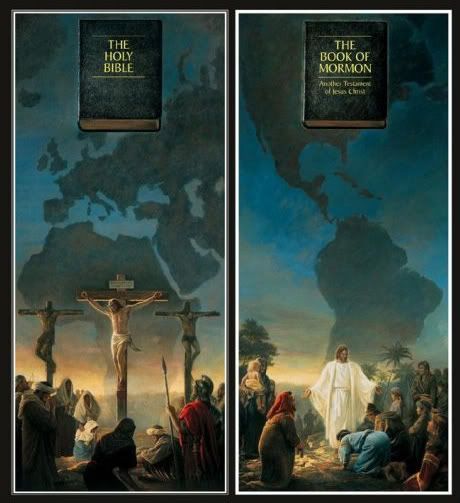
In my post on born-again Mormons, a commenter challenged me to "write down the Book of Mormon descriptions of Christ and Salvation and then the Bible descriptions then compare the two." I knew that this type of endeavor could take some time, since there are many, many, many passages on the Savior in the Book of Mormon. So for this post, I thought I would narrow down my search. When I typed "Christ" in to the scripture search engine at lds.org, the first results to appear were in the book of Moroni. Today I will thus compare Moroni's teachings on the Son of God in Moroni chapter 7 to New Testament Christology. Here, in chart form, are some of the correlations I found:

(you may have to scroll down, since my first attempt at HTML tables didn't work very well.)


Believers in Christ enter into his restMoroni 7:3
Wherefore, I would speak unto you that are of the church, that are the peaceable followers of Christ, and that have obtained a sufficient hope by which ye can enter into the rest of the Lord, from this time henceforth until ye shall rest with him in heaven.
Heb 4:3,11
For we which have believed do enter into rest...Let us labour therefore to enter into that rest, lest any man fall after the same example of unbelief.
Christ's followers cannot be servants of the devilMoroni 7:11
For behold, a bitter fountain cannot bring forth good water; neither can a good fountain bring forth bitter water; wherefore, a man being a servant of the devil cannot follow Christ; and if he follow Christ he cannot be a servant of the devil.
Luke 9:50
And Jesus said unto him, Forbid him not: for he that is not against us is for us.
Prophets testified that Christ would comeMoroni 7:23
And God also declared unto prophets, by his own mouth, that Christ should come.
Acts 3:20-21
And he shall send Jesus Christ, which before was preached unto you: Whom the heaven must receive until the times of restitution of all things, which God hath spoken by the mouth of all his holy prophets since the world began.
We are saved by faith in Christ's nameMoroni 7:26,38
And after that he came men also were saved by faith in his name; and by faith, they become the sons of God.
For no man can be saved, according to the words of Christ, save they shall have faith in his name
Acts 16:31
Believe on the Lord Jesus Christ, and thou shalt be saved, and thy house.
After he finished his work on the earth, Christ ascended to heaven and sat on the right hand of GodMoroni 7:27
Christ hath ascended into heaven, and hath sat down on the right hand of God
Mark 16:19
So then after the Lord had spoken unto them, he was received up into heaven, and sat on the right hand of God.
Those who have faith in Christ will have great powerMoroni 7:33
And Christ hath said: If ye will have faith in me ye shall have power to do whatsoever thing is expedient in me.
Matthew 17:20
And Jesus said unto them...If ye have faith as a grain of mustard seed, ye shall say unto this mountain, Remove hence to yonder place; and it shall remove; and nothing shall be impossible unto you.
Through the atonement and resurrection of Christ, humankind can be raised to eternal lifeMoroni 7:41
Behold I say unto you that ye shall have hope through the atonement of Christ and the power of his resurrection, to be raised unto life eternal, and this because of your faith in him according to the promise.
John 11:25
Jesus said unto her, I am the resurrection, and the life: he that believeth in me, though he were dead, yet shall he live:
True followers of Christ will become like himMoroni 7:48
...that ye may become the sons of God; that when he shall appear we shall be like him, for we shall see him as he is
1 John 3:2
Beloved, now are we the sons of God, and it doth not yet appear what we shall be: but we know that, when he shall appear, we shall be like him; for we shall see him as he is.

Edgar Goodspeed's book How to Read the Bible says of Christ that Mark records the doer, Matthew the teacher, Luke the compassionate Savior; and John reveals him as the universal Lord--not just someone for Judea or the Middle East, but the universal Lord. Likewise the Book of Mormon portrays Christ as the living head and organizer of his church. In the Book of Mormon he is a doer, he is a teacher, he is a compassionate Savior, and as well he is the universal Lord of light, life, and salvation for all mankind in all nations.

This exercise has had the effect of strengthening my conviction that the Savior taught by the Book of Mormon and to the Latter-day Saints is that same being who is worshipped by orthodox Christians and who is found within the pages of the Bible. I am an amateur genealogist, and when I check my work on the Church's genealogy program, family search, I am often given a program to compare my ancestor with someone in the database. I have found that when I have a person with the same first and last name, birth date, place of birth, who has the same spouse and children, that this person is most likely the same though I may have a different middle name than the one on the program.

Mormons and evangelical Christians may have some different understandings of the nature of Christ, or some interpretations of the Bible which conflict. But as this post has shown, we can feel confident that we are worshipping the same being and we might do well to trust that the other community will not be damned for their sincere beliefs.

Media in the Bedroom

originally posted at Mormon Matters
Beginning as far back as March 2001, the Church has advised members not to locate their computers in a bedroom. William C. Porter, in the “I Have a Question” section of the Ensign and then again in April Conference suggested that “parents need to make online use a family, not a private, activity. Put the computer in a room that the whole family uses, not in a child’s bedroom.” Right now our computers are located (1) in the kitchen alcove, and (2) in the parents’ bedroom (which is actually more of a public area than our living room!) We have found it interesting to make computer use a family activity. One evening we were all lying on the couch when my third daughter was IM’ing a friend. This Aaronic priesthood holder was making some suggestive comments to the laughter of our entire family. Little did he know that DD’s parents and sisters were reading every word he wrote. I have allowed my children to participate in myspace and facebook, as long as they add me to their site. I’ve never censored them, but they know that I can read the things that they and their friends say to each other.
The American Academy of Pediatrics has recommended that parents remove television sets from their children’s bedrooms. A study conducted by the University of Minnesota School of Public Health found that
“…older adolescents who have a bedroom television are less likely to engage in healthy activities such as exercising, eating fruits or vegetables, and enjoying family meals. They also consumed larger quantities of sweetened beverages and fast food, were categorized as heavy TV watchers, and read or studied less than teens without TVs in their bedrooms.”
I am very opposed to TV in bedrooms, but then again, I am also opposed to food in bedrooms! Back when I turned 16, my parents allowed me to put a stereo in my bedroom. With the addition of this form of media, I spent much more time indoors, alone in my room listening to music, and less time exercising, studying, or socializing.
Do any of the bedrooms in your home contain computers, TVs, DVD players, or other forms of media players? Have you noticed any positive or negative effects from this situation? How do you make computer and TV viewing family activities?

Friday, September 5, 2008

More Longing For Home

While reading Eckhart Tolle's A New Earth, I encountered his explanation of alienation. He discusses a feeling described by some of the great twentieth-century writers such as Franz Kafka, Albert Camus, T.S. Eliot, and James Joyce.

"Alienation means you don't feel at ease in any situation, any place, or with any person, not even with yourself. You are always trying to get "home" but never feel at home."

Tolle calls this the "universal dilemma of human existence. This is a condition described by Christians as "homesickness for heaven." The idea is that since we are heavenly creatures, we don't and shouldn't ever feel completely comfortable here on a fallen earth. The book of Hebrews mentions this condition in the famous "faith" chapter:
These all died in faith, not having received the promises, but having seen them afar off, and were persuaded of them, and embraced them, and confessed that they were strangers and pilgrims on the earth. For they that say such things declare plainly that they seek a acountry. And truly, if they had been mindful of that country from whence they came out, they might have had opportunity to have returned. But now they desire a better country, that is, an heavenly: wherefore God is not ashamed to be called their God: for he hath prepared for them a city. (Hebrews 11:13-16)

Tolle claims to have an answer to this dilemma of human existence. His book details how a seeker can awaken to the inner soul and disassociate from the mind, or the ego. I appreciated many things about Tolle's rather new age thinking, and I wonder if it can be accomodated within Christian thought. Have you ever felt this "longing for home," this feeling of being a stranger upon the earth? Do you think scriptural teaching supports Tolle's proposition that humans can overcome their natural man and become integrated beings by getting in touch with the true self? Is this something we can accomplish while here on the earth, or will we always be a little homesick for our heavenly abode?

Sunday, August 31, 2008

BiV's Blog of the Month


This weekend just happens to be the perfect time to showcase a blog that I have recently discovered. It's called:


PoliticaLDS


The blog is made up of Amy, Joel, KWS, and Stephanie from the right, and bigbaldDave, Mike, Rick, and the Wizzle from the left. The blog has been up since January, and averages maybe ten posts a month. This leaves time for plenty of discussion, and they've had anywhere from 9 to 188 responses to the posts. As one would expect, there is commentary on health care, California's Proposition 8, abortion, and the U.S. Presidential elections. But the group also includes fun and interesting posts such as Fat America and The Value of Not Cheating on Your Flippin' Wife.

The posts are imbued with an LDS viewpoint, whether liberal or conservative. One of the recent posts introduces all of the permabloggers. They have fascinating stories and it's interesting to see how they came to develop their particular political views. If you love politics and debate, head on over and make a few comments.

Saturday, August 30, 2008

Stuart Falls in Love

Last night my daughter's boyfriend asked her to marry him. His name is Stuart, and he took her up to Stewart Falls in Provo to pop the question. I met him earlier this month and he and I have been in cahoots--I sent him my ring which no longer fits (size 4!!) to propose with. Truly I am not ready for my children to start getting married. I cannot think of what he will call us. Mom and Dad seems strange. First names? Perhaps. DH wants Stuart to call him "Dr. B!" I never called my in-laws anything. Except, after the children were born I referred to them as Grandma and Grandpa. What do you call your in-laws? Was it uncomfortable at first?

Friday, August 29, 2008

McCain's Gal Pal

John McCain's shocking choice of a running mate, Alaska governor Sarah Heath Palin, is unlikely to garner supporters from the Democratic side of the fence. She brings a strong anti-abortion stance to the ticket and opposes gay marriage. Recently photographed for an issue of Vogue magazine, she describes how she was first dressed in "a bunch of furs." (Furs?? Are you kidding me? Do people still tolerate this?) Although she made a point of noting that she wasn't the high-society, fur-wearing type, she tellingly let the political incorrectness of fur-wearing slide. In fact, she has spoken up to prevent environmentalists from naming the polar bear as an endangered species. She is a proponent of petroleum development and favors drilling in Alaska's protected Arctic National Wildlife Refuge. So I don't expect many Obama supporters to suddenly change their vote on account of McCain's new running mate.

But as I've read about this little-known candidate, I've gained some respect for her and I now believe that she will be a dynamite addition to the Republican ticket. Says pundit William J. Dyer, "Sarah Palin is walking, talking, governing proof that feminism, motherhood, and conservatism aren't inconsistent." He has been championing her cause on the Beldar Blog, where you can read about some of her more impressive accomplishments, and follow video links for a peek inside her family life. (Great links, really--you must check them out, ESPECIALLY the ones in the 7th paragraph.)

Palin has been a natural leader since she led her high school basketball team to the state finals as "Sarah Barracuda." I admire her initiative in overturning her own party's ethics-violating leadership to become governor and clean house in our country's largest State. She has taken on Alaska's powerful oil industry and has increased the state's treasury.

I respect her pro-family position after seeing that she puts her money where her mouth is. When her last pregnancy was discovered to be a Down's Syndrome child, she never considered termination. "We understand that every innocent life has wonderful potential," Palin told AP when her fifth child, Trig, was born in April. By all accounts she has negotiated family life in an exemplary manner while performing strongly as a politician. Her pro-life stance did not keep her from exercising a veto that granted benefits to gay state employees and their partners in Alaska. Bloggers consider her weak on foreign affairs, but she's been shown to be sharp on the issues. She recently visited her troops from the Alaska National Guard in the Middle East.

Most interestingly to me, she's climbed through local and state politics on her own--not based on her parents' or her husband's influence. Her father, Chuck, would rather be moose-hunting than be involved in politics. "Holy cow," he exclaimed when he found out she'd been chosen as McCain's running mate. Palin's husband, Todd, does not have a college degree, and had spent nearly 20 years as a blue-collar employee in the oil fields of the North Slope. His grandmother is an elder of the Curyung tribe of the Yup'ik Eskimos.

Some may look askance at the 72-year-old McCain's choice of VP. Because of his age, his choice of a running mate is rightly scrutinized more than usual. I predict that after Americans get to know the engaging personality and solid qualifications of Sarah Palin, they will greatly approve. No review of this 44-year-old female would be complete without mentioning her attractive good looks. Palin was Miss Wasilla in 1984 and remains highly photogenic. She is certain to enliven the McCain candidacy for voters who are currently fence-sitting.

Born-Again Mormon

When I went to the Missionary Training Center a year after becoming a member of the Church, I earned the nickname "born-again Mormon" because of my evangelical Christian background and my enthusiasm for Christ and his teachings. At the time I saw no conflict between my acceptance of Jesus as my personal Savior and my conversion to Mormonism. And I still become dismayed when I encounter conflict between the two groups. Since my days at the MTC, I haven't heard the term "born-again Mormon" used to describe someone who has experienced a change of heart depending on the Savior to rescue them from sin and yet who embraces the truths of the restored gospel. The term is instead used to signify a Mormon who has left the Church because of their conversion to a brand of evangelical Christianity.

Such is the case with Micah Wilder and his Christian rock group, Adam's Road.

I knew the Wilder family quite well when we lived in Indiana. Micah's mother was the RS President when I was Compassionate Service leader, and we worked closely together. My husband home taught the family, my oldest daughter had a crush on their son, and I babysat the youngest Wilder daughter. We haven't been in touch in quite a while, but Micah and his band have recently been in the news. Apparently he changed his views while on a mission, was sent home two weeks early and influenced several missionaries and a recent convert from the Florida area who have joined together in this band. His brother, a talented pianist, soon followed, along with other members of the Wilder family. His mother, a professor at BYU, resigned her position and left the Church with her husband and the boys.

It is difficult for me to come to terms with my reaction to this news. I feel greatly saddened that these young RM's were unable to find the love of Jesus within the Church. Since I know the family, I've listened to several hours of interviews with these young men and I don't agree with many of the conclusions that they have made. I think that the Mormons DO rely on Christ's atonement to save us. Although we have doctrinal differences, there are also large differences among the Christian sects. I really believe that we are worshipping the same God and the same Jesus.

I don't know if all my Mormon friends would agree that they are "born again," or that the sacrifice of Christ has already saved them. What about you? Can you say, as these young men do: "I am saved--my life is yours alone"?

Thursday, August 28, 2008

My Week With the Vampires

I took a short break from blogging to have a marathon reading of the Twilight series--no, I won't be apologizing for it! I'm a reader of everything and anything, and there is very little that I don't enjoy in some way. This series was no exception. Just mark me down as another middle-aged woman making an escape into the thoughts of a pretty teen-aged girl with two immortally gorgeous men madly in love with her. These books were marginally better than the standard romance novel as they dealt with themes of good and evil and, interestingly, the theme of restraint. The "family" of good vampires Stephenie Meyer writes about have decided to live on the blood of animals rather than indulge their blood lust for humans. And Edward, the main heart-throb, valiantly holds back his all-consuming desire to gobble up his ingenue girlfriend, Bella.

I've been fascinated by the interest for these books among Latter-day Saint readers. Personally, I don't censor my children's reading--I'd rather discuss the disturbing parts with them--but occasionally if I find them bringing home trash I will apply my favorite test: Mom reads the spicy parts of the book aloud in the kitchen, embarrassing the teenagers so much that usually the book is immediately returned unread. Were I the type to censor, however, I'd probably include the Twilight series in my list of "inappropriate for Mormon teens."

Latter-day Saint reviews of Meyers' novels tout them as being clean and sex-free, but nothing is farther from the truth. In these books, desire is thinly veiled as blood lust. Although Edward resists, it is always on his mind, and drives the book from page to page. Beginning with the third novel, Bella begins to actively tempt Edward to consummate their relationship, both with physical sexual relations (so she can experience love as a mortal) and with blood-letting (so she can afterward become his immortal companion).

The goriness found in each of the books was something I found unpleasant. Though not enough to bother a generation raised on prime time TV, there were many graphic descriptions of war, cruelty to animals and a bloody childbirth rivaling scenes from The Exorcist.

Another reason I might restrict this series from my children is that I detest young adult literature that portrays parents as goof-balls. Bella's divorced parents are barely functional. After basically caring for her neglectful and emotionally immature mother during her childhood, Bella goes to live with her father, who seems unable to feed himself as well as being clueless as to her activities and blissfully unaware that Edward spends each night awake in his daughter's bed as she sleeps entwined in the vampire's cold arms.

I will say that the novels are engaging and interesting. Though the characters are one-dimensional, they have charm and personality. One of the criticisms of the Twilight series has been gender roles, and this is one that I looked for as I read. I found that in the end, I was not too disturbed by this aspect of the books. Yes, Bella is a young and annoying "fainting female" protagonist wooed by a 107-year-old male chauvinist. But in a literary sense, her lack of restraint is a foil for the continence practiced by the vampires. Her inability to sever her relationship with the other male love interest, the shape-shifter Jacob, may be irritating at times, but it contributes to this theme and adds conflict and tension to the story. In the final book, Bella has developed as a character and as a woman. She defends and stands by her choices despite the males' pressure. She discovers and gets in touch with her unique abilities. She is able to use her formidable force to protect her loved ones and repel the forces of evil, rather than depending on the male figures for rescue, as she did at the end of the first book.

In the end, I can't find myself being too critical, although Bella will never replace Buffy in the hearts of vampire afficionados.

Sunday, August 24, 2008

Are you still getting those "Obama is a non-flag-saluting Muslim" emails?

originally posted at Mormon Matters

In a June of 2006 speech, Barak Obama spoke honestly about the uncertainties of belief. "Faith doesn't mean that you don't have doubts," Obama declared. "You need to come to church in the first place precisely because you are first of this world, not apart from it." Senator Obama laid down principles for how to discuss faith in a pluralistic society, including the need for religious people to translate their concerns into universal, rather than religion-specific, values during public debate.

Wednesday, August 20, 2008

Coming to a Temple Near You!

Significant changes have been taking place in family history work. A new genealogy program has been rolled out selectively to members of the Church by temple district. Today, the Columbia, South Carolina Temple went online with the new familysearch program, allowing those of us in the temple district to submit our temple names at home on our own computers. This brings the total temple districts using the system to 82. All week I've been loading my genealogy into the new database. Now that I have a little bit of familiarity with the system I thought I would review it for my bloggy friends.

One of the biggest reasons for the change was to alleviate the problem of duplication of ordinances. I think the new system does a great job on this. As you type in your names, you can immediately see if anyone else has been working on them or if the ordinances have been done. It is a lot more user-friendly than the old temple-ready which you had to go to a genealogy library to use. This week I entered in my and my husband's first 6 generations, of which I thought I had all the ordinances done. I discovered about 30 missing temple ordinances, which I was able to submit there and then. I now have the printed out sheets with barcodes which I can take to the temple when I am ready to perform them.

New familysearch is set up like a wiki, and you can combine the names which have been duplicated, find people who will share information, and share your own research. If someone has submitted information you disagree with, there is a place to dispute their findings. (That's the fun of genealogy for me!)

A big problem for me on the site was the limited capability of submission. If you only have say, a few hundred names or so, it is easy to type them in or download a GEDCOM. But for those of us with thousands upon thousands of names it becomes a problem. One must split their PAF files into smaller pieces and download less than 1,000 names at a time. This becomes confusing as you try to keep track of which families you've put in. The program tells you generally not to put in your large GEDCOMs, since you will probably be duplicating information. But unless you check each name one by one, you don't know which names are on there. (I haven't tried the Insight program, which is the best way to merge duplicate records, because I don't want to have to spend money on it!)

Along with the temple submission program, the Church is in the process of digitizing all of their microfilmed records. I have been waiting for this for years. They really have been slow getting their collection online. I hear that most of the records should be up by 2012. It's about time.

I think it's probably a good thing that each new generation has a new genealogy program and has to go through their information yet again. It helps to reveal problems and errors which have been perpetuated. If you haven't been to new.familysearch.org yet, go try putting in at least a few generations of your family and see how it works!

Thursday, August 14, 2008

Dialogue Review: The Grandest Principle of the Gospel

It's time for the fall issue of Dialogue magazine, and doesn't this article sound scrumptious? “The Grandest Principle of the Gospel”: Christian Nihilism, Sanctified Activism, and Eternal Progression" by Jacob T. Baker. In this article, Baker explores why many of the early Mormon Apostles and writers, and even evangelical scholars, believed that the doctrine of eternal progression was Joseph Smith's most innovative idea, rich in possibility and potential. He focuses on the period directly following the Manifesto of 1890 and the reordering of Mormon theology which took place. Baker states:

Mormon thinkers of this period understood the purpose of all activity—premortal, mortal, and postmortal—to be the achievement of human deification and also understood that the joy of eternal progress applies to all intelligences, including God.
I am well aware of the difference in emphasis among many of the sects who believe that heaven is a place of peace and rest, and the Mormon view that purposeful work and acquisition of new knowledge continues in the eternal realms. I, for one, hope that there are liberal quantities of both. Mormon mothers can certainly use a considerable period of cloud-sitting! Baker makes a good point that Mormon writers have sometimes exaggerated Christian ideas to contrast and extol the virtues of our own. We mischaracterize these groups when we imagine them to be all about harp-playing and never about growth. However, the doctrine as presented by Joseph Smith and expanded by Brigham Young and later leaders has a majesty and power unsurpassed by other parties of religionists.

As I read the quotes Baker includes in his paper describing the doctrine of eternal progression in exultant terms, I couldn't help but marvel. These early Mormon writers present the idea of deification as an impetus to mental activity, an idea which takes hold of the acolyte and lures him/her to greater and greater efforts: "in a way that wearies not." I found these statements quite inspiring. If, in the past, you have been one of those Latter-day Saints who feels uncomfortable with the theosis aspect of eternal progression, I would point you to this article. It is presented in a way which will surely touch your soul, no matter what your doctrinal reservations.

Monday, August 11, 2008

Teaching to the Women

I just had the most fascinating experience in a BYU student ward.

I'm visiting with my daughter in Provo, and I attended Church with her ward yesterday. After Sacrament Meeting, she urged me to attend her Social Relations class. It was taught by the Bishop's wife, and they were going to discuss the Temple. Several couples in the ward plan to be married by the end of the month, and some will be going on missions. Sister R took it upon herself to prepare them for this major event that they would soon be experiencing.

I knew things would be different when I saw that she had her temple packet with her on the table. Sister R gave the most amazing presentation I have ever seen. I found myself wishing that a video would be made and sent around to show all teachers of the Temple Prep class how it was done. She unapologetically described each part of the Temple experience, from the symbolism of entering past the first "gate" with your Temple recommend (which she waved in the air), to how to recover your new name if you forget it. She had some of the young men in the room squirming as she explained a relatively new policy that you could wear your bra under your garment top, or your underwear underneath the bottoms in the case of periods or yeast infections. Everything was presented in a faithful, testimony-building, no-nonsense way. The young people were enthralled. And what's more, she presented her remarks to the women.

Although the class consisted of an equal amount of college-aged young men and women, her remarks were completely female oriented. Continually she referred to your escort as "she," talked about the woman who would lay her hands on your head, discussing the authority she held, and the woman who would take you through the veil. Sister R's husband, the Bishop, who was sitting in the back of the room, stood several times to add to her remarks, and twice noted that, "for the men, of course, they will have a male escort," and similar clarifications.

I was fascinated by this turn-around in teaching style. The Bishop seemed just a tad annoyed that his wife was presenting a female perspective on the Temple to a mixed audience. But I was eating it up! Although the men don't always realize it, this is the experience we women have each Sunday as we are presented a male view of the scriptures, a male view of the priesthood, a male view of life. I contrasted the experience with last Sunday's SS lesson, in which I was taught about Alma, Amulek, and male missionary work with never a thought to how a woman might fit in to the scene. Sister R's lesson, on the other hand, had the females in the room actively engaged in their relationship to the temple and the males in the periphery.

This was a great object lesson to both men and women on how teaching directed to a particular gender tends to marginalize and silence the other. Try it! As an experiment next time you teach, style the lesson so that it is addressed entirely to the female gender. Does this make a difference in how males are included?

Optimally we will come closer to a style in our teaching which will include all of our audience, males and females, single and married, parents and childless, old and young. Let's strive for this ideal!

Please DON'T Follow Along in Your Own Scriptures...

cross-posted at FMH, see comments there.

Some of you have already heard about the recent direction to LDS sacrament meeting speakers not to ask their listeners to follow along with their scriptural citations. In many wards, a letter has already been read over the pulpit, stating in part:

"In order to maintain an atmosphere of reverent worship in our sacrament and stake conference meetings, when speakers use scriptures as part of their talks they should not ask the congregation to open their own books to the scriptural reference. Also, members should not use visual aids and their sacrament meeting or stake conference talks. Such teaching methods are more effective in classroom settings and leadership meetings. We believe these adjustments will enhance the spirit of our worship services.”

When I first heard these directions I was puzzled. Why would turning to the scriptures detract from the spirit of meetings? I wondered about these things, but wasn't unduly bothered.

UNTIL today when I heard a more detailed explanation. I am visiting in Utah, and attended my daughter's BYU ward today. After two short talks on the Oath and Covenant of the Priesthood, the Bishop stood up to speak. He first addressed his remarks to those who might have been worried that women could not participate in the Oath and Covenant of the Priesthood. He said that having the responsibility for the ordinances compared to his being the wage-earner for the family. "I go to the bank and put in the money," he said, "and my wife uses the account and spends it all. She has all the blessings and I have the responsibilities."

Next he turned his attention to those who might have been bothered by the recent instructions about Sacrament Meetings. He mentioned that he had been invited to a special leadership meeting to explain the rationale behind this. He told the congregation that whoever is presiding in a meeting is the authority and should not allow his power to be lost. This power would be taken away if a speaker said, "will the audience please do such-and-such." In the same way, he continued, a chorister should not ask the audience to stand, but should instead turn to the Bishop and ask his permission for such an action to be performed.

I was horrified that this was the reasoning behind the recent change. Do we think we are going a bit overboard on the power trip?????

Sunday, August 10, 2008

Gods in Embryo

If I had to pick my one favorite presentation at the Sunstone Symposium this year, this presentation by Hugo Olaiz would be it: "Are We Still Gods in Embryo? The Mormon Doctrine of Human Deification."

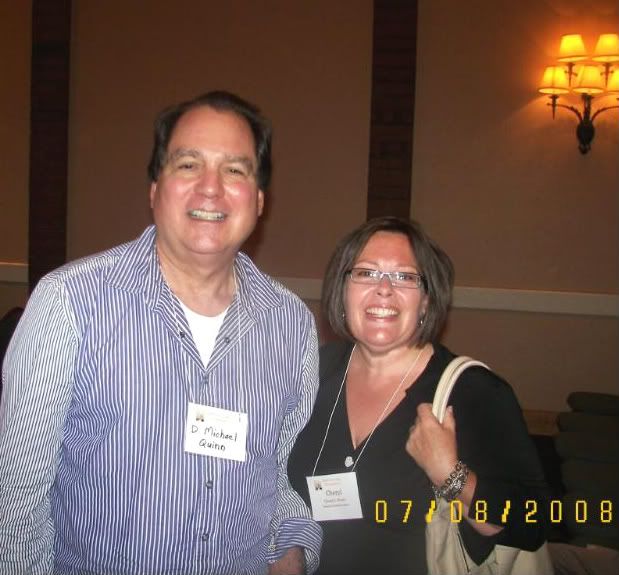
Hugo impressed me from the start with his presence when he realized that both the moderator and the respondent for his session, the illustrious Michael Quinn were not present. He began his own session and launched right in to his talk, which was brilliant. At the risk of vastly simplifying what he had to say, I'd like to just give you a few of my impressions and then urge you to order the full talk if you are interested in this topic.

Hugo explained that human deification (as expressed by the couplet "As man is now, God once was; as God is now, man may become) contains two distinct concepts, one that God has progressed and perhaps may still be progressing from some human form to a divine state; and the other that man may reach this state also. We often call this "eternal progression," but in this talk Hugo preferred to use the more specific term "deification." His paper discussed the observation that, although early Mormon thinkers had vigorously debated and elaborated upon this doctrine, there is a distinct change in how we approach it today. The first half of the couplet, the one dealing with the progression of God, has become nearly invisible, and while we retain the possibility of deification for man, it is reimaged as "eternal progression," with its bolder implications being tamed.

For those who have been in the Church as long as I have, this shift is remarkably clear. I remember the days when deification was actively taught in our church meetings. To me the shift to a doctrine more compatible with evangelical Christianity is quite clear.

After concluding his talk, Hugo opened the session to questions, then with just fifteen minutes left, Michael Quinn came sailing up the aisle, panting heavily. Although Hugo's talk was cogent and engaging, and would have stood quite well on its own, Michael's addition added emotion and drama to the proceedings. Michael referred to the history of Christianity and showed how early Christianity defended its doctrine of monotheism against outside threats with violence and bloodshed. He said that if we did not understand this history, we would not have a clear view of where the modern Christian world stood regarding polytheism. Now we have our LDS leaders and theologians seeking to ally themselves with the Christian movement and to deemphasize our early teachings. If we do this, Michael dramatically warned, we are trading our birthright for a mess of pottage.

Michael's speech was so stirring, it made me want to leap to my feet and applaud. Later, during the Q&A, he added to the defense of Joseph Smith's early teachings on deification by giving a beautiful word picture of Joseph opening window after window in a large room, bringing light flooding in, and leaving a legacy for later generations to formulate into unified doctrines.

So, what do you stand, readers? Are you comfortable with a milder form of our doctrine which aligns more closely with Christian thought? Or do you identify with Joseph and his bold but perhaps discomfiting proclamations on the nature of God and man?


BiV with Michael Quinn

Friday, August 8, 2008

Firestorm Breaks out at Sunstone!

The panel on "Mormon Motherhood, Choice or Destiny" was a response by five women to Julie Beck's Conference talk, "Mothers Who Know," which was so controversial in the bloggernacle last October.  I was interested to hear their thoughts on Julie Beck's official pronouncement on women's roles in the LDS Church.  I thought Margaret Toscano's talk was particularly cogent--expressing dismay for the presentation by our General RS President of only one approved way to be a mother, but also for the dismissal by many LDS women of Julie Beck's words as a leader but not of Russell Ballard, or Russell Nelson's subsequent talks which basically presented the same view. Interestingly, the Bloggernacle's own fmhJanet presented the most defensive view of motherhood, though she did note the dangers of letting our children become our whole world.  "It's too much for one person to stand," she said, "being someone's whole world." 

If you want to hear more about what the speakers said, order the Sunstone tape, 'cause I lost my notes!  But the most interesting part of the session were the comments following the speakers.  As soon as moderator Janice Allred opened the floor for discussion, a woman leaped to her feet and marched to the microphone.  She grabbed it off its stand and, agitated, stated, "I am so offended that I was not asked to be on this panel!"  Not all LDS women's views had been represented, she explained.  The panel had not expressed the views of the many Mormon women who feel their greatest work is in the home.  She particularly targeted Margaret, questioning if she would be welcome in the Toscano home because she did not have a Masters degree or a PhD. 

Another woman stood and expressed how alienated she felt in her LDS ward because of her decision not to have children.  She related the many inappropriate questions that were asked of her and the condemnation that was placed upon her by her gospel sisters.

Sitting in the back row with the Zelophehad's Daughters, I marveled at the outpouring of emotion, not only at this session, but at the original talk given by Sister Beck.  As was mentioned by the panel, this came from a wide range of women, from stay-at-home moms to the most radical.  Its seems that SAHMs were overwhelmed by the image of perfection presented, which they felt they could never live up to.  Working women saw the talk as presenting only one pattern of faithful womanhood.  Nevertheless, the opposition to the talk has been perceived as being largely from feminists.  Feminism has as its goal the championship of choice for all women to decide how they will structure their lives.  It seems to me that among the mothers who stay at home, they cannot feel their choice is validated unless all women are urged to make that same choice. 

How did you react to Julie Beck's conference talk?  Why do you think this polarizing talk still has the power to stir up a hornet's nest of LDS women?

Thursday, August 7, 2008

A Public Display of Religion

originally posted at Mormon Matters

Sanya Richards, Olympic athlete, is confident that she will be the first to cross the finish line in the 400 meter race.   91,000 fans at Beijing National Stadium and millions more on television will be watching the event.  Richard plans to drop to her knees, say a quick prayer and then point skyward in spiritual appreciation. This might not be a problem if the Olympics was being held in any of a number of countries. However, the Chinese government frowns upon public displays of faith outside state-sanctioned religious events and does not allow proselytizing.

Types of Spirituality--Sunstone Workshop

As I've said before, Susan Skoor, Apostle and member of the Council of the Twelve in the Community of Christ church (RLDS) is an exceptional individual.  She has a presence about her that is almost tangible.  She engages with each person she meets, and has the knack of making them feel heard.  My first day at the Sunstone Symposium was spent in her 3 1/2 hour workshop--it flew by like 30 minutes.

Susan (In my reports of Sunstone, I'm going to use the first names of all the presenters, just to be consistent, and because there is a great feeling of comeraderie here) began her workshop with a short devotional.  She played a recording of a song with words by St. Francis of Assisi, lit some candles, had a prayer, gave a short sermonette on Jesus and social change, and ended with a rousing hymn complete with clapping and swaying.  Little did we know as she was leading us in the devotional, that she was modeling four types of spirituality about which she would instruct us.  There are

  • Thinkers--who approach religion by study and research.  They love scriptures, sermons, being on time, order, planning, and worship services based around a theme.
  • Feelers--are inspired by emotion, passion, testimony.  They emphasize conversion and transformation, and fellowship and relationships are important to them.
  • Mystic--experience God in silence, contemplation, and meditation.  They have great sensitivity, are intuitive and experience leaps of faith.  To them, God is a mystery.
  • Advocates--Theirs is a lived religion.  They feed the poor, do their home teaching, and focus on living the gospel. They tend to be critics, and their goal often becomes transforming systems.
In the workshop, we answered a series of questions to see what our predominant style of spirituality was.  We had a little fun with it, guessing the styles of some of the Community of Christ and LDS Apostles.  But then Susan cautioned us that the goal of this exercise was not to label people but to explore the good and dangers in all of them.  My first impulse as we were discussing the four types was to identify the LDS Church with one of these, but her point was that all 4 were found in Jesus' ministry.  This exercise could help to identify where we need to expand our faith journey.  It helps to recognize others' styles as legitimate and meaningful in the Church community, and to allow for all of them in our worship.

I especially liked Susan's speculations about the younger generation.  She said that the thinkers were leaving organized religion for science, the feelers were meeting their need for fellowship on the internet, the mystics were becoming detached and forming "the Church of the Bookshelf"--grabbing pieces of different systems of thought to embrace a spirituality that is uniquely their own, and that the advocates were leaving for politics and non-profits.  We spent some time developing plans for churches who have an interest in drawing these seekers back into organized religion and discussed ways to meet their needs in our congregations. 

This was an enlightening experience and I enjoyed working with the other workshop participants and hearing their ideas.  Soooo...what type of approach appeals to you out of these four types of spirituality.  What do you think I am?  (I'll let you know in the comments--it might surprise you.)

Tuesday, August 5, 2008

Sunstone Bound

I'm almost packed, and I'll be leaving on the first plane out for Sunstone!  I'm looking forward to all the sessions and the get-togethers that are planned.  I'm presenting as part of a panel on meaningful approaches to scripture.  It will be held at 11:15 on Thursday, so if you are around, come and see me!

After the Symposium, I'll be sticking around for a few days in Provo to greet my missionary when she returns home on the 13th.  Hopefully I will find access to a computer to log my impressions of the week.

Monday, August 4, 2008

Binding Members to the Church

originally posted at Mormon Matters

President Hinckley has reminded that we all need at least three things to remain firmly in the faith—a friend, a responsibility, and “[nourishing] by the good word of God." (Gordon B. Hinckley, “Converts and Young Men,” Ensign, May 1997, 47)   Church leaders have recognized that these things are helpful in holding members to the Church, especially the new convert. 

Saturday, August 2, 2008

BiV's Blog of the Month

It's that time again, readers!  Time to highlight another great Mormon blog which has shown outstanding achievement in the past month.  Drumroll please! :

Mormon


Insights


The writer of this blog, S. Faux, is a PhD in the area of cognitive neuroscience and evolutionary psychology. He is a college teacher, and a fan of Darwin.  He has been a member of the Church all of his life, and over the years has written thoughtful essays on Mormon topics. Many of these are included on his blog.  He decided to share them when LDS members were encouraged to do so by the Church.  Browse the sidebar, which includes a list of all of his essays.

In the month of July, Faux posted 32 essays on Mormon topics.  A good starting place in perusing his blog would be to read his piece Lehi's Three Sacrifices: A Relationship to the Festivals of Passover, Weeks, and Tabernacles.  In an introduction, he considers it his "most important blog essay in terms of providing an intellectual contribution."  It is an essay describing the Book of Mormon as a book written from a Jew to a Jew, and highlights the Hebrew meaning of the sacrifices made by Lehi.  Faux states:

"The primary lesson of this essay is that the Book of Mormon has a depth and richness that makes it worth serious scholarship. Dismissing the book as mere frontier literature does an injustice."
 Another essay I particularly enjoyed reading  was Overwhelmed by the Spirit of Revivalism, in which Faux describes the early Latter-day Saint religion as "standard Christianity on steroids."  In the essay he makes the point that we "cannot understand our own Church history without understanding the religious history which preceded and concurred with the formation of our own Church."  Thus, we owe a debt of gratitude to those spiritual predecessors, who were sincerely and legitimately seeking God. They established a way and pattern for Joseph Smith to watch.

Other outstanding essays from the month of July include Abe Lincoln and the Mormons: Did Joseph Smith meet with and talk to President Lincoln?  Church History is NOT Church Testimony: How the proper use of Church history can provide perspective; and an interesting apologetic article Ancient Quotations in the Book of Mormon.

I hope you will enjoy reading Mormon Insights, and will continue to visit frequently.

Thursday, July 31, 2008

Mormon Prophets, Christian Theologians, and Eternal Progression

After contrasting two LDS views of eternal progression Aaron Shafovaloff chides, "If only Mormonism had a prophet to clear up this mess!"  He then declares:

The Christian view of eternal progression is easy to describe. We will ever-increasingly grow in the knowledge and power of God for all eternity. And no, that isn't simply just a long amount of time with an ending point. It's for eternity. Christians essentially believe in a true eternal progression more than traditional Mormons do. We will never get to the point where we can say we have fully appropriated and received the entirety of our inheritance in Christ. (emphasis mine)
A little research will show that to the contrary, Christians have widely disagreed over the doctrine of theosis (becoming God).  Beginning with early Christian theologians,  St. Athanasius of Alexandria wrote, “God became human so humans would become gods."  And St. Maximus the Confessor exhorted, "let us become the image of the one whole God, bearing nothing earthly in ourselves, so that we may consort with God and become gods, receiving from God our existence as gods." During the Reformation, Martin Luther understood justification to mean theosis.  John Calvin and Lancelot Andrewes viewed the process of salvation and sanctification to be a divinization of man.  Wesleyan Protestantism developed the notion that ""that man in this present life can acquire so great and such a degree of perfection that he will be rendered inwardly sinless, and that he will not be able to advance farther in grace," and this was declared a heresy by the Roman Catholic Church.  To this day, there are widely divergent views among the many Christian churches.  (see this, for example.)  Aaron's "easy to describe" Christian view is in fact simply one opinion among many. 

Scripture is not crystal clear regarding whether man can become a god, but there are many intimations.  1 John 3:2 tells us that we shall be like him.  Romans 8:16-17 states that children of God are his heirs, to be glorified as Christ was.  Verse 29 of the same chapter further explains how the saints become conformed to the image of the Son, so that Christ is the firstborn among many justified and glorified brethren.  In Phillippians 2:5-6 we are told that we should have the mind of Christ, who, being in the form of God, did not think it robbery to be equal with God. 

Though the Savior did not quail at the thought of being equal with God, apparently human beings do.  Despite the writings of Biblical theologians and Church fathers, many Christians such as Aaron equivocate by saying that the saints will never receive their promised inheritance (see above).  And what he doesn't realize is that Mormons do the same.  LDS authorities are quick to explain that although we may become exalted and attain to all the power, authority, knowledge, wisdom and might that a god may possess, we are yet eternally subservient to our Heavenly Father.  He created us, and any works we might do bring further glory to Him. (see the comments to my last post, which were awesome!)

Thus I stand by my earlier statement that Mormons and Christians have very similar positions on eternal progression.  We both have scriptural traditions promising us "all that the Father hath."  Both groups have leaders in our respective religious traditions who teach us that we are sons of God and have the divine potential to be gods ourselves.  Yet we also have some differences of opinion among ourselves as to how and to the extent that this will be accomplished. 

It seems that Aaron would hold Mormons to a higher standard, since we claim a prophetic voice, to be consistent in our explanations of whether God himself is still progressing.  I would have to agree with him on this point.  Many Latter-day Saints have experienced ambiguity when faced with the problem that earlier prophets do not always agree doctrinally with those who come later.  This cannot fully be explained by saying that different prophets speak for different times.  In this case, the nature of God should not change between the time of Brigham Young and Thomas S. Monson.  Most of us are inclined to view prophets as mortal men, who search out religious truths line upon line, sometimes making mistakes which are later corrected.  But this does weaken the claim to prophetic leadership. 

Hurricanes

originally posted at Mormon Matters.

Hurricane season is here, with the most recent tropical storm Dolly leaving hundreds of thousands of people in South Texas without power.  An estimated 236,000 people were left without food, power, or other services for several days.  Retired Lt. General Russel L. Honore, who was leader of Joint Task Force Katrina before retiring, is now urging Americans to develop a culture of preparedness.  Since I was in Texas for tropical storm Allison, I saw firsthand how LDS wards reacted in an emergency.  One of the most impressive experiences I had during that disaster was the chance to use and share food storage items.  So I was taken aback this week when a member of the Church advocated using firearms to protect our stash, stating: "That's why the Church tells us to keep a gun with our food storage!"