Thursday, October 18, 2007

Why Everyone in the World Speaks English


When my family first considered moving, I was concerned that we didn't speak a word of Arabic. "Don't worry," I was told. "Everyone there speaks English." And in fact, wherever one roams throughout the wide world, they will find that it isn't that hard to get along. For many, many people of all nations speak English. In fact, I've noticed that Americans can get quite cocky about that fact. Our pride tells us that we are the leaders of the free world and that people of other countries speak our language because they know of our great influence. Or perhaps because they admire us so much! Well, I have finally realized why it is that so many people speak English. Americans' influence doesn't originate in Washington, D.C., or in New York. No, it all comes from Hollywood.


The people of the world learn English so they can watch American T.V.!


I've long been ashamed of Americans' attitude toward language. In European countries, people rub shoulders with others of different nationalities and languages frequently. Because the countries are small and the borders are porous, everyone learns to speak competently in several languages. Even here where it's more difficult to enter the country, people speak Arabic, English, French, and often another language or two. I watch people on the bus greet each other, and finding they don't speak the same language, switch back and forth until they find a language they have in common.

In the United States there has lately been a fervor over immigrants learning to speak English. "If they want to live here, they should learn to speak English," you'll hear stridently proclaimed. Well, yes. They will. And their children will. But learning a language doesn't come in two weeks. I've been working on my Arabic for over a month now, concentratedly. And I have an aptitude for languages. And I still don't know much more than greetings, counting to ten, and part of the alphabet.

How much more human we would be if we all learned as much of other languages as we could. For those who live in the US: how many of us speak adequate Spanish? The likelihood of encountering a Spanish-speaker is great at this period in our history. Do we know how to ask someone their name, to show them how to fill out a form, to give basic directions in the Spanish language?

I love the way that many Mormons all over the world can speak foreign languages because they served missions. On missions, we actively meet people, we have a message to share, we have a motivation to learn the language. But in our daily life we have little motivation to learn so that we can communicate with the world's people.

How would our motivation change if all television programs came into our homes in different languages?

Saturday, October 13, 2007

Missionary Packages

When I was a young missionary in Quebec, Canada, my mom was a perfect correspondent. She wrote faithfully every week and send me several packages. Even though none of my family was LDS, they were supportive of what I was doing and wonderful about communicating with me often. Now that my own daughters are on missions, I'm not doing so well. I've never been a very good letter-writer. I'm great at emailing, so they hear from me each week when they check their email. But I've only sent a handful of letters and one package each. (I made a mini-scrapbook of family pictures and sent it to each of them.)

Today I got an email from my oldest daughter's mission president's wife. What an on-the-ball lady! She is reminding each missionary's parents that packages for Christmas need to be in the mail soon. She wants us to send them to the mission office where they will be held until a special mission-wide conference in December. I think it's a wonderful idea. But I need your help! I can't think of what to send my daughters. One is in Korea and the other is in Italy. I am in Saudi Arabia. So anything Christmassy will be impossible to find here.

Give me some ideas on what to send--and tell me about packages you received on your mission that were meaningful to you!

Wednesday, October 10, 2007

A Mother Who Knows


I Am The Mom

A Powerful Voice

All of my adult life I have longed for a powerful voice. There is a small soprano sound which my vocal cords emit, and this voice does not serve me well. As a swim coach, I need a powerful sound which carries over the splashing. With such a voice as I have, I must earn my authority as a coach slowly and painfully. When I answer the telephone, even today as a woman of a certain age, people ask me if my mother is at home. I have wished for a voice that would command attention and respect.

Here's the comment fmhLisa made when she met me:

And as long as we’re being scary mean uber feminists, can I just say that I’m still a little blown away by how supremely feminine Bored in Vernal is. Her blog voice in my head sounds a lot like a super firm Eleanor Roosevelt, but in person she this tiny little thing, with a very very feminine way about her, and a tiny little girl voice. I was just following her comments around the nacle and trying to read them with her actual voice in my head rather than the “Roosevelt esque Bored in Voice” I’d created for her, and I couldn’t do it. Is that weird?

I was so flattered that my blog voice was commanding.

With my "tiny little girl voice" and less than statuesque height, I have throughout my life confronted and pondered issues of respect and authority. And lately I have wondered what I would do if placed in such a position. My recent blog post, "If You Were a (Female) Speaker At General Conference" was my effort to see what other Mormon women would do given an authoritative placement in the LDS Church. Although this post was read by over 200 people, I tellingly only received 4 willing speculators. Perhaps many are uncomfortable with "aspiring" to a calling. I can sympathize with this feeling, since I have been hurt by accusations in the Bloggernacle of wanting to be a Bishop or usurping the Priesthood. In addition, after I had put the post up, a furor arose over Julie Beck's talk in Conference, and I think many were reluctant to seemingly denigrate her remarks. However, I think it's important for us to define our personal philosophies regarding this issue. The probability that each LDS woman will at some time in our lives hold a position of some small authority is quite high.


The first thing I would do as a high-profile woman would be to choose one or two specific platforms. I think for everyone from political candidates to Apostles it is extremely effective to become known for one or two strong stances. I'd choose something that was meaningful to me and something I think that women could have a strong influence over. I'd strive diligently both for revelation and to get to know the concerns of LDS women worldwide. I'd eschew platforms such as modesty or homemaking in favor of education or literacy or saving the earth. I'd strongly consider service as a platform, though it would have to be more specific and defined than the broad category we now invoke. I think a woman leader must select causes which are universal to women in every circumstance, which cause a great good for the entire world, and have eternal implications.

Next, I would give talks which emphasize my platform in a way that reaches all within the sound of my voice. When a woman gives a talk in General Conference she is speaking to all: women, men and children; members and non-members; rich and poor; mothers, single women, divorced women, etc. Though she might address herself to mothers or to young women, her messages fall upon the ears of the fathers and the young men and give them subtle messages also. For example, a father might pick up from a talk given to mothers that his wife is responsible for the length of their son's hair.

I regret the fact that appearance makes such a difference in the regard in which a woman in the public sphere is held. However, I would recognize that I must present a clean, fit, and professional appearance in order to be taken seriously. This would not preclude my wearing of the quirky items I love on occasion and in appropriate circumstances. I think I'd also wear pantsuits to travel and give talks in (a la Hilary Clinton.) I noticed in a press release about newly called General RS counselor Barbara Thompson that she said she felt more comfortable in pants than dresses. I wished that she would continue to wear her pants often, and to make them more acceptable in Mormon circles.

Finally, I would travel widely and attempt to make Mormon women everywhere aware and accepting of other cultures. The Salt Lake Tribune reported that the General RS presidency recently met for lunch with 17 women from African nations. The visitors included a Muslim from Djibouti with whom Beck fasted in honor of Ramadan. I was extremely impressed by her willingness to experience cultural and religious diversity in her calling to serve the women of the world.

Now, the title of my hypothetical General Conference talk: Using Your Education as a Spiritual Force for Good. I'd emphasize the variety of levels of education to which we can attain--some are self-taught, some gain their education through life experience, some through advanced degrees. Some are educated in music, some in physics, some in nutrition. These can all be used as a spiritual force for good in whatever sphere we are placed. I wouldn't address my remarks specifically to the female sex, though I would hope my remarks would resonate particularly with women.

With that, I'll give all you readers a second chance: tell us what you'd do with a powerful voice!

Tuesday, October 9, 2007

DH Arrives in the Blogosphere

We have a 2-week Ramadan vacation, and DH has been very busy. He has put up a new blog, Prepare Ye the Way of the Lord, which consists of his compilation of LDS missionary quotes. He also plans to blog about missionary work. I think it's his way of doing his part while we are here in Saudi unable to proselyte. In addition, you may have noticed his comments on some of the Mormon blogs under the name of "Dr. B."

I'm not quite sure what I think about DH's participation here. In a way I feel like he has invaded my personal space. I know he won't agree with many of my comments and I hope it won't cause any more friction than is usual. But I don't plan to censor myself.

And, even more important, since we only have one computer now, I don't plan to give up my internet time!

Saturday, October 6, 2007

If You Were A (Female) Speaker At General Conference

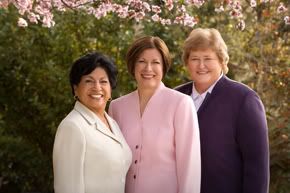
Today, Mary N. Cook of the YW Presidency spoke to the youth of the Church about what an influence they could be in their families and in the world. Now it's your chance. If you were a female and had the opportunity to speak at General Conference, what would you choose as your topic? Who would you address? What would you try to accomplish?

Because women seem to gather some criticism about their talks, what they wear, their hairstyle, etc, I've become curious about how others would handle this challenge. Additionally, I wonder how we would handle the high-profile women's callings in general. If you were RS President, what would your focus be? What would be your considerations in calling counselors or a RS board? What would you do first? How would you spend the majority of your time?

Now, the hard one: What would you do as wife of a General Authority? We see the wife of the President of the United States as being high-profile herself. She usually travels quite a bit with her husband and generally has a special project or emphasis that she champions. So, how would you use your influence as wife of our Prophet or wife of one of the Apostles? Are there special causes you would espouse? What would you wear in public? Would you change your hairstyle?

I have many ideas on the above questions, but I want to hear from some readers first. Feel free to send the readers of your blogs over, too. I really want to hear from some LDS women!

Thursday, October 4, 2007

Latter-Day Saints Grapple With the Noachian Flood--A Dialogue Review


LDS discussions of Noah and the Flood are fascinating. We are uniquely qualified among religions to debate this subject. On the one hand, acceptance of science as a means to discover truth has a long-standing tradition among Mormons. Brigham Young is quoted thus:

"How gladly would we understand every principle pertaining to science and art, and become thoroughly acquainted with every intricate operation of nature."
On the other hand, Latter-Day revelation confirms the existence of an historical Flood and the reality of the person Noah. As a faith tradition, we often receive mixed signals from our leaders, who are not unified on their interpretation of this Biblical story. Since there is no official and dogmatic position on the historical occurrence of a worldwide Flood, we see much variance among faithful members. Some of the discussions I have enjoyed on this topic are

Duane E. Jeffrey, Noah's Flood: Modern Scholarship and Mormon Traditions, Sunstone Oct 2004.

Donald W. Parry, The Flood and the Tower of Babel, Ensign, Jan 1998.

Julie M. Smith, SS Lesson #6, Times and Seasons, Jan 31, 2006.

GeoffJ, The Noah Version of the Creation Narrative (or, ark=uterus?), New Cool Thang, Feb 2, 2006.

lxxluthor, The Incoherence of the Flood, Faith Promoting Rumor, March 8, 2007

Ronan, Your Monday Poll #2, BCC, Sept 10, 2007

These discussions demonstrate just how much faithful Mormons can differ on their understanding of the Biblical narrative of the Flood. This month's Dialogue, which I have featured on my sidebar, contains yet another discussion on the topic of the Flood. "On Balancing Faith in Mormonism with Traditional Biblical Stories: The Noachian Flood Story" by Clayton M. White and Mark D. Thomas is available online at the Dialogue website. White and Thomas assert that there exist several groups of thought among Latter-Day Saints concerning the Noachian Flood:
1. Many members assume that their religion requires them to believe in the Flood as a world-wide occurrence.
2. A sizable group of LDS believe that the Flood story reports a local event.
3. A third group of believing Saints hold that the story is fictional, but valuable as symbolic and containing moral principles.

The bulk of this article seems dedicated to presenting the scientific evidence against a worldwide Flood. While giving lip service to "room for competent opposing opinions," it seems to me that the authors place their credence in an actual, yet localized Flood. The article does a creditable job presenting scientific evidence against a worldwide Flood in a nutshell. The article is readable and concise. It covers the following salient points:

Insufficient size of the Ark to contain sufficient species for the enormous global biodiversity we see today.

Insufficient time to acquire animals from all land masses on Earth

Impossibility of maintaining specialized conditions required for maintenance of fragile species

Lack of evidence that species on islands and continental land masses arrived there from a single point source.

Complications of requirements of marine vs. fresh-water aquatic species

Discussion of problems relating to parasites and microorganisms.

Fossil records of endemic species and/or groups.

Evidences of tree growth rings

Difficulties of transporting entire ecological systems.

Global distribution of life and it's incompatibiliy with repopulation from a single focal point.

Although these several points were well-presented, I felt the article lacked the balance called for by its thesis. There are many unique reasons that a large group of Latter-Day Saints believe in a literal worldwide flood. Some of these could include the reality of Noah in LDS doctrine, the necessity of the "baptism of the earth," and the location of the Garden of Eden in Missouri necessitating a means of transporting the covenant people to the Middle East. There are undoubtedly other strong reasons for a belief in an historical Deluge.


Lack of consideration of these points leads to the veiled condescension which I detected in this article toward those who reject the authors' conclusions. In spite of the authors' assertion that "our aim in this article is to assess the competing claims regarding the historical core of the biblical story of Noah's flood," in fact only one of the three competing claims was thoroughly treated.

Notwithstanding that I share the perspective presented by the authors, I regret that more space was not given to the exploration of the strong bases upon which proponents of other explanations of the Flood stand.

I can agree most wholeheartedly with the authors' conclusion that
"As we seriously explore the historical core of the story of Noah's ark and the flood, we are likely to encounter several possible temptations at odds with John Taylor's open quest for truth, cited in the opening of this paper. These temptations are to abandon either the text, science, or religion in our quest for truth about the story of Noah."
The article is worth reading for its concluding plea to abandon neither science nor religion in grappling with the ambiguity of this powerful Biblical piece of literature.


Additional reviews of this Dialogue article can be seen at T&S, NDBF, LDS Science Review, Adventures in Mormonism.

Tuesday, October 2, 2007

Preaching a la Paul

Interesting doctrine taught in SS this week--we were studying the 2nd part of Acts and the teacher focused on Chapter 21 where Paul is asked by James to demonstrate his adherence to the Jewish Law by attending the synagogue and purifying himself. (Acts 21:20-26) Paul was accused of being dangerous because of his teachings about the relationship of Christians to the Law of Moses. Paul followed the counsel of "Bishop James," went to the synagogue, and complied with Jewish purification ritual. Brother M. compared this story to our situation here in Riyadh. He said that though most of us have been taught to proclaim the Gospel, here we should follow the counsel of our leaders and maintain a low profile.

I don't disagree with this strategy--I just wonder if we can compare our situation with the actions of Paul. In Acts 21:4 and 11 Paul was being advised not to return to Jerusalem because of the danger he was in. With complete disregard of his own safety (and what the Spirit was directing?) he said:

I am ready not to be bound only, but also to die at Jerusalem for the name of the Lord Jesus. (Acts 21:13)

It feels strange to have so many years of indoctrination to preach the Gospel no matter what the consequence, to have the examples of Paul, Alma, the sons of Mosiah, and the early missionaries of the Restoration--and then, when consequences might actually occur as a result of missionary work, to be told to hide the light.

Is speaking of the Church here folly--a blatant disregard of what our leaders have advised, or is it bravery? And what, exactly, was the example of Paul?

Saturday, September 29, 2007

Ramadan

Most of the Muslim world started the observation of Ramadan on September 13 this year. I've discovered that during the month of Ramadan celebrations, life changes drastically here in Riyadh. Everyone is fasting (or at least pretending to fast) during the daylight hours from sunrise to sunset. So whenever they can, they sleep or take it easy during the day. When the sun goes down, they break their fast with water and some dates, then go to prayer. After that, the city comes alive. Many families have big meals or parties. Stores are open until 1 or 2 am and the streets are crowded with shoppers. There are Ramadan sales in every shop.

My students have been coming to school exhausted, and seem surprised that we are having class. Here in the HPE department, we don't do strenuous exercise during these weeks of fasting, but continue to hold classes for continuity's sake. We have 3 weeks of school and then a 2-week vacation coming up. Ramadan is early this year, and since school just started, it makes it difficult. We'll do more theory than practical PE, with emphasis on nutrition.

This week was also the University's faculty party. My husband was sent the following email:

Invitation to a Ramadan Dinner
PSU would like to invite all faculty to a Ramadan dinner on
Tuesday the 25th of September at 9.30pm
The evening’s entertainment will include: competitions, cultural activities and sports activities, the highlight of which is a game of football between a faculty and a student team. Finally, a delicious dinner will be served under a full moon and a starlit sky.
We hope that you will attend and enjoy this annual PSU calendar event!
A bus will be available to pick up faculty from the DQ.

At first I was confused, because the email I got wasn't as detailed, and the date was different. I soon realized that there was a men's party and a separate women's party. I teased DH that it wouldn't be as romantic under the moon and stars without the women!

So Monday night we had our party. I must say I was less than impressed. Women faculty arrived promptly at 9:00 PM when the shuttle delivered us, dressed to the nines. Many were wearing their native costumes. There were colorful saris from India, gold-threaded embroidery on flowing robes, the traditional Saudi thawb. And the jewelry was fabulous! Tables were loaded with covered dishes containing the native Middle Eastern foods. But we were not to eat or begin the program until the arrival of the Women's Dean and Assistant Dean. We waited and waited, famished with hunger. The Westerners became worried that something might have happened to detain the Dean. But we were told not to worry, that this was common during Ramadan. A party set for 9 PM might not get started until much, much later. It was difficult to remember that customs were different, and not to construe this behavior as rude. But the Dean did not show up until 11:30. (I was hoping to go home by 11!) We had a short poetry reading by several students, the Dean welcomed us there, and then we ate. There was a tattoo parlor off to one side where we could go and get our palms or hands tattooed with henna. One of the Architecture faculty, a new arrival from Canada, got her ankle and the side of her leg tattooed. (It seems that this is a rather scandalous place to get henna'ed.) Those of us from the DQ were so tired, we left around 1:00, the soonest we could get away.

I don't know how these people do it, partying all night long, every night all month long, and going to work the next day. They are tired and fasting, and irritable. Stay off the roads! It's dangerous out there.

Wednesday, September 26, 2007

The Mice Will Play


This is what my daughter did during her first semester at college at Utah State. I feel a bit out of control since leaving her and her sister in the US at college and running off to Saudi Arabia. I may deserve this, since I have always told my teenagers that I don't mind them experimenting with their hair as long as they don't experiment with drugs or sex. But Daughter #4 is going a bit further than any of her sisters have. Yikes.

Saturday, September 22, 2007

Wearing the Abaya

The Abaya is a full-length black robe which is worn by every woman when they appear in public in the city of Riyadh. I'll post some pictures of myself in the Abaya when I get my computer connection. It is very, very hot here, so the Abaya is a bit uncomfortable. However, I haven't had too much trouble with it. In fact, it's fun wearing the Abaya here at the University because I feel a bit like Professor McGonogall teaching the students at Hogwarts!

The difficulty comes in regards to the head covering. Abayas are sold with a matching head scarf which is worn in different ways. Conservative Muslims will cover the entire head. You'll see them trip and fall occasionally, as it is almost impossible to see while walking. Another option for conservatives is to wear a separate piece which surrounds the face and leaves slits for the eyes. Most women simply drape the scarf over their head. Westerners usually wear the scarf around the neck and are occasionally asked by the religious police (Muttawa) to cover.

I quickly picked up the unwritten do's and don'ts of the head covering. I cover while walking from the shuttle bus to the front door of the University. I cover while entering the place of Mormon meetings. But I don't cover in the grocery store or other public places. I'm getting the impression that women here would like to have a bit more freedom in being seen uncovered, and appearing in the grocery store with the head uncovered is generally acceptable.

I thought that I had the whole thing solved until my husband began reprimanding me whenever he saw that I was wearing the scarf around my neck. I asked him nicely to please butt out of telling me when to cover. But he continues to nag me. Now I feel like ripping the whole black thing off my body and wearing a bikini in public! So, why do you think I'm having such an extreme reaction? Am I afraid DH is buying into the whole subjugation of women thing? Or is it my rebellious nature reacting to the nagging?

Heavy sigh.

Tuesday, September 18, 2007

A Computer at Last!

I finally got a laptop for a fairly decent price! I am thrilled to death. But the only problem is, we are unable to get internet access just yet. Here in Riyadh, one must wait for a residence permit (iqama) in order to do just about anything. If you don't have your iqama, you cannot open a bank account, get a telephone, internet access, or even get paid by your employer! I'm about to die waiting.

I don't even have a computer at work yet, so I'm having to snitch little periods of time here and there on other people's. I have many things I want to tell all of my loyal readers, but I'll just have to wait a bit longer.

If you want to know all the boring details of my personal life, I'm trying to put them up a little at a time in diary form on my other site, Behind the Infamous Veil. But keep checking here as I'm hoping to give you some nice interesting posts about the fascinating culture I'm encountering here.

Monday, August 20, 2007

March

While you're waiting to hear from me, I thought I'd post a book review on the last book I read while in the States: March, by Geraldine Brooks. This is a great book for the light novel reader--not too difficult to read, but with some substance to it. Brooks has drawn her inspiration from Louisa May Alcott's Little Women, and has written the story of the absent father, Mr. March, who has gone off to aid the Union cause in the Civil War. She has loosely based this character on Louisa Alcott's own father, Bronson Alcott.

Bronson Alcott sounds like a man with whom I would love to become acquainted. He was a transcendentalist philosopher, educator, and abolitionist. He counted among his closest friends Ralph Waldo Emerson and Henry David Thoreau, and his name appears frequently in their letters and journals. It appears that Brooks had plenty of material to study in forming the character of Mr. March, as Bronson Alcott recorded his own life in 61 journals and his letters fill 37 manuscript volumes in the Harvard College Library.

Brooks has done a wonderful job of creating a life and voice for Mr. March. As a callow youth, he shows little thought for the evils of slavery, but he gradually encounters Negro slaves in the South and becomes enlightened. The book takes him through his marriage to Marmee, the loss of his fortune in attempting to advance the abolitionist cause, and his tortured decision to join the Union Army as a chaplain. While experiencing the horrors of war, he loses his innocence and becomes a tortured soul.

It is this character, portrayed near the end of the novel, who captured my imagination. The following excerpt from the novel recounts Mr. March's thoughts as he leaves the hospital and prepares to return home to his anxious family:

You go on. You set one foot in front of the other, and if a thin voice cries out, somewhere behind you, you pretend not to hear, and keep going.

But some steps require more effort than others. As I set my foot upon the path leading to that little brown house, I felt like an impostor. Surely, I had no business here. This was the house of another man. A man I remembered. A person of moral certainty, and some measure of wisdom, whom many called courageous. How could I masquerade as such a one? For I was a fool, a coward, uncertain of everything.

Had I been alone, I might have turned back then, melted away like the snow on that bright, mild morning, become a particle lost in the vast spate flowing through the landscape of war, so that my daughters could live with the unsullied memory of that other man, and not be obliged to know this inferior replacement.

But I was not alone. John Brooke had a firm grip upon my arm and the young Lawrence boy pranced brightly ahead of us, barely able to contain his excitement. He was carrying on as if he brought some bright-wrapped, welcome Christmas gift. If only he knew for what shoddy goods he was the forerunner. I pulled my muffler up high around my face, so as to hide the trembling at the corners of my mouth. Truly, walking up that path was an act of courage greater than any asked of me at war.

To those who have experienced uncertainty, and have faced their own weaknesses in the darker parts of their souls, this character will seem familiar. This novel builds in complexity when, at its apex, one comes to see the differing points of view of several of the characters, and that things are not always as they seem. I loved the shades that the author adds to Marmee. In Little Women, the mother is a paragon of virtue, but in life one can hardly live up to this standard. Here Marmee is shown as a noble, but real person. Without reservation, I would put this novel beside my copy of Little Women upon the shelf.

Thursday, August 16, 2007

Bored in Vernal is now Behind the Infamous Veil

I would like to say goodbye to all my blog friends for a while. Tonight we unhook the computers and pass them on to our two college girls. They will depart tomorrow for BYU-Idaho and Utah State Logan, respectively. I have the weekend to finish cleaning this place out and we will fly out of Utah early on Monday morning. I don't know how long it will take once we get to Riyadh to buy a new computer and get hooked up. Don't give up on me! I'm sure I'll be back to blogging soon.

Wednesday, August 15, 2007

Fantasy Bonds in Eternal Marriages

This was another session I attended at Sunstone Symposium. It was given by Michael Farnsworth, EdD, an educational psychologist who recently retired from the marriage and family relations dept. at BYU Idaho.

The words "fantasy bonds" were, in my opinion, a little misleading in this presentation. Michael was using the terminology given by Robert Firestone to roleplays that husbands and wives develop in their marriages. Fantasy bonds are culturally defined duties that people begin to act out in their marriages. They can eventually become bonds which hold the couple back from intimacy.

Michael said that intimacy is an acquired taste--many cannot stand the passion that true intimacy brings. When we fear our own and others' energies, we can form fantasy bonds as a psychological defense to marital distress. Mormon women have a great tendency to slip into this role-playing behavior. Once a young wife enters into the pattern, all her decisions are made for her. She will have many children, she will not work outside the home, she will hold Church callings, etc. Michael warns of three dangers to this reaction, and I have observed these myself.

1. The relationship can become superficial
2. The marriage partners are embroiled in continual conflict
3. One of the partners surrenders their voice

Thus, Michael suggested that personal identity has to be established before relationship identity can be formed.

The respondent to this talk was Ronda Callister, PhD and professor of organizational behavior at Utah State. She presented the point of view that developing a resilient identity is the work of a lifetime. She said that had she waited until personal identity was established before she was married, it would have been a very long time! Then she shared some steps she had taken in developing a resilient identity and encouraging intimacy in her marriage.

I enjoyed this presentation but I found it very difficult to listen to, since I neither see myself as having a very well-developed sense of identity nor much intimacy within my marriage.

Sunday, August 12, 2007

Blake Ostler on Spiritual Experiences

Blake Ostler's presentation at the Sunstone Symposium went a lot different than I thought it would. I didn't expect Blake to be as understandable, down-to-earth, and personal as he was. Blake spoke about LDS testimony and spiritual experiences--and he wasn't dry at all. In fact, near the beginning of his talk, he told of an experience he had when he was age 15. Sitting in the high school gym, a girl he didn't know well sat next to him, and he was prompted to tell her that God wanted her to stop thinking about suicide. This turned out to be an important message, since she was already planning the act. Blake argued that spiritual experiences are real. (Well, he actually says, "attacks claiming that such experiences are not trustworthy because they are merely ephemeral emotions are based on a caricature and unjustified reduction." It is Blake, after all.) Blake testified that it is not irrational for us to believe and trust our spiritual feelings. He also preached a "radical inclusivism," where we are called to be open to the spiritual experiences of others, including evangelicals. He cautioned that we should recognize that our experience does not mean that we know anything, that we should not feel morally superior because of it, and that we should remain open to doubt. He explored the idea that spiritual experience cannot be produced at will. He concluded that religious experience has no meaning without a life lived in pursuit of this knowledge.

Blake's presentation seemed to generate a great deal of controversy among the audience. The respondent, Bill Heersink from Salt Lake Theological Seminary, praised Blake for his "holistic view of humans that doesn't try to divorce the mind and soul," but nevertheless disagreed with his definition of spiritual experience. Several of the questions at the end likewise asked for further clarification. One young man in particular questioned Blake's view of spiritual experience. The young man told of an experience of his own in the MTC. He prayed to know his status regarding a girlfriend and was given a strong confirmation that he would marry the girl. When she later "Dear Johnned" him, it was devastating.

I was quite surprised to hear Blake respond that the young man's experience was not a valid one, since it had later been proved to be false. I thought Blake's answer went against his explanation of "radical inclusivism" earlier in his talk. Blake saw his own experience in high school to be valid since the girl was actually thinking of suicide, but the young man's experience was different since he did not end up marrying his girlfriend.

I believe this is a problematic way of looking at spiritual experience. Encounters with the Divine tend to be nebulous and not easily interpreted. I would be much more willing to see the young missionary's experience as a real manifestation of the Holy Spirit, sent for comfort and aid at a difficult time. Perhaps the interpretation was in error, but the experience was undeniable.

I appreciated and agreed with the points in Blake's presentation. I found it comforting to hear such an erudite and intellectual assertion that we can "know with a surety" the reality of the Spirit in our lives. However, I was quite put off by the application of his own principles in his response to the young returned missionary. I would like to see a greater acceptance of spiritual experience within and among religions.

Spirituality at Sunstone

In this post I'd like to address the issue brought up by Snarkimus Prime in his continuing attacks upon me regarding spirituality at Sunstone. There are two areas of interest to me: People, and Programs.

People

Snarky seems to object to the presence at Sunstone of many former Mormons. Some of the more infamous among these are the Toscanos, Janice Allred, Lavina Anderson, Richard Dutcher, Will Bagley. These people have been excommunicated or left the Church due to their exploration of Mormon topics through their art, be it writing or film.

Especially for U, Snarky--Sunstone Slideshow

Saturday, August 11, 2007

Snarker, be Damned: Another Sunstone Testimony

I finally have internet access again (!)and Snarker be damned, I am going to post my little heart out about how wonderful and spiritual it was. I believe that the types of talks and panels at Sunstone have the power to touch the questioning and questing among us in a way that speaks to our souls.

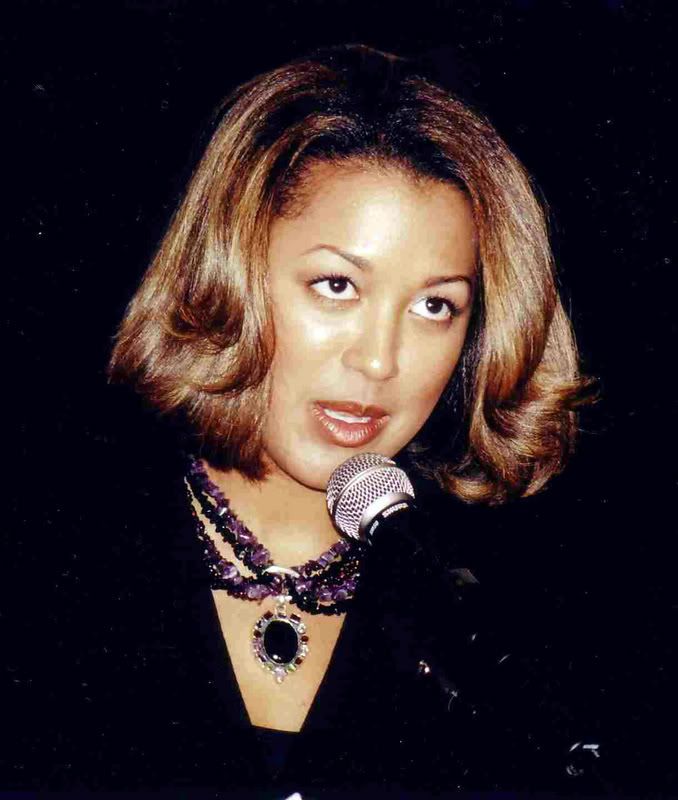
On Thursday, the Mormon Women's Forum presented a panel titled "Image and Reality: The Many Faces of Mormon Women. Janice Allred led the panel and explained that the concept of face invites us to consider several contrasting pairs that define face: appearance vs. reality, public vs. private, open vs. hidden, engaged vs. withdrawn, present vs. past, and ideal vs. real. Each of the panelists addressed how Mormon women negotiate the tension between the ideal and the reality of their own lives. Since I was one of the panelists, I'll post my remarks here for your edification!

Virginia Woolf wrote: "a woman must have money and a room of her own if she is to write fiction." I identify with this statement because I realize that in order to accomplish great things, one must have the means and the space. I sometimes wonder if, within Mormonism, a woman can find "a room of her own." From the time a Latter-day Saint girl or boy is very young, words of testimony are whispered in their ears. They memorize all 12 Articles of Faith and are taught songs of faith and assurance. The Young Women stand each week and recite a motto describing the ideal girl. An active teenage girl who attends Church services, Mutual, and Seminary goes to Church 10 or more hours a week. She is interviewed by her Bishop twice a year to assess her worthiness. Often, this young woman will marry at a fairly young age and begin Church and family responsibilities before she has ever really lived on her own.

These can all be wonderful influences. They tend to produce women who have lived clean, decent lives; who have not mired themselves in addictions. These women are trained and prepared to keep clean and organized homes and to raise upstanding families. Are they missing anything from never having had a room of their own?

I think our strength as a culture is that we tend to develop the public face of our people superbly. As a young wife, I had learned how to present that face to the ward and to the world. I was well-spoken, well-groomed, energetic. I had the skills to run a Parent-Teacher Organization or to speak in public. This picture shows 6 of my eventually 8 children. As you can see, I sewed matching dresses for these girls. I did it three times a year: Christmas, Easter, and Pioneer Day.

But the public appearance was very different from the private reality.

At times I found friends I could share the tough realities of my life with. But in my experience, the Mormon world was not conducive to such confidences. As a Latter-day Saint, I felt compelled to put on a good face for the world. To my non-member friends and neighbors, I felt that I needed to show them how happy being a member of the Church made me. I couldn’t reveal any marital problems, for that would put a bad light on our “eternal family” rhetoric. I didn’t feel free to complain about the pressures of having 8 children, because it might invalidate my reasons for having such a huge family. Among the other LDS women, I felt some competition and equal pressure to maintain the image of perfection. Especially when I was a young mother, I didn’t realize that other Mormon women might also be struggling.

Putting forth a good face is also an inherited trait in my family. To illustrate this, I’d like to share a story my mother wrote in her family history. She tells of going to see a Broadway musical review with her sisters. Since they knew someone in the production, they were invited to go backstage. They left their seats during the final number and were ushered back behind the curtains to watch the chorus line finale. They saw the dancers with big, bright smiles upon their faces while they faced the audience. But when they turned their backs on the crowd, the girls’ faces would relax into a frown or a scowl of concentration. By the time they turned back around, they had their smiles pasted back on. My mother compared this chorus line to her family. She said that in public, they always had to have their smiles on.

I wrote a poem (some of my blog readers will remember this!) which expresses the liminality I have felt as I have attempted to please my family, my Church, and especially my husband without being able to fully celebrate the nontraditional parts of myself. It’s called, “I Put on Black.”

I put on black,
My head I bow.
You like me now.
You like me now.

I put away my chartreuse scarf,
And colored things I used to wear.
My second piercings now are bare,
I gel down my unruly hair.

I do not have a lot to say.
My makeup now is quite subdued.
I seem to cook a lot of food,
I don’t go swimming in the nude.

I nod and murmur when I should,
I shut my mouth, my thoughts I still,
My questions and my quirks I kill--
My secret longings none can fill.

The ward is suddenly so kind.
I’m not as different now, you see!
A call has been extended me
To teach Relief Society.

Sedately I walk down the aisle,
The Bishop’s wife sits by my side,
She nods at me; you smile with pride,
I feel a tearing deep inside.

I clean the toilets and the hall,
Read stories to my sweet sunbeams.
We never argue now, it seems.
I wonder where I put my dreams.

Your temple marriage now is safe,
You hold my hand that wears the ring.
I never dance, I never sing,
You would not notice such a thing.

I’m all in black,
I’ve kept my vow,
You like me now,
You like me now.

But this is what
You do not see:
I don’t like me,
I don’t like me.

When my family moved to the small, provincial town of Vernal, Utah two years ago, I discovered blogging. I felt I had found “A room of my own,” where I could present my innermost thoughts and feelings, ideas I’ve long held, but didn’t always align with the perfect Mormon woman. On my blog, I call myself “Bored in Vernal,” a feminist, pacifist, disgruntled, yet fully active Latter-day Saint. I’ve found the cyberworld to be a place where I can explore the real me among those with a Mormon background. I’ve found that I can’t leave the Church behind. It is a deep and inextricable part of me. Yet there are some policies, procedures and doctrines that, in order to be authentic, I must take exception to. Even at the ripe old age of 47, I’m still trying to find myself. Right now, it’s almost like I live a double life. I find myself saying things at Church, then saying the polar opposite on my blog. Which do I really believe? At the time I say these things, I feel I am representing myself accurately. I’m so confused. What are my true feelings? Who am I?

One of the objectives of this panel was to explore how Mormon women negotiate the tension between the roles and expectations of Mormon culture and the reality of their own lives. I pondered this as I read a recent novel entitled “Snow Flower and the Secret Fan.” The book is about nineteenth-century China and a group of women in Jiangyong, a far flung area in the rural countryside. These traditional Chinese females experienced the binding of the feet at age 7, early marriage, and a secluded life thereafter. While embracing the expectations of their culture, the women of this community developed practices which enabled them to survive. To meet their needs for community, the women contracted with other females—either “sworn sisters” or “old sames.” The novel is based on factual evidence that these women developed a secret system of writing by which they could communicate. It was called “nu shu,” and was kept secret for over a thousand years.

I believe that women such as myself who find tension between traditional Mormon roles and their own personal paradigms must find some way to relieve the strain. What practices will they develop which will enable them to survive and flourish? Will it be online communities such as blogging, or email groups? As wards become more accepting of diversity, will they find kindred spirits within the ward with whom they can commiserate? Or will these women find fulfillment in jobs outside the home, retaining their cultural roles only while at home and at Church?

Through the Proclamation on the Family, the Church has shown its commitment to traditional roles for women. Within our illustrious history, though, there have been some few opportunities for women, even within this type of culture, to find “a room of their own.” I’m thinking of women such as Ellis Shipp, who was sent back East by Brigham Young to obtain a medical degree. She practiced and taught medicine in Utah while bearing ten children. Women like Minerva Teichert, who went to Chicago to take art lessons as a “set apart” missionary of the LDS church. She married, raised a family, cooked and helped with the ranch while painting prolifically throughout her life. I’m thinking of Relief Society sisters who collected grain for humanitarian service, wrote their own manuals, maintained their own budgets and buildings. I urge that we continue to draw upon these, and many other examples of women who embraced their cultural roles within Mormonism yet broadened the definition of womanhood to find a room of their own from which to reach out and touch the world.

Stay tuned! I'll be posting much more of my experiences from Sunstone.

Thursday, August 9, 2007

Greetings from the Sunstone Symposium!

A big Bronx cheer to those who believe "Symposia" are evil. I just felt the Spirit stronger than I have in the past year. This year's event is off to a great start.

I just attended this evening's presentation by Helen Whitney, creator of the PBS special "The Mormons." She told the story of the making of the film with some behind-the-scenes stories and commentaries. "Why did I choose to examine these quirky, strange, and scary Mormons?" she asked. She explains that she feels an affinity to the spiritual and is fascinated with radical religious commitment. Mormonism is not just a Sunday religion, as we all know. It is all-encompassing. Helen began her three-year process of preparing this documentary with a bit of knowledge about the Mormons: "I knew they were smart, funny, they weren't polygamists, and they lived in other places outside of Utah," she explains. At the end of the odyssey, she says that she can't imagine tending to family, career, and belonging to such a faith--"my head just hurts."

I was extremely impressed by all the work that went into making this documentary. Whitney has crafted her new-found knowledge and thousands of hours of interviews into an art form. It was fascinating to listen to her explain how and why she chose the music, the art work, and the interviews that would be included. She explained that access is always a problem for a documentary film maker. She would not have been able to make the film without gaining the trust of the LDS Church. Why was the Church so open to a film it would not have any control over? Helen postulates that the Church has a reputation for being very closed. Michael Purdy, the Church representative with whom she worked on this project, wanted to change this perception.

I especially liked Whitney's discussion of gathering the interviews. She wanted to get her subjects to strip away the religious jargon. She was concerned that the speakers would be too boring. She said that dissidents were the most interesting. Historians seemed too attatched to one little piece of the picture and the faithful were unable to move past their trite jargon. I thought in view of this situation that her final result was remarkably balanced.

Whitney's "surprise" interviews included Betty Stevenson (inner-city convert), and Marlin Jensen. The higher up you go, she noted, you must abandon all hope of fresh, unrehearsed answers. Not so with Jensen. He was authentic and interesting. "The Church would be well-advised to use him as the public face of Mormonism," she quipped. On the other hand, she was disappointed with Boyd K. Packer's interview, blaming herself as much as him. She saw him as having made some strong statements in the past, and she wanted him to expand upon what he had written. Instead, she felt that he did not own what he had said.

What touched me about Whitney's presentation was her excitement about Joseph Smith as a powerful and complex leader. She cautioned Mormons not to strip him of his boldness and ruthlessness. She labeled Joseph "postmodern" and described him as "experimenting with his many selves." She said that we should judge his narrative by its power to change lives and people's willingness to believe it. Whitney challenged Mormons to see Joseph as a fascinating prophet-puzzle. She urges us to own our beliefs and be less defensive.

After the presentation, I felt inspired by the admiration of a non-member who sincerely investigated Mormonism and found it a passionate, intriguing religion. The session was opened and concluded with hymn singing directed by Ardean Watts. How I wish every chorister in the Church could take lessons from Ardean! He conducted with a flair, almost dancing in his excitement, and all eyes were upon him. We sang with gusto.

Kevin Barney has an open thread on the Symposium at BCC--check it out for more observations on the event.

Tuesday, August 7, 2007

My Summer Reading


Lean Mean Thirteen by Janet Evanovich
I've read all 13 Stephanie Plum novels. This one is the same as the others--a light read with amusing portions, but containing smutty language and adult situations. Absolutely no redeeming value.


Dialogue Magazine
I almost always sit down and read my Dialogue the minute it arrives. My favorite article in this issue was Cetti Cherniak's "The Theology of Desire" (Part 2 in a series). Loved her discussion on artists and all those who exercise creative agency. Another great piece was Wrathall's "Trial of Faith." Wrenching.


Religious Literacy by Stephen Prothero
Written in the same vein as "Cultural Literacy" by Hirsch, Prothero makes a great case for the need for familiarity with world religion. Go here to test your religious literacy!


The Secret of Lost Things by Sheridan Hay
This novel's themes of loss, power, love and impairment resonated with me. How can we regain the things we lose, or cope with never finding them again? Which of our secrets are destructive, and which are necessary?


Lucy's Book by Lavina Fielding Anderson
I wanted to read this to get Lavina's take on the changes that were made to this memoir in it's various publications, and on Lucy's role in the early church. I haven't been disappointed! I'm still working my way through this one--I've had to renew this library book twice. That never happens! When I get some extra $$$ I will add this to my collection.


Harry Potter and the Order of the Phoenix by J.K. Rowling
I have to reread the last two Harry Potter's before the new one comes out, so I can remember what is going on! I just finished all 870 pages of #5--now, can I read #6 by Friday night??


Sunstone Magazine
I've finished the latest issue of Sunstone--Enjoyed reading Margaret Toscano's "Are Boys More Important Than Girls?" I heard her give this talk at last year's Symposium. To read it online, click on the Sunstone link!


Harry Potter and the Half Blood Prince by J.K. Rowling
I'm done with Book 6 and now I've refreshed my mind on all the events of the previous Harry Potter books. I still can't believe Dumbledore really died in this book. I'm ready for Book 7 to come out, and I sure hope it explains Snape's treachery and why he was so trusted by Dumbledore!


Ysabel by Guy Gavriel Kay
Another fun summer read. This book combines fantasy with a bit of Celtic and Roman history. It's entertaining, but nothing special. This book is supposed to be more contemporary than his other works. I think I'll try his earlier fantasy novels. His Fionavar Tapestry series and "The Last Light of the Sun" are international bestsellers.


Harry Potter and the Deathly Hallows by J.K. Rowling
I read it! and I'm not telling.


Snow Flower and the Secret Fan by Lisa See
I read this novel of nineteenth-century China for a Book Club group. I'm driving all the way to Highland to reunite with some friends I knew in Houston. We will spend the night and discuss the book. This one's worthy of a blog post, too!

Sunday, August 5, 2007

A Room of My Own


The concept of face invites us to consider several contrasting pairs that
define face: appearance vs. reality, public vs. private, open vs. hidden,
engaged vs. withdrawn, present vs. past, and ideal vs. real. What are the
stereotypes about Mormon women and how well do these images represent
actual Mormon women? What are the roles and expectations that Mormon
culture scripts for women and how do Mormon women negotiate the tension
between these ideals and the reality of their own lives? How do these ideal
images affect the ways Mormon women shape their own identities?

Virginia Woolf wrote: "a woman must have money and a room of her own if she is to write fiction." I identify with this statement because I realize that in order to accomplish great things, one must have the means and the space. I sometimes wonder if, within Mormonism, a woman can find "a room of her own." From the time a Latter-day Saint girl or boy is very young, words of testimony are whispered in their ears. They memorize all 12 Articles of Faith and are taught songs of faith and assurance. The Young Women stand each week and recite a motto describing the ideal girl. An active teenage girl who attends Church services, Mutual, and Seminary goes to Church 10 or more hours a week. She is interviewed by her Bishop twice a year to assess her worthiness. Often, this young woman will marry at a fairly young age and begin Church and family responsibilities before she has ever really lived on her own.

These can all be wonderful influences. They tend to produce women who have lived clean, decent lives; who have not mired themselves in addictions. These women are trained and prepared to keep clean and organized homes and to raise upstanding families. Are they missing anything from never having had a room of their own?

I think our strength as a culture is that we tend to develop the public face of our people superbly. As a young wife, I had learned how to present that face to the ward and to the world. I was well-spoken, well-groomed, energetic. I had the skills to run a Parent-Teacher Organization or to speak in public. This picture shows 6 of my eventually 8 children. As you can see, I sewed matching dresses for these girls. I did it three times a year: Christmas, Easter, and Pioneer Day.
But the public appearance was very different from the private reality.

At times I found friends I could share the tough realities of my life with. But in my experience, the Mormon world was not conducive to such confidences. As a Latter-day Saint, I felt compelled to put on a good face for the world. To my non-member friends and neighbors, I felt that I needed to show them how happy being a member of the Church made me. I couldn’t reveal any marital problems, for that would put a bad light on our “eternal family” rhetoric. I didn’t feel free to complain about the pressures of having 8 children, because it might invalidate my reasons for having such a huge family. Among the other LDS women, I felt some competition and equal pressure to maintain the image of perfection. Especially when I was a young mother, I didn’t realize that other Mormon women might also be struggling.

Putting forth a good face is also an inherited trait in my family. To illustrate this, I’d like to share a story my mother wrote in her family history. She tells of going to see a Broadway musical review with her sisters. Since they knew someone in the production, they were invited to go backstage. They left their seats during the final number and were ushered back behind the curtains to watch the chorus line finale. They saw the dancers with big, bright smiles upon their faces while they faced the audience. But when they turned their backs on the crowd, the girls’ faces would relax into a frown or a scowl of concentration. By the time they turned back around, they had their smiles pasted back on. My mother compared this chorus line to her family. She said that in public, they always had to have their smiles on.

I wrote a poem which expresses the liminality I have felt as I have attempted to please my family, my Church, and especially my husband without being able to fully celebrate the nontraditional parts of myself. It’s called, “I Put on Black.”

I put on black,
My head I bow.
You like me now.
You like me now.

I put away my chartreuse scarf,
And colored things I used to wear.
My second piercings now are bare,
I gel down my unruly hair.

I do not have a lot to say.
My makeup now is quite subdued.
I seem to cook a lot of food,
I don’t go swimming in the nude.

I nod and murmur when I should,
I shut my mouth, my thoughts I still,
My questions and my quirks I kill--
My secret longings none can fill.

The ward is suddenly so kind.
I’m not as different now, you see!
A call has been extended me
To teach Relief Society.

Sedately I walk down the aisle,
The Bishop’s wife sits by my side,
She nods at me; you smile with pride,
I feel a tearing deep inside.

I clean the toilets and the hall,
Read stories to my sweet sunbeams.
We never argue now, it seems.
I wonder where I put my dreams.

Your temple marriage now is safe,
You hold my hand that wears the ring.
I never dance, I never sing,
You would not notice such a thing.

I’m all in black,
I’ve kept my vow,
You like me now,
You like me now.

But this is what
You do not see:
I don’t like me,
I don’t like me.


When my family moved to the small, provincial town of Vernal, Utah two years ago, I discovered blogging. I felt I had found “A room of my own,” where I could present my innermost thoughts and feelings, ideas I’ve long held, but didn’t always align with the perfect Mormon woman. On my blog, I call myself “Bored in Vernal,” a feminist, pacifist, disgruntled, yet fully active Latter-day Saint. I’ve found the cyberworld to be a place where I can explore the real me among those with a Mormon background. I’ve found that I can’t leave the Church behind. It is a deep and inextricable part of me. Yet there are some policies, procedures and doctrines that, in order to be authentic, I must take exception to. Even at the ripe old age of 47, I’m still trying to find myself. Right now, it’s almost like I live a double life. I find myself saying things at Church, then saying the polar opposite on my blog. Which do I really believe? At the time I say these things, I feel I am representing myself accurately. I’m so confused. What are my true feelings? Who am I?

One of the objectives of this panel was to explore how Mormon women negotiate the tension between the roles and expectations of Mormon culture and the reality of their own lives. I pondered this as I read a recent novel entitled “Snow Flower and the Secret Fan.” The book is about nineteenth-century China and a group of women in Jiangyong, a far flung area in the rural countryside. These traditional Chinese females experienced the binding of the feet at age 7, early marriage, and a secluded life thereafter. While embracing the expectations of their culture, the women of this community developed practices which enabled them to survive. To meet their needs for community, the women contracted with other females—either “sworn sisters” or “old sames.” The novel is based on factual evidence that these women developed a secret system of writing by which they could communicate. It was called “nu shu,” and was kept secret for over a thousand years.

I believe that women such as myself who find tension between traditional Mormon roles and their own personal paradigms must find some way to relieve the strain. What practices will they develop which will enable them to survive and flourish? Will it be online communities such as blogging, or email groups? As wards become more accepting of diversity, will they find kindred spirits within the ward with whom they can commiserate? Or will these women find fulfillment in jobs outside the home, retaining their cultural roles only while at home and at Church?

Through the Proclamation on the Family, the Church has shown its commitment to traditional roles for women. Within our illustrious history, though, there have been some few opportunities for women, even within this type of culture, to find “a room of their own.” I’m thinking of women such as Ellis Shipp, who was sent back East by Brigham Young to obtain a medical degree. She practiced and taught medicine in Utah while bearing ten children. Women like Minerva Teichert, who went to Chicago to take art lessons as a “set apart” missionary of the LDS church. She married, raised a family, cooked and helped with the ranch while painting prolifically throughout her life. I’m thinking of Relief Society sisters who collected grain for humanitarian service, wrote their own manuals, maintained their own budgets and buildings. I urge that we continue to draw upon these, and many other examples of women who embraced their cultural roles within Mormonism yet broadened the definition of womanhood to find a room of their own from which to reach out and touch the world.

Saturday, August 4, 2007

Calling You Out

It's a new meme by Johnny who is supposed to be studying, but instead is taking frequent breaks to comment on people's blogs and bother those who should be packing.

Here are the rules:

(1) Explain an issue that you are most passionate about.

(2) Why should all others (ignoramuses that disagree with you) accept your position?

(3) Why do the rest of us (ignoramuses who disagree with you) just not get it?

Well, everyone who blogs knows that I am passionate about pacifism and Mormon feminism. But I think I'll respond on a different issue today. I am passionate about gifted education. Because of all our moves, my children have attended a combined total of 15 different schools plus about 5 years of home schooling. We have seen a wide range of programs for gifted children. (BTW all 8 of my children have tested gifted, no big surprise with their family background.) We've encountered four different types of gifted education:

1. The children are divided according to ability and the gifted classes work ahead of their grade level.
2. The gifted children are identified and placed in magnet schools
3. The children attend regular classes and are pulled out of class a few hours a week to attend supplementary programs.
4. There is no gifted program--the children are mainstreamed and enjoy a maximum interaction with their peers of all abilities.

For some reason there are ignoramuses who believe that the gifted children should remain in the regular classroom as examples for the rest of the students, helping them with their homework, tutoring them, running errands for the teacher and otherwise frittering away their public education time. These children learn to do the work, which is way too easy for them, quickly and with a minimum of effort. They seldom have homework or work up to their potential.

My position is that children should be allowed to work at the highest level they are capable of attaining. In a public school situation this is best achieved by putting them with others of the same capabilities, either in a self-contained classroom or a magnet school. Yes, this is segregation according to ability. I have seen amazing results with such classes.

You should accept this position because if Americans wish to be competitive in the worldwide arena we need to give our gifted students every opportunity to advance in their studies. This is not possible in a crowded classroom of 30 students at different levels. The teacher must spend most of the time on those who do not understand and need to be brought up to grade level.

Many of you just do not get it. You want the money spent on education to go to your mediocre or special needs student. You want my well-behaved child in the classroom to influence others for good. The gifted children have parents who disproportionately help in the schools and in the classrooms. You would like to spread this assistance around.

My focus is the best education for the gifted child because my children are gifted. Would my ideas change if my children were not in this demographic? Probably not. Separating the children by ability makes better teaching possible for all.

I tag J G-W, JohnR, M&M, Téa , and Amelia.

Friday, August 3, 2007

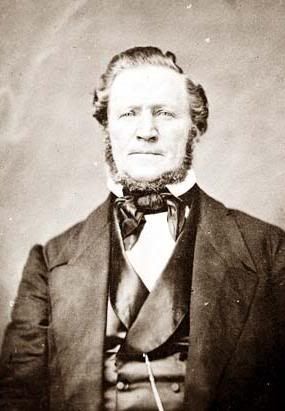
Brigham's Advice to Women and Men

As reported by Wilford Woodruff:

Many other remarks were made & while addressing the females Said Sisters if you expect to call me Br Brigham I want you to be Cleanly. Keep your faces, hands & skin Clean from head to foot your Clothes dishes & Houses clean Also your Children & teach them manners, & when you mix up Bread don't have a dozen flies in your tray.

I know that the women generally rule there Husbands & the Children their Mothers. But when A woman under takes to rule me I want Her to be so secret about it that I Cannot Catch Her at it. Now I do not want the Brethren from my remarks to abuse there wives but treat them kindly: Do there Heavy luging but dont wash there dishes as some men do.
"


How are we all doing?

Wednesday, August 1, 2007

Postmodern Ideas for the LDS Church


Recently, Christian bloggers have been discussing the effects of postmodernism on their congregations. (Hat Tip: DMI Dave) For example, this article notes that our society is undergoing a shift to a completely different way of thinking--from left-brained, logical, analytical patterns to whole-brained or bi-lateral thinking. This type of thinking includes and embraces the right-brain intuitive and creative influences. The postmodern generation has been trained in the classroom to use the right brain in their learning activities. Schools have increasingly incorporated the inquiry approach to problems and have engaged in cooperative learning paradigms.

As they encounter the Church as adults, these 18 to 30 year-olds use postmodern thinking in solving difficulties and ambiguities. I believe that as this generation takes its place in local Church leadership, there will be more creative problem-solving at the grass-roots level and less reliance upon tradition. Rather than memorizing and quoting from the Church Handbook of Instructions, these leaders will increasingly use their right brain and intuitive powers.

An example of this type of thinking in the LDS Church can be found in a recent post at Mormon Rhetoric. Here Natalie makes some interesting suggestions on the subject of ward boundaries. Not being part of the postmodern generation, I had never even considered that ward boundaries could be formulated using criteria other than geography. But she makes a great case for approaching problems such as transient communities and weak youth programs. In other areas of the Church, one can see Ward Councils using cooperative principles rather than rigid hierarchical structures. (Warning: Sometimes this attempt may resemble the cartoon above!) Nonetheless, this is an exciting development.

The evangelical churches have concluded that in order to stay vital they must learn how to think postmodernly without sacrificing key principles.

Do you see that the LDS Church could benefit from postmodern thinking? What do you identify as key principles that should not be sacrificed if the Church begins to take a more right-brained or bi-lateral approach?