Wednesday, January 23, 2008

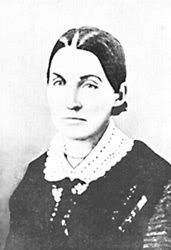
Emma -- the "Elect Lady"

What woman would not want to have earned the title "Elect Lady?" This evocative term was used to describe Emma Hale Smith in a revelation given by the Lord in July 1830. "Thy sins are forgiven thee," Emma was told, "and thou art an elect lady whom I have called." The appellation is an interesting one, and may possess shades of meaning beyond simply that Emma was an extraordinary and revered woman. How do the words "elect lady" fit in with her being "called?" Does this phrase have any connection with the ordination promised to her in verse 7? Following are several interpretations which can be made of the words "elect lady:"

An "Elect Lady" was a member of the Church

At the time of this revelation (July 1830), Emma Smith had recently been baptized (28 June 1830). She was to be confirmed a few weeks later--sometime in August. The revelation mentions in connection with the aforementioned ordination that Joseph "shall lay his hands upon thee, and thou shalt receive the Holy Ghost..." Thus it is possible to see the ordination as referring to Emma's confirmation as a member of the Church. Through baptism into the Lord's true Church, Emma had become part of the elect of the Lord. We find these words in D&C 29:7: “And ye are called to bring to pass the gathering of mine elect, for mine elect hear my voice and harden not their hearts.” Section 29 was given shortly before the Conference held Sept. 26, 1830, and reflects an early understanding concerning the meaning of the word “elect” as those who had been gathered in to the fledgling Church.

An "Elect Lady" means one elected to preside

Church apologetic tradition generally favors this interpretation of "Elect Lady." The verse is seen as a future promise to she who would later become the President of the Relief Society. This idea comes from two sources; one is Willard Richards' Nauvoo RS minutes:

President Smith read the Revelation to Emma Smith, from the book of Doctrine and Covenants; and stated that she was ordain'd at the time the Revelation was given, to expound the scriptures to all; and to teach the female part of community; and that not she alone, but others, may attain to the same blessings.--
¶ The 2d Epistle of John, 1st verse, was then read to show that respect was there had to the same thing, and that why she was called an Elect lady is because elected to preside.
The other source for this information is the Manuscript History of the Church which states:
“I assisted in commencing the organization of ‘The Female Relief Society of Nauvoo’ in the Lodge Room. Sister Emma Smith, President, and Sister Elizabeth Ann Whitney and Sarah M. Cleveland, Counselors. I gave much instruction, read in the New Testament, and Book of Doctrine and Covenants, concerning the Elect Lady, and showed that the elect meant to be elected to a certain work, &c., and that the revelation was then fulfilled by Sister Emma’s election to the Presidency of the Society, she having previously been ordained to expound the Scriptures.” (History of the Church, 4:552–53.)

An "Elect Lady" was one who had been ordained to the Priesthood

Some have interpreted the ordination of Emma under the hands of Joseph as an ordination to the Priesthood. I am not inclined to give much credence to this theory, as the word "ordination" had not yet acquired the specific restriction to which we assign it today. In the 1830's the word was likely to be used as today we use the term "set apart." (see Smith, Church History and Modern Revelation, 1:126) However, a scripture which supports this view is found in D&C 84:34 where those of the Church who obtain the two priesthoods become "the church, and kingdom, and the elect of God." I also think that the connection of the word "elect" to the higher priesthood deserves consideration.

An "Elect Lady" was a term taken from Masonic ritual

On March 17, 1842, in the Masonic Hall in Nauvoo, Illinois, twenty women and two men listened as Joseph Smith, Jr., Prophet and President of The Church of Jesus Christ of Latter-day Saints, organized the women of the Church and read the revelation he had received twelve years earlier, in 1830. "Thou art an elect lady, whom I [the Lord] have called," Joseph quoted. The significance of the venue of this setting-apart escapes us today because we are not acquainted with Masonic ritual.

Reed Durham has explained that the influence of Masonry began early in the history of the Church. Apparently, in an unorthodox form of Masonry called "Adoptive Masonry," women are included in Female Lodges. In this order, the highest woman is known as the "Elect Lady." There existed a close connection between the ceremonies for women in this Masonic order and the endowment ceremony later performed in Mormon temples. "Elect Lady" contains a temple symbolism which may have had its roots deep in the past. In this paradigm, Emma's appellation is connected with an expanded and glorified concept of Masonry which Joseph believed contained the remnants of ancient mysteries.

An "Elect Lady" was one whose calling and election was sure

Perhaps an understanding of "Elect Lady" as one who has had her calling and election made sure can make sense of all of these definitions and bring them together into a grand fulfillment. The Second Anointing was an ordinance performed at Nauvoo and often referred to as the "Fulness of the Priesthood." It was given to men and their wives to seal them up unto eternal life after they had proved faithful, and guaranteed them the promises of godhood.

David John Buerger has written an article detailing the evolution of the doctrine of election in the Church and the practice of the Second Anointing. In this article he shows that as early as 25 Oct 1831 Joseph Smith spoke of "the High Priesthood and the power given them to seal up the Saints unto eternal life," thereby making their calling and election sure. In the School of the Prophets established January 1833, no one was admitted without having received the ordinance of being sealed up unto eternal life. On the 6th of February 1836 a "sealing" of former endowment blessings took place in the Kirtland Temple, and in June of 1839, Joseph more clearly defined the concept of calling and election in a sermon based on 2 Peter 1:10-11. We see, then, that although not fully articulated until 1843, the seeds of the principle of election were present about the time that Emma received the revelation in D&C 25. Notice in verse 3 that Emma's sins are forgiven, the Lord has called her as an elect lady and in verse 7 an ordination is mentioned.


Regardless of their meaning, these words must have been a comfort to the newly-baptized Emma. Her baptism was performed under a great deal of stress for the Mormons. The group had formed a dam which would create a pool in which their people could be baptized. This was destroyed by opponents, and had to be rebuilt. After several of the Saints had completed the ordinance, a crowd of hecklers gathered to ridicule and revile them. Joseph was arrested for "causing an uproar over teaching the Book of Mormon". When he returned, it was late into planting season, and Emma wanted Joseph to stay around, plant, and establish a home. Section 25 was received at this time. It contained promises of hope for the future. The terms were such that they would grow in significance to her as the years went by.
Tuesday, January 22, 2008

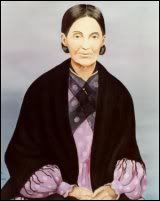
Emma's Calling to Exhort and Expound

By established tradition, Emma Smith has been held above reproach by the body of Latter-day Saints. It is acknowledged that she did not make the trek West after the death of her husband Joseph, but we all realize that she had some pretty compelling reasons for staying.


  • She was the primary caregiver for her aged mother-in-law, Lucy Mack Smith.
  • She felt the importance of preserving an inheritance for her five living children (one of whom was born five months after his father's death).
  • She had tensions with Brigham Young and concerns about the proper line of succession.
  • She remained unable to fully accept the principle of polygamy.

  • She desired to seek refuge from the unrelenting turmoil and trials of her life.

Beside this, we paint Emma as the model of a prophet's faithful and dedicated wife.

  • She supported herself and her children by taking in boarders during Joseph's frequent absences.
  • She gathered supplies for the men of Zion's Camp.
  • She crossed the frozen Mississippi with two babes-in-arms and two toddlers, carrying the manuscript of the JST hidden in her clothing.
  • She cared for untold numbers of ill and homeless Saints as they migrated to Nauvoo.

Sure, we hear intimations from time to time that Emma was not always compliant in accepting "sister-wives" into the family. But to our modern sensibilities--to our society today wherein plural marriage has been repudiated--Emma's difficulties with "The Principle" can almost seem virtuous.

So it is with trepidation that I approach the topic of this post, which may seem critical of the First Lady of Mormonism. When we analyze D&C 25, we often dwell on the description of Emma as an "Elect Lady" (having received her Second Anointing), and the instructions given to her to prepare a collection of hymns. As we know, she fulfilled this assignment, working with W. W. Phelps to prepare the 1835 LDS Hymnal. In 1841 she expanded this early selection to 304 hymns in "A Collection of Sacred Hymns." In Section 25 we also see Emma directed to help Joseph with the translation of the Book of Mormon when scribes were not available. A BYU team was able to confirm that some of the original manuscript is in her handwriting.

But we don't often discuss verses 7 and 8 where Emma is told, "And thou shalt be ordained under his [Joseph's] hand to expound scriptures, and to exhort the Church according as it shall be given thee by my Spirit." She was also told that her time should be devoted to "writing" and to "learning much." We have no record that an "ordination" took place at this time. I hesitate to interpret the "ordination" Emma was promised as a foreshadowing of her calling as General Relief Society President 12 years later. Perhaps as leader of this women's organization she did her share of exhortation--but this was to a limited number of sisters, not to the entire Church. And we see no evidence of any expounding of scripture. I am unaware of any writing that Emma did that can be construed to fulfill the admonition given her in Section 25.

I believe that in verses 7 and 8 Emma Smith is being called as a "prophetess" in the Old Testament sense of the word. Not just as a prophet's wife, as in verse 5 and Isaiah 8:3, but as a female prophet as Miriam, Deborah, and Huldah. This use of the word prophesy placed the person who was called as a vicarious witness, or a spokes[wo]man for the Lord. How would the Church be different today if Emma had spoken in an authoritative voice to the members of the Church? What if we had even one scripture that she expounded by the Spirit?

Despite my feminism, I love what the Lord tells Emma in verse 5. I don't believe it detracts from a woman's strength when she accepts the Lord's call to be a comfort and support to her husband in his afflictions. We see over and over in Church history how Emma was able to be a comfort to Joseph. I just find it sad that Emma spent so much time and effort in supporting her husband that she was never able to fulfill the glorious promises that the Lord had given her as an individual.


1 Hearken unto the voice of the Lord your God, while I speak unto you, Emma Smith, my daughter; for verily I say unto you, all those who receive my gospel are sons and daughters in my kingdom.
2 A revelation I give unto you concerning my will; and if thou art faithful and walk in the paths of virtue before me, I will preserve thy life, and thou shalt receive an inheritance in Zion.
3 Behold, thy sins are forgiven thee, and thou art an elect lady, whom I have called.
4 Murmur not because of the things which thou hast not seen, for they are withheld from thee and from the world, which is wisdom in me in a time to come.
5 And the office of thy calling shall be for a comfort unto my servant, Joseph Smith, Jun., thy husband, in his afflictions, with consoling words, in the spirit of meekness.
6 And thou shalt go with him at the time of his going, and be unto him for a scribe, while there is no one to be a scribe for him, that I may send my servant, Oliver Cowdery, whithersoever I will.
7 And thou shalt be ordained under his hand to expound scriptures, and to exhort the church, according as it shall be given thee by my Spirit.
8 For he shall lay his hands upon thee, and thou shalt receive the Holy Ghost, and thy time shall be given to writing, and to learning much.

9 And thou needest not fear, for thy husband shall support thee in the church; for unto them is his calling, that all things might be revealed unto them, whatsoever I will, according to their faith.
10 And verily I say unto thee that thou shalt lay aside the things of this world, and seek for the things of a better.
11 And it shall be given thee, also, to make a selection of sacred hymns, as it shall be given thee, which is pleasing unto me, to be had in my church.
12 For my soul delighteth in the song of the heart; yea, the song of the righteous is a prayer unto me, and it shall be answered with a blessing upon their heads.
13 Wherefore, lift up thy heart and rejoice, and cleave unto the covenants which thou hast made.
14 Continue in the spirit of meekness, and beware of pride. Let thy soul delight in thy husband, and the glory which shall come upon him.
15 Keep my commandments continually, and a crown of righteousness thou shalt receive. And except thou do this, where I am you cannot come.
16 And verily, verily, I say unto you, that this is my voice unto all. Amen. (D&C 25)

Friday, January 18, 2008

Women and Peace and Security

In October of 2000 the Security Council of the United Nations adopted its landmark resolution 1325 on women, peace, and security. This resolution was an effort to protect the rights of women across the globe and remove barriers to their equal participation and full involvement in the maintenance and promotion of sustainable peace. Every year since 2000, this resolution has been reaffirmed. Three months ago, in October, an open debate was held to discuss progress on the implementation of this resolution. I recently became aware of this debate and the efforts that are being made to safeguard women around the world.

This year the Council expressed their concern that armed conflicts persist in many parts of the world and are an ongoing reality affecting women. Specific acts of violence against women and girls continue to occur including killing, maiming, sexual violence, rape, exploitation and abuse. A statement by the Security Council reported:

"such acts remain pervasive, and in some situations have become systematic, and have reached appalling levels of atrocity. The Council stresses the need to end impunity for such acts as part of a comprehensive approach to seeking peace, justice, truth and national reconciliation. In this context, the Council reiterates paragraph 9 of resolution 1325 (2000) and calls on all parties to armed conflict to respect fully international law applicable to the rights and protection of women and girls, especially as civilians."

As part of the effort to stop atrocities committed against women during war, the Council recommended that women be made a more vital part of formal peace process. I believe it would be extremely beneficial to have women more involved in peace talks, and providing gender perspective during the making of policies and programs promoting peace in their various countries. Women continue to be underrepresented despite the U.N.'s efforts toward this goal.


The obstacles women in many countries face result from shattered economies and social structures, lack of rule of law, poverty, limited access to education and other resources, and various forms of discrimination and stereotypes. My native country is one in which women's rights have been a priority for many years. We haven't been held back significantly by the above obstacles. However, I knew nothing about this initiative which has been an ongoing effort for seven years! Why isn't the U.S. promoting this resolution in a major way?

Perhaps the atrocities of war regarding women are so far removed from us that we do not realize their seriousness? Maybe we feel these acts are not the fault of our soldiers? Do we think that American women are already adequately represented in forming policies and procedures regarding peace initiatives?

As a U.N. member nation, have we fully participated in the Women and Peace and Security Resolution? (Read more about it here!)

Thursday, January 17, 2008

"We Lay Our Garments By"

The JS manual's chapter 2 contains a cute little story that the Prophet’s brother William recalled:

“My father’s religious habits were strictly pious and moral. … I was called upon to listen to prayers both night and morning. … My parents, father and mother, poured out their souls to God, the donor of all blessings, to keep and guard their children and keep them from sin and from all evil works. Such was the strict piety of my parents.” William also said: “We always had family prayers since I can remember. I well remember father used to carry his spectacles in his vest pocket, … and when us boys saw him feel for his specs, we knew that was a signal to get ready for prayer, and if we did not notice it mother would say, ‘William,’ or whoever was the negligent one, ‘get ready for prayer.’ After the prayer we had a song we would sing; I remember part of it yet: ‘Another day has passed and gone, We lay our garments by.’ (in JS Manual, Lesson #2)

This hymn sounded so interesting to me that I did a little search on it. It was written by Baptist pastor John Leland (1754-1841) of Virginia, a well-known champion of religious freedom. The Dictionary of American Hymnology (DAH) of the Hymn Society in the United States and Canada shows that Leland’s hymns were widely known. One of Leland’s hymns encouraged new Christians being baptized in an icy pond or river in winter with the lines, “Christians, if your hearts are warm / Ice and snow can do no harm.” It was published 42 times from 1794 to 1961. Much more widely used than this special occasion hymn were two other hymns by Leland. Leland’s evening hymn “The Day Is Past and Gone,” published 493 times from 1793 to 1946 according to the DAH, emphasizes the transitory nature of life on earth and the certainty of death:
The day is past and gone
The evening shades appear;
O may we all remember well,
The night of death is near.

We lay our garments by,
While we retire to rest;
So death will soon disrobe us all,
Of what we here possess.

The hymn eventually made it to the 1835 LDS hymnal. Of course, it is not surprising that this hymn has not survived in our current canon of hymns. It has a dark, moody feel to it. I don't think Latter-day Saints like to recall that death will soon disrobe us of all we possess. We'd rather "Work while the sun shines." The hymn does resolve itself in the final verses to something more like a Mormon "press on" exhortation, especially in verse 4:

Lord, keep us safe this night
Secure from all our fears:
May angels guard us while we sleep,
Till morning light appears.

And when we early rise,
And view th' unwearied sun,
May we set out to win the prize,
And after glory run.

And when our days are past,
And we from time remove,
O may we in thy kingdom rest,
Where all is peace and love.

I loved finding this little gem and imagining the Smith family all gathered around in their cabin singing as they got ready for bed. And I like to think they sang "may angels guard us while we sleep" as they retired on the evening of 21 September 1823!

Wednesday, January 16, 2008

Jesus Loves Me, But Not My Breasts?

This comment at FMH brought on a slew of unwelcome emotions:

"As to the question of modesty, I would just ask women for some basics: I don’t want to see your boobs, and I don’t want to be overly reminded of them. I know you have them, and I know you can’t make them disappear, but you also know how to make them more or less noticeable. Please, choose things on the “less noticeable” side of the scale. Similarly, skirt-lengths that don’t give me reason to think I might catch something if I pay close enough attention are nicer than not."

I have often deplored the treatment of modesty for women in our Church. Women and YW are oft castigated for wearing clothing that might titillate a man. Girls are faulted for inappropriate thoughts experienced by SS teachers, and are held accountable for men's reactions to their appearance.

This emphasis is unwelcome for many reasons. First, a man is accountable for his own responses. We realize that men have sexual reactions to visual stimuli. But since a man is likely to get turned on by the sight of a shapely woman in jeans and a turtleneck sweater, or even a woman's eyes flashing through a burka, he must learn how he will deal with these completely natural feelings. We have seen that it is not impossible for a man to enjoy the sight of a beautiful woman, relax and turn his mind to other things, then go on with his life. He need neither feel guilty for his reflexes, dwell on inappropriate thoughts or take them into action, nor blame the woman who happened by or her choice of clothing.

In many countries outside of the U.S., women breastfeed their children in public. Men are taught from a young age that this is natural and normal. When a breast appears in public, it doesn't seem to throw these men into a tizzy. Thus, it must be possible for males to learn how to process the sight of women's body parts.

So-called "modesty" teachings are also unwelcome in the Church because they undermine the principles of the Gospel. The Lord would have his children know that they are valued, precious, and loved. Why do you think our youth have such difficulty believing these teachings? When carried to an extreme, as they now are, teachings on "modesty" undermine and confuse this Gospel truth. Young people get the message that their body parts are shameful and disgusting. "Modesty" teachings are so often emphasized that they replace instruction on God, Christ and the atonement, the Restoration, and Christian love. This leads youth (and others!) to excessive dieting, eating disorders, cutting, and depression.

Comments such as Blain's are all to frequent in Mormon culture, among both women and men. I may be more fragile than most Mormon women, but these words have the effect on me of wanting to either flaunt my body or hide it and hurt myself. They make the possession of a woman's body an undesirable condition. "I know you can't make those breasts go away, but I wish you would," these voices say. "Make them less obvious if you can. Better yet, just disappear."

At times I am admonished to choose my dress as if I would be in the company of Jesus. In reality, we should feel perfectly comfortable stark naked in the presence of the Savior. If we don't, there is something wrong with the way we have been taught to view our bodies. In the Garden before the Fall, man and woman were unclothed in the presence of God, Jesus, and perhaps the entire Heavenly Host, and they "were not ashamed!" God fashioned our body parts and is intimately acquainted with them.

We are making the clothing issue for women a bit of an obsession. I agree with C.S. Lewis that "I do not think that a very strict or fussy standard of propriety is any proof of chastity or any help to it." In Mere Christianity he writes on the Christian view of sex and sexuality. He says that sex is an appetite, and like all appetites, it should be fed in healthy ways but not titillated, not indulged, not gorged. One sign that our sexual appetites are totally out of bounds is the growing phenomenon -- Lewis was writing in the 1940s -- of striptease shows. He wrote:
"Now suppose you came to a country where you could fill a theater by simply bringing a covered plate onto the stage and then slowly lifting the cover so as to let everyone see, just before the lights went out, that it contained a mutton chop or bit of bacon, would not you think that in that country something had gone wrong in the appetite of food? ...There is nothing to be ashamed of in enjoying your food: there would be everything to be ashamed of if half the world made food the main interest of their lives and spent their time looking at pictures of food and dribbling and smacking their lips."

I would not like my remarks to be construed as a defense of ostentatious flaunting of the body or of the degradation that takes place in pornography. Both are extremes which are as contorted as an overemphasis on covering up. In this fallen, cold and inhospitable world, clothing is a necessity. It is a gift given to mankind for their protection and comfort. Some concluding thoughts by C.S. Lewis:
"Finally, though I have had to speak at some length about sex, I want to make it as clear as I possibly can that the centre of Christian morality is not here...All the worst pleasures are purely spiritual: the pleasure of putting other people in the wrong, of bossing and patronising and spoiling sport, and back-biting; the pleasures of power, of hatred. For there are two things inside me, competing with the human self which I must try to become. They are the Animal self, and the Diabolical self. The Diabolical self is the worse of the two. That is why a cold, self-righteous prig who goes regularly to church may be far nearer to hell than a prostitute. But, of course, it is better to be neither."

Monday, January 14, 2008

Just Saw the President...

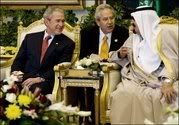
...or rather his cavalcade as he passed the snarl of traffic in which our bus was entangled. We had to wait 3 hours at the outside of our compound. Helicopters were buzzing overhead. Women swathed in abayas were begging armed guards to let them in to their homes so they could care for their children. Men were honking maniacally, and riots were only stemmed by army Rambos stationed every 25 yards along all major highways. We'd been told that George Bush was coming this week, but information was carefully guarded, and we had no idea when he would arrive or why he was here. We certainly had no idea of this! Tomorrow school will be cancelled and businesses will be closed as all routes to anywhere will be cordoned off.

Really, I just wish "W" would sit around and watch TV until November. The last thing the Middle East needs is $20 billion in weapons.

Saturday, January 12, 2008

Feminist Musings on the Story of Jephthah


Whenever I come across an odd story in the Old Testament, I feel compelled pull it apart and try to make some sense out of it. Why is it there? Does it have some symbolic meaning of which we are unaware? Are we misinterpreting crucial aspects? Would it make more sense within the cultural milieu? Such is the story of Jephthah, one of the Biblical judges.

This strange little story begins with an "unlikely hero," Jephthah, the son of a prostitute. He was taken into his father's family and raised there, but after the death of his father the legitimate children forced him to leave. He made some reputation for himself among a band of "vain men," so that when his countrymen needed help against the Ammonites, they came to him. Jephthah agreed to captain an army against Ammon, in return for being named their titular head. His first military action was an attempt to negotiate with the enemy. When that did not work, he gathered together the men of Israel. The Spirit of the Lord came upon Jephthah, and he went forth to battle, making a interesting vow to the Lord. If the Lord would help him win the battle, he would dedicate to the Lord and offer up for a burnt offering whatever should come forth from the doors of his house to meet him when he returned.

After a successful conquest, Jephthah returned home and was greeted by his daughter, his only child. That she was a precious and only child is pointed up by the fact that the judges immediately before and after him were Jair (who had thirty sons who rode on thirty ass colts), and Ibzan (who had thirty sons and thirty daughters). The number of children is the only fact we are told about these two judges, making it very likely that they are there solely for the reason of emphasizing Jephthah' only begotten child. But she was a female.

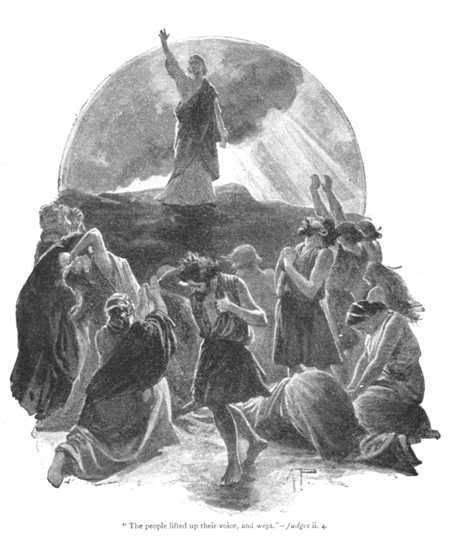
Not only was human sacrifice forbidden by the Lord, (Deut. 18:10), but burnt offerings were to be firstborn males (Lev. 1:3). Nevertheless, Jephthah had made a vow, and intended to keep it. His daughter acquiesced, asking only for two months time to go up to the mountains with some friends and "bewail her virginity." At the end of the two months, she returned to her father, and he "did with her according to his vow which he had vowed, and she knew no man." Thereafter it became a custom for the daughters of Israel to go up four days in a year to lament the fate of the daughter of Jephthah.

The tradition of Biblical scholars is to interpret this vow of Jephthah's as an impetuous and evil action which had disastrous consequences. That Latter-day Saints have followed in this tradition is clear from the chapter heading of Judges 11: "He makes a rash vow which leads to sacrifice of his only daughter."

This interpretation is problematic for at least two reasons. First, if this was a "rash vow," why would the Lord be given credit for bringing about the victory of Jephthah's army? In the Book of Judges, the people are punished with captivity and defeat when they forsake the Lord. Second, why would Jephthah make such a vow? Did he think perhaps an animal would be the first out the door to greet him? (In ancient Israel the animals were sometimes kept in the house.) What if the animal was an unclean one, such as a dog? To offer up such a sacrifice would be a great affront. But perhaps the greatest problem Biblical scholars face in the exegesis of this passage is the inclusion of Jephthah in Hebrews 11--the "faith chapter." Here Jephthah is included along with the great heroes of the Old Testament in obtaining "a good report through faith."

I rather favor an interpretation that became popular in medieval times--that Jephthah was promising only to dedicate his daughter to the Lord and not to kill her. This would parallel Jephthah's daughter more to Samson and to Samuel than to Abraham's sacrifice of Isaac. But it would preserve the Messianic shadowing. Several points make this interpretation possible:

  1. The Hebrew "vav" usually translated "and" may also be translated as "or" rendering the reading in Judges 11:31: "whatsoever cometh forth...to meet me...shall surely be the Lord's, or I will offer it up as a burnt offering." Thus Jephthah's method of sacrifice would depend upon what came forth out of his door.
  2. The daughter departed into the mountains to "bewail her virginity," not her death. It is possible that she was being offered to some type of temple service which would necessitate her remaining unwed for the rest of her life. Note verse 39 which says that Jephthah kept "his vow which he had vowed: and she knew no man." This last clause would seem awkward and unnecessary if she were being put to death.
  3. Certain Hebrew scholars believe that for as long as she lived, the virgins of Israel went at different times, each for four days in the year, to provide comfort and encouragement to the daughter of Jephthah at the tent of meeting. This custom must have ended at her death, since there is no further reference to it in scripture or Jewish history.
You see that it is possible to fit this story quite nicely into our Latter-day Saint canon. Faithful Jephthah makes a promise to the Lord, and keeps his promise. Faithful Jephthah's daughter yields herself to her father's vow and becomes a type of Christ. The story doesn't fit quite so nicely into feminist thought, however...or does it? What was the name of this intriguing daughter? What was she like? Didn't she deserve to make her own decisions? Why must her life be subject to her father's vow? Here's the other side of the question: if Samuel and Isaac were obedient to the vows of their parents, isn't it equal treatment for a young woman in the scriptures to show the same dedication? Is submission not a principle that Christ modeled, and which males and females must all learn? In my search for spiritual submission, is it helpful to have a female role model? Or would this simply reinforce unrighteous patriarchal domination which tends to crop up in religious settings? Can it be possible to spin this story into a celebration of a strong woman character who makes her own decisions and chooses on her own to follow the Lord? And what of my own life? Is it conceivable to view the submission I have promised in the temple as a glorious principle even though the submission my husband covenants is to God, and mine is to a mere mortal? Is the surrender I give freely in this holy place simply that required of all Christian disciples? Or does God require of women an additional offering? Does Jephthah's daughter hold the key? Am I to become a daughter on the pyre? I'm still wondering.

Thursday, January 10, 2008

Lament of the Lost Judges


This week in Seminary I am teaching the Book of Judges. As is customary in our OT year, the students are asked to read selected chapters from the books we are studying. The chapters they read in Judges are: 2, 3, 6, 7, 8, 13, 14, 15, 16. Does anyone see a problem with this selection? Out of 13 judges in Israel there are 6 of whom we have a substantial(?) account. Our Seminary chapters cover Othniel, Ehud, Gideon, and Samson, but leave out Deborah and Jephthah.

I was annoyed, but somehow not surprised to see that Deborah was basically ignored in the lesson materials. After many hours of studying the account of Jephthah, I must also include this story in my "Lament of the Lost Judges."

The stories of Deborah and Jephthah are problematic for LDS teachers. The student manual skims over Deborah by noting:

Judges 4–5 tells about how Israel was delivered from the bondage of their enemies under the direction of a woman named Deborah, who was both a judge and a prophetess. She prophesied that a woman would destroy the enemy’s leaders. The prophecy was fulfilled when a non-Israelite woman named Jael killed the leader of the enemy army. The people learned that if they trusted the Lord, He could deliver them. Judges 5 contains the words of a song the Israelites sang about this important event. Music can be a powerful way of praising God (see also D&C 25:12).

A sidebar in the Student Manual also includes a list of judges in which Deborah and her military commander, Barak, are listed together, erroneously creating the impression that they were some sort of co-judges. The teachers manual merely suggests: "Assign students to report on the following leaders and describe how they were unlikely heroes: Ehud, Deborah, Jael, Gideon, Jephthah." Thus, the Seminary manual allows perhaps 2-5 minutes for a student presentation on Deborah and Jephthah and no commentary whatsoever for the teacher. Compare this with a section suggested to last 15-20 minutes on the fact that Samson's parents were childless. Here the manual departs radically from the Old Testament text and preaches that the plan of happiness would be affected if Satan could influence people to stop having children.

This dearth of information leaves the LDS teacher of youth with little instruction on how to present these fascinating Biblical judges, both of whom are of especial interest to women. Most will choose to simply pass over them. Considering the prominence of these stories in the scriptural record, it would be helpful if LDS lesson materials would deal with some of the following issues:

Deborah

  • What is the Old Testament definition of a prophet and a prophetess? How does this differ and fit in with our understanding of modern prophets?

  • In what way did a woman judge add to our understanding of the period of Biblical judges?

  • What special abilities did Deborah bring to her ministry?

  • Why was Deborah's authority over a military commander and her authority to provide judgment in the people's affairs unusual for her day? How did she attain such prominence?

  • In what ways were Deborah and Jael (the other important woman in the story) called of God and in what ways did they simply step up to fulfill a need that they saw?

  • What importance does the Song of Deborah have in the scriptural record?

  • How is Deborah a role model for both men and women?

  • What types of Christ do we see in Deborah's story?


I would like to ask my readers if they have heard the story of Deborah taught in an LDS setting, and if so, what was taught and how was it done? I plan to cover the story of Jephthah in greater depth, so I am saving it for my next post.


'Deborah Under The Palm Tree', Adriene Cruz

Sunday, January 6, 2008

The Most Unwieldy Name Ever

...Home, Family, and Personal Enrichment Meeting. And it doesn't even have a good acronym. HFPE does not make it.

When they changed the name, and all the good little RS sisters were running around trying to train themselves to call it by its proper new name (at the time we were asked not to shorten it), I promised myself I would keep calling it "Homemaking meeting" as a matter of principle. Now I've noticed it's become appropriate to refer to this meeting as "Enrichment."

But I think this long-standing RS staple is dying.

Enrichment meeting has been dwindling for quite some time. When I first married in the early '80's, homemaking was held during the day in most wards. But attendance was falling fast due to a greater number of working women. I don't recall a directive ever coming from "the top," but one by one the wards and stakes decided that in order to get a bigger attendance, they would hold the meetings in the evenings. Meetings were a mix of fellowship, food, crafts and projects, learning of skills, and spiritual talks. It was a night to dress up and get out of the house, impress your friends with your cooking skills, and partake of a bit of refinement. How nice it was to wash that infant cereal out of your hair and sit down at a table dressed in a fancy cloth and adorned with flowers!

But soon attendance began to drop again. In a woman's whirlwind life, some things had to go, and for many, homemaking didn't have the importance to make the final cut. I was still at home with 8 small children, and needed a night out, so I faithfully attended month after month, but now I mingled with only the 60-and-above crowd, the Homemaking Leader, Homemaking Counselor, and their committee. Under General RS President Mary Ellen Smoot, there was a revamping of the program. This is when we took on the cumbersome name of "Home, Family, and Personal Enrichment Meeting." The new program became effective in January of 2000. We were told to always refer to the meeting as "Home, Family, and Personal Enrichment." We were also asked to substitute the majority of hands-on projects with more formal spiritual instruction. At the time I noticed that Enrichment meetings changed their tenor and became more similar to the Sunday meeting where the sisters sat and listened to a speaker. Instead of revitalizing the program, interest and attendance continued to plunge.

In 2004, the HFPE took a drastic turn when guidelines were changed. Directives were sent from the RS Presidency in Salt Lake City that meetings would be held quarterly instead of monthly. One to two stake enrichment meetings would be held, and each ward was encouraged to organize small-group activities for sisters with similar interests. More official clarifications were made in a circular dated January 1, 2006.

After a couple of years of implementation, I see a variety of results among the wards and stakes I have personally visited. There are a few wards who have made a spectacular program out of this. The four quarterly meetings are well-advertised and interesting. I find the more popular ones to be activity-focused, or centered around a dinner. These successful wards are usually blessed to have a highly motivated small-group specialist who has mobilized groups of women to meet regularly tying quilts, scrapbooking, exercising, reading books. Unfortunately, the majority of wards with which I am acquainted have dull, lackluster and poorly attended quarterly meetings, and few, if any midweek activities.

I'm showing my age when I admit that I look back on the "good old days" with fondness. But I don't think Enrichment could ever be the program it was. It takes a lot of work, and a lot of money to put together the type of thing that I remember. Women don't have as much time as we used to. In the '80's I recall ten or more of us showing up at the Church early in the morning, toddlers in tow, working most of the day to get everything set up for that evening's Homemaking Meeting. I don't think modern-day wards have great numbers of SHM's. (The ward I'm in now has two.)

I don't want to see HFPE die. I become apoplectic when I think of the possibility of losing this great institution which gave me so much support as a young mother. But I am beginning to fear that, like its name, this RS appendage has become too unwieldy to continue. People don't put their whole lives into the Church like they used to. The branches have overcome the roots and are now beginning to wither.

Friday, January 4, 2008

Beyond James 1:5


We have a tendency to speak of James 1:5 as if it were the only scripture Joseph Smith ever read. Mormons believe it is THE scripture that sent the young 14-year-old into the woods to pray. Joe Spencer in his review of "The First Vision" chapter of the new JS manual says that in his religious searches Joseph became affected by the public discourse but that his reading of James 1:5 brought him to the more important personal experience.

Joseph’s relation to the text, then, was unique: he had discovered a scripture that was generic enough (from an “epistle of straw,” as Luther put it, and his point was precisely that James was not partisan enough) that it genuinely excepted itself from the public dialogue. Joseph was leaving the public realm entirely, wagering something in a venture that would, as he would soon see, force the situation to change entirely. Joseph’s wager, interestingly enough, was a serious faithfulness or fidelity to the text, to the scripture. One could even say that he was about to stage the scripture, to enact it as if it were a script. This staging, it is clear from the last words of the text, already quoted above, changed the situation by introducing a truth: “I had found the testimony of James to be true….”

Now, I want to backpedal a bit by saying that Joe Spencer's intention in his post is to present a "serious look at the Pearl of Great Price account as quoted in the manual," without bringing in the other accounts of the First Vision. And I certainly don't wish to downplay the importance of James 1:5 in preparing Joseph Smith to ask of God. However, I feel that without a familarity of all of the extant accounts of Joseph Smith's vision, our understanding of this event will remain limited.

Joseph's retreat to the woods was more than a sudden reaction to just one scripture. In the 1832 account from the Joseph Smith Letterbook, Joseph presents himself as a serious scholar of the scriptures from the age of twelve to fifteen. He said that he applied himself to the scriptures and had an "intimate aquaintance" with the different denominations. Through his study he became convicted of his sins and realized that an apostasy had occurred, leaving no denomination built on the gospel of Jesus Christ. This understanding already leaves him with two motivations for an encounter with Deity:

1.) to rectify his standing before the Lord, and
2.) to determine which church, if any, was authorized by God.

Visionary accounts of Joseph Smith's time describe those who are convinced of their sins and go to the Lord in a search for forgiveness. These were published in local news sources. Joseph would have been well acquainted with these stories and their claims of encounters with Christ. Even without his transformational experience with James 1:5 he would have been aware of the possibility of searching for and experiencing the presence of God.

This same 1832 handwritten account shows Joseph's immersion in scriptural references and the religious rhetoric of the day. It seems that quite a few scriptures and ideas played a part in leading him to the Grove. However, James 1:5 is not specifically mentioned in this account:
"I felt to mourn for my own Sins and for the Sins of the world for I learned in the Scriptures that God was the same yesterday to day and forever that he was no respecter to persons for he was God...and when I considered upon these things my heart exclaimed well hath the wise man said the (it is a) fool (that) saith in his heart there is no God my heart exclaimed all all these bear testimony and bespeak an omnipotant and omnipreasant power a being who makith Laws and decreeeth and bindeth all things in their bounds who filleth Eternity who was and is and will be from all Eternity to Eternity and when I considered all these things and that (that) being seeketh such to worship him as worship him in spirit and in truth therefore I cried unto the Lord for mercy for there was none else to whom I could go and to obtain mercy and the Lord heard my cry..."

The 1834-5 account written by Oliver Cowdery and published in the Messenger and Advocate presents Joseph's vision as a response to the religious excitement in Palmyra and a desire for forgiveness of his sins.
"And it is only necessary for me to say, that while this excitement continued, [Joseph] continued to call upon the Lord in secret for a full manifestation of divine approbation, and for, to him, the all important information, if a Supreme being did exist, to have an assurance that he was accepted of him."
In an 1835 account written by Warren Cowdery, Joseph tells a Jewish minister of his vision. Here James 1:5 is only one of the scriptures and studyings which lead him to seek the Lord in prayer:
Being wrought up in my mind respecting the subject of Religion, and looking at the different systems taught the children of men, I knew not who was right or who was wrong, but considered it of the first importance to me that I should be right, in matters of so much moment, matter involving eternal consequences. Being thus perplexed in mind I retired to the silent grove and there bowed down before the Lord, under a realizing sense (if the bible be true) ask and you shall receive, knock and it shall be opened, seek and you shall find, and again, if any man lack wisdom, let of God who giveth to all men liberally & upbraideth not. Information was what I most desired at this time, and with a fixed determination to obtain it, I called on the Lord...

An 1839 interview with William Smith, the Prophet's brother presents the idea that Joseph's first encounter with James 1:5 was during a sermon which was preached near Palmyra:
"Meantime the revival was nearing its close...The Reverend Mr. Lane of the Methodist church preached a sermon on the subject, "What church shall I join?" He quoted the golden text of James -- "If any of you lack wisdom, let him ask of God that giveth to all men liberally and up-braideth not, and it shall be given him." The text made a deep impression on the mind of the Prophet. He read it on returning home, and pondered it deeply. Here was a message from the word of God. A message to all men; but to him especially, since he had been made to feel that of all men he lacked wisdom, in respect of a matter to him vital."

In 1844 Joseph wrote an account for publication in a history of religious denominations in the U.S. Here he mentions the scripture in James, but also the important idea that God is not the author of confusion (1 Cor 14:33).
"Considering that all could not be right, and that God could not be the author of so much confusion, I determined to investigate the subject more fully, believing that if God had a church, it would not be split up into factions, and that if he taught one society to worship one way, and administer in one set of ordinances, he would not teach another principles which were diametrically opposed. Believing the word of God, I had confidence in the declaration of James, "If any man lack wisdom let him ask of God, who giveth to all men liberally and upbraideth not, and it shall be given him."

The official account of the First Vision was written in 1839 in the handwriting of James Mulholland. It was first published by Joseph Smith in the March 15th 1842 edition of the Times and Seasons. It is here that the scripture in James is given prominence as the primary reason that Joseph retired to the Grove. This account and all of the later accounts (1840, 1842Wentworth, 1842Hyde, 1843, and 1850) relate that Joseph read this scripture in the Bible and was struck by it, motivating him to retreat to the woods to pray.

Through the study of the different accounts, we can see the development of the increasing importance of the passage in James. It seems that this one verse gradually became representative of Joseph's scriptural search. After reading the several accounts we begin to view Joseph as a boy with a spiritual understanding of many scriptural passages. We understand that several influences were at work to create a yearning in Joseph's heart. We see the influence of the pastors and the religious seekers of the day in nudging Joseph to seek forgiveness of his sins as well as a knowledge of which ecclesiastical path was "right." In fact, forgiveness of sins was probably more important to Joseph when he knelt before God, although today the story is used primarily to explain how and why the Church was restored.

There are many other aspects to Joseph's story which are augmented when consideration is made of all of the versions. I daresay that most church members will be satisfied with one official account. The majority would not, I suspect, appreciate having to deal with the various discrepancies which are apparent. I do not suggest that these be added to our new Joseph Smith manual, or even mentioned in depth in Sunday classes. But I view the availability of these additional accounts as beneficial to those who might enjoy a more nuanced understanding such a study affords.

Thursday, January 3, 2008

Latter-Day Morality

You may not be aware of this if you grew up Mormon, but the LDS definition of morality is rather different than that which is generally accepted. Morality is very easily defined to Mormons--it means not having sex. That's all. End of discussion. Immorality means having sex. That's what we teach our teenagers, and that is the definition we carry with us from our church meetings into our daily lives.

Today I'd like to talk about some of the nuances to the word "morality." The meanings that we don't get in Mutual or Seminary or Sunday School. For purposes of this discussion, I would prefer to define "morality" as a system of ideas of right and wrong conduct.

We Mormons like to think of ourselves as a moral people. We accept the Ten Commandments from the Old Testament, Jesus' behavioral standards as described in the New Testament, additional ideals and clarification from the Book of Mormon, and random precepts such as the Word of Wisdom health code from the D&C. We even have our own rules of behavior that come from continuing revelation and church tradition. But out of all of these standards of morality, there are some in which we are truly invested, and some to which we merely give lip service.

As one indicator of standards of morality, let's look at what we teach our children and youth. The standard of conduct that we hit the hardest is of course sexual purity before marriage. We do this to the extent that even the word morality has become synonymous with sexual behavior, as noted above. We reinforce this teaching with related cautions about masturbation for YM and dress standards for YW. I have been dismayed by the amount of emphasis dress standards receives in the Young Women's program. This counsel eclipses all other religious instruction, including teaching of the Savior and the Restoration. Modesty in dress for girls is taught during YW classes, midweek activities, Standards Nights, Seminary, Sunday School, over the pulpit, at Stake dances, Girls Camp, EFY. Indeed, there is scarcely a church activity a YW can attend where she is not warned that she must appear dressed modestly. If her clothing is not appropriate, she is subject to being sent home to try again. The message is firm and unmistakable. Dress standards must not be violated. Here again the very word "modesty" has been coopted to mean only a particular pattern of dress for girls and women.

Additionally, sermonizing abounds in our youth programs on the importance of obedience to the Word of Wisdom. Due to this emphasis the youth of the Church would sooner steal a car, cheat on an exam, or spread vicious rumors about a peer than take a sip of coffee.

The emphasis on the remainder of the wide spectrum of right and wrong behavior is virtually ignored among Latter-Day Saints. To illustrate this point, fill in the blank of the following sentence:

Our Mormon youth are known for never ________________.

One might say that our youth would never drink alcohol, or smoke a cigarette. One might fill in the blank with "never sleep with a boy/girlfriend." But would you even think of filling in the blank as follows:?

Our Mormon youth would never skip classes at school.
Our Mormon youth would never haze their fellow students.
Our Mormon youth would never tell a lie.
Our Mormon youth would never steal.

As a convert who attended evangelical Christian services, I can tell you that in other churches, these standards of moral conduct are given great emphasis. If you have grown up in the LDS church, it is likely that you consider loss of sexual purity and Word of Wisdom adherance as grievous sins. It is possible that you would add murder to this list, with the exception of those you kill while in the military. Other transgressions would be appraised as less important on the moral continuum.

Is there not a morality that is based on the other commands of God found in the scriptures? Is there not a morality that is concerned with practices that minimize the harms that people suffer? Promoting people living together in peace and harmony? Morality that requires charitable action for good? Overcoming selfish vices? What about a morality based on respect for the planet on which we live and the myriad creatures who live upon it?

I hope we can begin to consider the vast implications of religious morality. Morality within the Church should be more than simply refraining from sex. This wider morality should be discussed at least as often as the length of skirts. It should help us formulate ethical theories for personal conduct.

Wednesday, January 2, 2008

BiV's Blog of the Month

This new blog is the brightest star on the Mohorizon for 2008:

Beginnings New.

BNJeans describes herself as a "lifelong member and former YW, now a Laurels teacher, parent, part-time college professor, and all-around busy gal." Her new calling in the Young Women's organization has prompted her to start the blog "Beginnings New." Jeans is a feminist who was unable to find any substantive YW ideas on line. The offerings out there are primarily "cutesy" ideas, crafts, quotes, and clip art. With the arrival of this new blog, YW leaders have something more.

When Jeans first broached the idea of a blog with more substance directed toward YW leaders, it was met mostly with enthusiasm at FMH. However, there was at least one vote of caution about what she hoped to accomplish. Silver Rain wrote about this on her blog post "A Plague of Agendas". Here she expressed her concern that YW leaders should not push their feminist agendas in church classes. "Is nowhere safe?" SR laments. "What will I do if I find my daughter isn't being taught the gospel in Church?" After a thorough perusal of the new blog, I don't think she has anything to worry about. I was sincerely impressed by the post What's in Your Church Bag? Jeans speaks of negotiating how to teach from the prescribed materials while being authentic, real, and relevant. In her "Church bag" she brings her testimony, scriptures, and love and unconditional acceptance. She leaves behind her political affiliations, confessions (ha! one of my bug-a-boos!), higher biblical criticism (not the place), personal angst (must you whine about how hard it was to prepare the lesson?) and demons from her own YW experience.

On the sidebar, the purpose of the blog is clearly stated.

My goal is to provide a lively and practical online place for YW leaders to talk about everything related to their calling to minister to the young women of the Church of Jesus Christ of Latter-day Saints... This is not the place for clip art or sappy poems. It's also not the place to merely complain about the program or about specific leaders, or the materials and manuals. While possibly cathartic, that can't be very helpful. I think we can help one another as leaders without throwing the manuals out in disgust. Yes, they are outdated. Yes, my own YW leaders taught out of the same ones in the 1980s. Total redesign of the manuals or overhaul of the program is not within my stewardship or my power. I'm looking for ways to inspire, challenge, nurture and transform the young women in my care to greater discipleship, and I'm confident there are lots of people out there who can participate in that project.

I found many things to enjoy over at Beginnings New. There are plenty of lesson ideas. Jeans hopes that as more people visit the blog, these will turn into discussions on how to adapt lessons to different wards, different age groups, and different needs. In one of these lesson discussions on health she mentioned considerations for girls who were vegetarians. I was thrilled to see this. One of my daughters decided to go vegetarian at the age of 16 (not due to the influence of DH or myself, rabid McDonalds and Pizza Hut frequenters). This was a considered and thoughtful decision on her part. At Church, she got no guidance beyond the advice that "eating meat sparingly" meant she was a sinner if she decided not to eat meat at all. It's good to see a YW blog that treats the girls as if they have intelligence of their own, and are able to understand complex issues.

I'm also excited to see that she has also included posts on issues of importance to YW. There is a post dealing with the pregnancy of Jamie Lyn Spears, Britney's younger sister and popular actress on the Nickelodeon show "Zoe 101." This is something my 14-year-old is talking about with her friends.

To all who are interested in YW issues, I encourage you to visit this blog and add your input.

**Revised 1/3: Just visited Beginnings New and read the new post on "God the Father"--this blog is going to be great fun even if you're not involved with YW at all!! Also I forgot to mention the cool webcrawl on the sidebar. Example: "no dating before 16? In S. Africa, no kissing either."

Tuesday, January 1, 2008

The Daughter of Jared

Although it takes a lot of reading between the lines to get to know the women of the Book of Mormon, it is an enjoyable exercise for LDS feminists. One of the more interesting characters I have encountered is the daughter of Jared. I wonder, if someone had thought to ask Brother Joseph what her real name was, what he would have come up with. Surely this woman was no "Sarah" or "Mary." I like to think she would have had a name as exciting as "Mahonri Moriancumer."

The daughter of Jared, like all worthy women everywhere, was "exceedingly fair." *heavy sarcasm intended* If we only had the full account instead of Mormon's abridgment, I'm sure her hairstyle, wardrobe, headscarf, and shoes would have been rigorously critiqued.

Although the daughter of Jared is painted as extremely wicked, I have come to admire her somewhat. She was "exceedingly expert." When her father had a problem, she berated him by saying, "have you not read the record which our fathers brought across the great deep?" Which means she had actually read the Old Testament-type records and understood them well enough to be able to plot intrigue based on their principles. In a male dominated society, it is surprising that she had access to the plates and that she was sufficiently motivated to read and ponder them. This required a bit of intelligence.

The daughter of Jared came up with a plan to entice Akish with her dancing, whereby Jared could promise her hand in marriage if he would bring Jared the head of his father the king. The Biblical student will recognize this same scenario occurring much later in the case of Salome and the head of John the Baptist. (Matthew 14) We can speculate that Herodias got the idea from the same source as did the daughter of Jared.

One can sympathize with her motivations, since the daughter of Jared became involved in secret combinations primarily to help her father, who was sorrowful because he had lost his kingdom. However, because of her great influence, Jared searched out the wicked secrets of old, and he taught them to Akish, who administered them unto his kindred and friends, leading many away into darkness.

As often happens, the daughter of Jared's plan backfired. Her father-in-law was warned to desert his throne, Jared took over the kingdom and she was given in marriage to Akish. Akish, having been stirred up to desire for power, then proceeded to have the head of his father-in-law. He murdered Jared as he sat upon the throne, and took over the kingdom. We hear no more of the fate of the daughter of Jared.

Although this daughter went over to the "dark side," she is of great interest. She is a symbolic character representing the strength and influence of woman. She is a reminder that a woman can be intelligent and talented, well versed in scriptural and political knowledge, and capable of exerting a strong influence over her male associates. In the portrayal of a woman with a great potential for evil, we might also assume that a woman can have a great influence for good. Indeed we see this in other stories in the Book of Mormon.

And now, blog friends, a chance to use your creativity!!
If you were to pick a name for the daughter of Jared, what would it be? Carmen? Phylinda Gadiantonfollower? How does the name you chose reflect your opinion of this Book of Mormon character?

Thursday, December 27, 2007

The True Order of Prayer


"Ask, and ye shall receive," the scriptures teach us, yet we have all prayed for things that have not come to pass. Many a sermon has been given on why our prayers are not always answered. But James puts it as succinctly as this: "Ye ask, and receive not, because ye ask amiss." (James 4:3) I believe, as it is possible to pray "amiss," it is also possible to pray correctly, in the true order of prayer, in a way that these prayers are always fulfilled.

The best example we have of this type of prayer is Nephi, the son of Nephi, who later became one of the disciples of Christ when he appeared to the remnant of Israel on the American continent. Nephi was a prophet and missionary who preached the word with unwearyingness. He sought God's will and to keep his commandments, and thus received the promise that "all things shall be done unto thee according to thy word," or in other words, all his prayers would come to pass. The Lord told him why this should be so--"for thou shalt not ask that which is contrary to my will." Nephi had reached the point where his prayers had become united with the mind of God and when he prayed, he did it with great power.

The true order of prayer is communication with our Father in Heaven which is dictated by the Spirit. This principle is taught throughout the scriptures. Paul explains in Romans 8:26-27 that the Spirit can help us to pray in the true order in spite of our human frailties. For we do not know how to pray as we ought, but if we listen to the Spirit it can make intercession for us. The prayer dictated by the Spirit to the saints in this way will be according to the will of God. D&C 46:30 tells us "he that asketh in the Spirit asketh according to the will of God, wherefore it is done even as he asketh."

Nephi's associates and fellow disciples learned from the Savior himself how to pray this way. When Jesus was among the Nephites he prayed an intercessory prayer to the Father in behalf of his followers. He asked that they might learn to be as united with him as he was with the Father--that they might be as one. Then he approached the disciples and saw that they had indeed learned the principle: "they did still continue, without ceasing, to pray unto him; and they did not multiply many words, for it was given unto them what they should pray, and they were filled with desire." (3 Nephi 19:23-24)

Praying without ceasing is thus seen to be a uniting of the human will to that of Christ and the Father. It is not necessarily many words which are said. In fact, prayers are often expressed in "groanings which cannot be uttered." Often vocal prayers which are expressed in the language of the spoken word are limited in conveying the true intent of the heart. However, the soul can be continually open to what is given by the Spirit. 2 Nephi 32 is a discourse upon the true order of prayer. It describes how the Holy Ghost teaches people to speak with the tongue of angels, or in other words, to speak the words of Christ. This chapter exhorts us to "hearken unto the Spirit which teacheth a man to pray." Finally in verse 9 we are that we must pray always and not faint, not performing anything unto the Lord until we are united with him in his will.

When we have learned to pray this way, our prayers will have great power. However, having our prayers come to pass is only a small benefit of learning this skill. The purpose of the true order of prayer is to teach us one of the most important things we can learn in our mortal existence. As we learn to pray in the true order of prayer, we are taught personal revelation. We are taught to converse with the Lord through the veil of mortality, as a preparation to one day enter his presence.

Tuesday, December 25, 2007

Christmas Day Report From the Field


'Twas the day before Christmas, and no pine trees to be found!


So here's what we made do with:


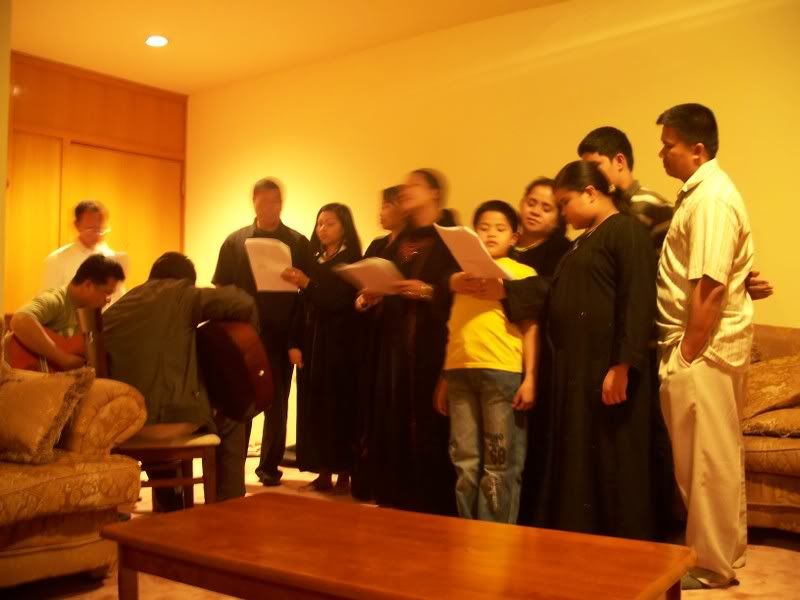
A group of carolers came by with songs in Tagalog.


But there's always those who prefer ipod downloads...


Here's the first one up on Christmas morning:


So I had time for a quiet breakfast.


The presents were few, but mostly appreciated.


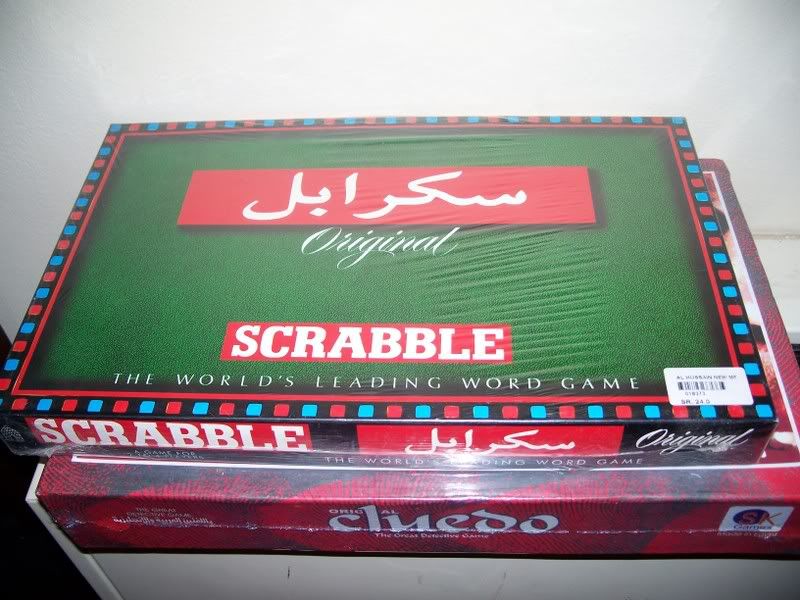
With the exception of the Scrabble game that ended up having Arabic letters instead of English ones...Oops!


Even the cleanup went smoothly.
Hope you had a happy one, too!

Saturday, December 22, 2007

If I Were Georg Friedrich Handel


If I had a gift such as Handel, I would place these passages in Isaiah in a musical setting, and listen to them sitting in front of a lighted Christmas tree with a cup of hot chocolate:


Sanctify the LORD of hosts himself; and let him be your fear, and let him be your dread. And he shall be for a sanctuary; but for a stone of stumbling and for a rock of offence to both the houses of Israel, for a gin and for a snare to the inhabitants of Jerusalem. And many among them shall stumble, and fall, and be broken, and be snared, and be taken. Bind up the testimony, seal the law among my disciples. And I will wait upon the LORD, that hideth his face from the house of Jacob, and I will look for him. (Isa 8:13-17)
This scripture reminds me that religion can often be a stone of stumbling for me, but if I will look for Christ, he can be a sanctuary and a place of saftey.

Therefore is judgment far from us, neither doth justice overtake us: we wait for light, but behold obscurity; for brightness, but we walk in darkness. We grope for the wall like the blind, and we grope as if we had no eyes: we stumble at noonday as in the night; we are in desolate places as dead men. And the LORD saw it, and it displeased him that there was no judgment. And he saw that there was no man, and wondered that there was no intercessor: therefore his arm brought SALVATION unto him; And the Redeemer shall come to Zion, and unto them that turn from transgression in Jacob, saith the LORD. (Isa 59:9,16,20)
Christ was sent into the world to dispell the darkness that often overcomes me. I relate with these verses that describe my searchings as groping for the wall as if blind. I've also felt the darkness of the soul that Isaiah describes.

Yea, in the way of thy judgments, O LORD, have we waited for thee; the desire of our soul is to thy name, and to the remembrance of thee. With my soul have I desired thee in the night; yea, with my spirit within me will I seek thee early: for when thy judgments are in the earth, the inhabitants of the world will learn righteousness. Lord, thou wilt ordain peace for us: for thou also hast wrought all thy works in us. (Isa 26:8,9,12)
This scripture is for those who yearn for something in the night which they cannot name--may the Lord ordain peace to us in this season.

In that day shall this song be sung in the land of Judah; We have a strong city; SALVATION will God appoint for walls and bulwarks. Thou wilt keep him in perfect peace, whose mind is stayed on thee: because he trusteth in thee. Trust ye in the LORD for ever: for in the LORD JEHOVAH is everlasting strength. (Isa 26:1,3,4)
This is the song I have in my heart when my faith and confidence are strong and whole. Though I stray and I complain and fret, deep inside there is a conviction that Jehovah is everlasting strength!

Neither let the son of the stranger, that hath joined himself to the LORD, speak, saying, The LORD hath utterly separated me from his people: neither let the eunuch say, Behold, I am a dry tree. For thus saith the LORD unto the eunuchs that keep my sabbaths, and choose the things that please me, and take hold of my covenant; Even unto them will I give in mine house and within my walls a place and a name better than of sons and of daughters: I will give them an everlasting name, that shall not be cut off. Even them will I bring to my holy mountain, and make them joyful in my house of prayer: their burnt offerings and their sacrifices shall be accepted upon mine altar; for mine house shall be called an house of prayer for all people. The Lord GOD which gathereth the outcasts of Israel saith, Yet will I gather others to him, beside those that are gathered unto him. (Isa 56:4,5,7,8)
I would love to make this the most beautiful song of all. It is to all those who feel they are different, who are outcasts, who need the love that God has to offer. He reaches out to us and gathers us into his holy presence.


For the people shall dwell in Zion at Jerusalem: thou shalt weep no more: he will be very gracious unto thee at the voice of thy cry; when he shall hear it, he will answer thee. And though the Lord give you the bread of adversity, and the water of affliction, yet shall not thy Teacher be removed into a corner any more, but thine eyes shall see thy Teacher: And thine ears shall hear a word behind thee, saying, This is the way, walk ye in it, when ye turn to the right hand, and when ye turn to the left. Moreover the light of the moon shall be as the light of the sun, and the light of the sun shall be sevenfold, as the light of seven days, in the day that the LORD bindeth up the breach of his people, and healeth the stroke of their wound. Ye shall have a song, as in the night when a holy solemnity is kept; and gladness of heart, as when one goeth with a pipe to come into the mountain of the LORD, to the mighty One of Israel.
I pray that in this season my eyes will be opened to see the great Teacher. I wish for the light of the sun to come into my soul. I want it to heal, to bind the breach, to bring peace and the song of gladness. Happy Christmas, my bloggy friends.

Thursday, December 20, 2007

Three Weeks of NaBoMoReMo

Still going strong and right on track for finishing the Book of Mormon by the end of the month! You know what is harder for me than making it through the Isaiah passages? You guessed it, I can't stand all the war stuff in the latter chapters of Alma. We're into the large plates now, so we have a lot of historical information (thankfully) abridged by Mormon. These chapters on wars and war strategies are very difficult for me to read. There are many yukky parts like kings being stabbed and Amalickiah swearing an oath to drink Moroni's blood, and dead bodies, and well, you know.


I just cannot see why it is necessary for the righteous Nephites to involve themselves in so many battles. Supposedly they believe the promise that the Lord made them that if they were righteous they would be protected and never brought down into captivity. It seems to me that they could rely on their righteousness and/or leave the lands of the Lamanites' possession, like Nephi did early in the book.

I've always really admired Moroni because of the verse that says that if all men had been, and were, and ever would be like unto him, the very powers of hell would be shaken forever. But I was disappointed to read one of his letters today. He just doesn't sound very nice, kind or fair. Ammoron sends to Moroni to ask him to exchange prisoners. Moroni writes back telling Ammoron how ignorant he and the rest of the Lamanites are concerning the gospel (I would tell you these things if ye were capable of hearkening unto them), he tells him he is a child of hell, and he refuses to negotiate unless the Lamanites will exchange a Nephite man, wife, and children for one Lamanite prisoner.

Ammoron's response to all this is actually pretty admirable, considering his point of view. He says: you have murdered my brother, I am not afraid of your threats, I will exchange prisoners according to your request since I want my men of war back, so we can fight you. Furthermore, we don't know anything about a God, but neither do you, and if there is a God, he has made us as well as you! And if there is a hell, won't God send you there for murdering my brother?

Anyway, I don't think I'm getting what I am supposed to be getting out of these war chapters. Peace out.

Wednesday, December 19, 2007

"The Church is True"--A Solid Position


Each first Sunday of the month these words can be heard echoing through microphones in LDS Church buildings throughout the world, "I know the Church is true."

Recent comments on my last post have prompted me to do some thinking on these words. In the past I have felt that these words are too broad and ambiguous to be useful. How can one "know" something that relies on matters of faith? Wouldn't it be better, as Rich suggested, to use the words "I feel," or "I believe," or even "I testify?" Wouldn't "I know" have to be reserved for cases when one has actually touched the wounds in Jesus hands and feet and side, or when a conversation with God has taken place wherein he has told the seeker that he chose Joseph Smith to restore his Church to the earth? What is "the Church?" Isn't it an imperfect, changing, adapting institution that seeks to implement Gospel truths? And what does "true" mean, anyway?

A few statements from fellow Latter-Day Saints have helped me to understand why they feel justified in using the words "I know the Church is true." Linda Hoffman Kimball said:

I understand the need for using the word "know." For me the restored Gospel, the authority and ordinances of the Priesthood, the divine guidance of this Church are the truest things I know. My conviction about these things is the standard by which I measure all other things claiming to be "true" or for anything else I say I "know." To use another verb might lessen the impact, the authority, the imperative this personal revelation has for me. I know what I mean when I say I know, but I'm less certain what others mean when they say it.

Another reason I think Church members use the word "know" is to underscore the exclusivity of the truth claims of Mormondom. This is a touchy subject in our modern culture. When most people want to hear "If it works for you, then God bless," Mormons unabashedly declare that Jesus Christ is the only Way, the Truth, and the Life; that angels came again; that ancient translated books bear witness of Christ; that ordinances essential to spiritual progress are necessary for everyone and available to them now or in the eternities. Some Mormon folk may think that to say "I believe" sounds too much like the broader cultural norm of "my truth is as good/valid/right as your truth."

Bookslinger said:
I can also honestly and boldly state that I know some things are true, because the Holy Ghost caused me to know. He not only told me, but he transfered in, or poured in that knowledge to me. Even more descriptive, he burned that knowledge into me, like page 38 of Gospel Principles, Chapter 7:

The convincing power of the Holy Ghost is so great that there can be no doubt that what he reveals to us is true. President Joseph Fielding Smith said:

“When a man has the manifestation from the Holy Ghost, it leaves an indelible impression on his soul, one that is not easily erased. It is Spirit speaking to spirit, and it comes with convincing force. A manifestation of an angel, or even the Son of God himself, would impress the eye and mind, and eventually become dimmed, but the impressions of the Holy Ghost sink deeper into the soul and are more difficult to erase” (Answers to Gospel Questions, 2:151).

President Smith also said, “Through the Holy Ghost the truth is woven into the very fibre and sinews of the body so that it cannot be forgotten” (Doctrines of Salvation, 1:48).


Yes, I could say I believe or I feel. That would be true. But the "whole truth" goes beyond that. To tell the whole truth, I have to say "I know" that a) God the father lives, b) Jesus the son of God, lives and is the Savior, c) the Book of Mormon is true (ie Jesus really visited the Nephites, etc), and d) Joseph Smith's first vision really happened.

I think that when they assert that "I know the Church is true," many Mormons are coming from the position that the claims made by the Church are authentic and conforming to reality. This would mean that, among other claims, Joseph Smith had a genuine encounter with a physical God, and that he translated an ancient record that was tangible. These are the types of things they wish to communicate in their testimonies.

In his recent talk at BYU-H, Elder Ballard said, "Our position is solid; the Church is true." I am interested in the solidity of my readers' positions--do you frame your testimony with the words, "I know the Church is true?" What does this mean to you? How is your "knowledge" different than belief?

Sunday, December 16, 2007

Defining our Mormonism on Blogs

I may be the only blog in the Bloggernacle to react with consternation at Elder Ballard's recent injunction to blog!


Elder Ballard has asked BYUH students to "join the conversation by participating on the Internet, particularly the New Media, to share the gospel and to explain in simple and clear terms the message of the Restoration." His message makes me nervous. For some of you, whose blog messages share the gospel and speak in glowing terms of the message of the Restoration, this Apostle's approbation will be welcome. But I'm a bit concerned about his caveats. Elder Ballard says that "we cannot stand on the sidelines while others, including our critics, attempt to define what the Church teaches...We are living in a world saturated with all kinds of voices. Perhaps now, more than ever, we have a major responsibility as Latter-day Saints to define ourselves, instead of letting others define us."

These words bother me because they presuppose a blanket "definition of Mormons." As we have seen in our different conversations here on the Bloggernacle, there are so many ideologies and strains of thought common among faithful Latter-day Saints. And there are a myriad of others invested in the Church who have much to add to our conversation. Although my blog often deals in the ambiguities found within Mormonism, I have felt more authentic sharing these things here on my blog than I have ever felt within the Wards and Stakes of the Church. Here I am defining myself, here I learn what I really think and feel rather than what I am told to think and feel.

If my major responsibility is to define myself, instead of letting others define me, I feel I am doing a good job here on "Hieing to Kolob." I chose the name of my blog because it represents my striving to reach the throne of God, but always finding myself falling a bit short. Sometimes my thoughts seem to be on some other planet than the typical Mormon. I feel that I share commonalities, but never really fit in with conservative Mormons, liberal Mormons, fundamental Mormons, new order Mormons, or any other subset. But here I have found community. Mormons don't always fit into a neat categorization! I've had my share of those who call me to repentance, but also those who are accepting of my strivings.

Recently I was asked to censor some aspects of my blogging by a Church leader (Perhaps this experience is informing my unease). I very much appreciated the way it was done. The way the leader approached me was respectful and classy. I agreed to change some things because my blog had the potential to negatively affect other members of the Church. Had the consequences been limited to myself, I may have had a much harder time with the decision. I have come to value the things I have learned while blogging. I feel a great resistance against religious censorship on our blogs. The value of discovering the beauty of diversity and wrestling with worldviews here seems much greater than any negative result that could occur. Faith can only increase with examination and grappling with truth. It may seem to lead us away for a time, but in the end doubt is a valuable part of our human experience.

I understand the Church's need to be more visible on the internet. It is true that in the past webspace has been dominated by antiMormon perspectives. It is good to see the proliferation of more positive presentations of the Mormon experience. I hope that this is what Elder Ballard is trying to promote. It seems to me, however, that we are not so much being asked to define ourselves on our blogs, but to present a unified, sanitized version of Mormons.