Wednesday, July 30, 2008

Robbery: To Be Equal With God

A few weeks ago there was a discussion at Mormon Coffee, an anti-Mormon evangelical Christian blog, about the LDS doctrine of progression and the human potential to become gods.  I felt the doctrine did not differ excessively from the type of divine potential expressed by Christian author C.S. Lewis (our favorite dry-Mormon!):

“It is a serious thing, to live in a society of possible gods and goddesses, to remember that the dullest and most uninteresting person you talk to may one day be a creature which, if you saw it now, you would be strongly tempted to worship, or else a horror and a corruption such as you now meet, if at all, only in a nightmare. All day long we are, in some degree, helping each other to one or other of these destinations. It is in the light of these overwhelming possibilities, it is with the awe and the circumspection proper to them, that we should conduct all our dealings with one another, all friendships, all loves, all play, all politics. There are no ‘ordinary’ people. You have never talked to a mere mortal.”

A commenter named "Germit" told me that I was misquoting the best.  He said that in this quote Lewis IS talking about an eternal progression of sorts, but attaining to the status of any part of the Trinity is far from his theology. Aaron Shafovaloff  corrected me in my interpretation of Lewis by saying that Christians don’t believe that we can ever be equal with God in knowledge or power. We will always be inferior “gods”, learning, subservient, dependent under the one Supreme God who is Supreme over all “gods” and worlds and universes and reality.  From what I understand of Mormon doctrine, we believe this, too.  We certainly do not aspire to attain to the status of any part of the Trinity.  Brigham Young declared: "Intelligent beings are organized to become Gods, even the Sons of God, to dwell in the presence of the Gods" (Discourses of Brigham Young, p.245).  In his view, mankind would remain the "Sons of God" and  always be beneath their Heavenly Father in an eternal hierarchy.

Now, I'm all for maintaining our distance from evangelical Christianity.  I believe we do have some very different ideas of the nature of God, and that our doctrines are not really compatible.  But on this particular point I felt unsettled because I feel we are being misrepresented.  An informal poll of a few mainstream Mormons has shown me that none of us think we will ever attain to the same status as God.  As far as I know, even our early authorities did not teach we would ever be equal with God the Father.  Am I wrong? 

Readers, what is your interpretation of eternal progression?  In what way will we always be inferior to our Heavenly Creator?  Do you know of any Mormon teachings which would suggest otherwise?

Friday, July 25, 2008

Fear

originally posted at Mormon Matters.

I am acquainted with physical fear.

A friend and I, two women of a certain age, accompanied our children to an amusement park on a weekday.  The children were allowed complete freedom, with an admonition to return to the meeting place at 5 pm.  My friend and I found myself with several hours to fill, and we decided to be daring.  Instead of finding a shady spot and chatting, eating several hundred dollars worth of funnel cakes, we thought we would recall our youth by riding the most scary rides in the park.  I had not been on one of these rides in many years and had forgotten the sensations associated with climbing 100 feet into the air with a crowd at my back.  When I reached the top of the rollercoaster, my forehead was slick with sweat.  I took my seat and the cars on the wooden tracks began to creak.  I felt distinctly unsafe.  The coaster crept to the edge of a precipice, and as it rolled off into thin air, a July Fourth sparkler exploded in my chest.  This was physical fear.

Mommy Meme

answers by Daughter #7, age 9


1. What is something mom always says to you?

Put away your shoes.


2. What makes mom happy?

Staying up all hours of the night.


3. What makes mom sad?

When (brother) is mean to me and so I start crying and then you're like, "Go to your room!"


4. How does your mom make you laugh?

Can you skip questions?


5. What was your mom like as a child?

She was the oldest.


6. How old is your mom?

49 (This is so not true. I am at least 4 months younger than this.)


7. How tall is your mom?

4 feet? (Also a heinous untruth.)


8. What is her favorite thing to do?

Work out.


9. What does your mom do when you're not around?

Write her book and blog.


10. If your mom becomes famous, what will it be for?

Blogging.


11. What is your mom really good at? (Don't say blogging!)

Writing.


12. What is your mom not very good at?

Having nice teeth. (yeah, I just went to the dentist to the tune of $4000.00)


13. What does your mom do for her job?

She used to be a P.E. person.


14. What is your mom's favorite food?

Nasty cheese, and spinach. (not to mention ice cream and chocolate.)


15. What makes you proud of your mom?

She reads my library books, and she is a good swim coach.


16. If your mom were a cartoon character, who would she be?

Donald Duck (Guess I sound like him when I yell)


17. What do you and your mom do together?

Go to the water park.


18. How are you and your mom the same?

We both have a picture of (sister) in our room.


19. How are you and your mom different?

Wrinkles.


20. How do you know your mom loves you?

She takes me to the water park.

Wednesday, July 23, 2008

Pioneer Day--Ashirah

For no reason that I can fathom, I am strongly affected by Pioneer Day. I greatly admire those who can commit themselves so irrevocably to a cause that is larger than themselves. Those who give up family, creature comforts, even their own lives for their religion are exceptional human beings. These people usually only come along rarely; yet here were hundreds of men, women, and children who united to try to build Zion on earth. Their journey was epic, and inspires those such as myself, who are related in no way other than by a common belief system. I know myself only too well--I'm no modern-day pioneer. I live a soft life, and I make few sacrifices to live my religion. But at least once a year, I welcome the opportunity to ponder what I give devotion to, and what might be possible--When you believe.

Hidden Up in the Mountains


from Thomas Bullock's journals, 1843-1849, vol. 4.

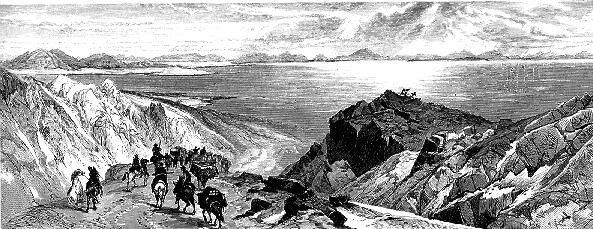
july Thursday 22 Many rushes by the sides of the Creeks. Elder Pratt came up to our Camp & consulted with W. Richards & G. A. Smith, when it was decided that O. Pratt, G. A. Smith with several others should go ahead & look out a place to plant; while W. Richards was to take the lead of the Pioneers in preparing the way thro' the Kanyon. Gather up & start at 9[.] soon pass the other Camping ground. went through a heavy Willow bed, overtook the last teams; graded the hill each side the Creek. when teams halted while extra hands go to repair the roads—then crossed over & entered the Kanyon; which required much hard work to make a road thro'—. succeeded in getting thro' the narrow spot of the Kanyon about 4 oclock, when we turned round the hill to the right. & came in full view of the Salt Lake in the distance, with its bold hills on its Islands towering up in bold relief behind the Silvery Lake—a very extensive valley burst upon our view, dotted in 3 or 4 places with Timber. I should expect the valley to be about 30 miles long & 20 miles wide. I could not help shouting "hurra, hurra, hurra, heres my home at last"—the Sky is very clear, the air delightful & altogether looks glorious; the only drawback appearing to be the absence of timber—but there is an Ocean of Stone in the mountains, to build Stone houses, & Walls for fencing. if we can only find a bed of Coal we can do well; & be hidden up in the Mountains unto the Lord.

Sunday, July 20, 2008

Baurak Ale and the Bloggernacle

When I joined the Church in 1979, the Doctrine and Covenants contained, in places, some code words for some of the early leaders of the Church. Members were taught that these code names were used to hide the identities of Joseph Smith and some of his associates so they would not be used in lawsuits against the Church. A short time before I left on my mission in 1981, the new triple combination became available. In this new printing, the code names had been changed to the real name. Now, a student of the Doctrine and Covenants will no longer encounter "Barauk Ale," "Mehemson," or "Horah," but Joseph Smith, Martin Harris, or John Whitmer.

I think these names are fascinating--not in a Hugh Nibley sort of way, but because it interests me to speculate on who chose the names and why they were assigned to certain people. Oliver Cowdery's code name was "Olihah," which seems to be a sort of Book-of-Mormonization of his real name. Imagine using this type of secret code in the Bloggernacle--if you wanted to criticize someone, you could just call him "Stevihah." That way, everyone would know who you were talking about, but he wouldn't be able to sue you!

Other names seemed to be combined from two different Biblical characters: WW Phelps was referred to as "Shalemanasseh." Just look how well that technique fits when we apply it to fmhLisa. Since she hasn't told her mother about her blogging yet, she really needs a code name. How about "Debezebel?"

Then there's the name (title?) Baneemy. This code was such a secret that no one was quite sure who it referred to! Several men claimed to be Baneemy, including Charles B. Thompson (who published a periodical titled "Baneemy's Organ") and Lyman Wight. To solve the problem, Orson Pratt interpreted the word to mean "mine elders." We might get the same problem by publishing a statement such as this:

"Mulapul is far and away the most intelligent and talented writer in the Bloggernacle."
I remember in the pre-1981 era, Sunday School D&C classes used to love to speculate about the use of these names. Did they show off Joseph Smith's knowledge of Hebrew? Were they proof that he knew the name of Enoch's father before the discovery of the Dead Sea Scrolls? I'm afraid that some of you younger bloggers may have missed the fun. In fact, I wonder if some of you are even aware of these nicknames. Know ye, or know ye not? Feel free to date yourselves in the comments.

Yours,
Borihah in Vern-ale

Tuesday, July 15, 2008

Is the Mormon God a Finite God?

Most of us would feel very uncomfortable with the notion that God was anything but omnipotent, omnipresent, omniscient. Indeed, at first I couldn't agree with Dennis Potter's description of a Mormon God who was finite, even if it did help to explain the problem of evil and suffering in a created world.
"In some sense," Potter explains, "God cannot eliminate all of the pointless evil that exists."

I don't agree.  I believe that God can eliminate evil, but my current thinking is that he intervenes in worldy affairs very, very infrequently.  Though Potter never won me to his way of thinking, he does present a very cogent argument which got me thinking about Mormon ideas on the nature of God. And I am beginning to entertain the idea that perhaps our God is finite in some ways.

Latter-day Saint doctrine on the creation differs slightly from mainstream Christianity.  We believe that instead of creation ex nihilo, or from nothing, God organized elements which already existed to make the earth.  Apparently, there were some eternal principles already in place which God could not violate.  In the same way, he created humans.  We existed as eternal intelligences which God organized into spirit beings.  Then these spirits participated in developing a plan whereby we would come to earth to receive bodies and an education.   Because we were intelligences who already existed, God's power to create us in certain ways is limited.  This answers the question Christian theologians wonder of why God couldn't have created beings who could learn without having to suffer. 

Does this make God finite?  In a way, I suppose it does.  He does not have the power to work outside of the laws of the universe.  He must work within certain parameters in developing a plan for the salvation of his creations.  The Mormon Gnostic adds that
"if good and evil, light and darkness, are primordial principles, then they are not created by God, and God does not have the power to eliminate them.  The need to explain how an all-perfect God could allow suffering as the manifestation of evil becomes a moot point, because evil is fundamental to the fabric of our cosmos."
What do you think?  Is the Mormon God a finite God?

Monday, July 14, 2008

Love At Home

DH: (out of the blue) Your mother is a pseudo-intellectual.

DS: What's a pseudo-intellectual?

Me: Someone who thinks they are intelligent, but they're really not.

DS: Why is she a pseudo-intellectual?

DH: Because she and her friends like to blog about theodicies (pronounces it wrong) and other strange things.

DS: What are theodicies?

Me: A theodicy is a theory of why God allows pain and suffering in the world.

DS: Why don't they stop blogging about it and just go do something about the pain and suffering in the world?

DH *kills himself laughing*

Saturday, July 12, 2008

The Good, the Bad, and the Ugly: A Theodicy

Why does a loving and an all-powerful God allow human suffering?

Here is an explanation I heard in Houston, Texas, and I think it has a lot of merit. It's distinctly LDS, it's very simple, and it combines several of the common theodicies.

  • The Good Adversity

  • The first type of adversity one might experience can be said to be "good." It is the kind of adversity that exists to strengthen the human soul. It may be a result of living in a fallen world. Just as a corollary to living we knock up against all kinds of adversity, such as natural disasters. I would add that not all people will choose to use this type of suffering as a chance to grow, but that is its purpose, and theoretically it is possible to overcome, and to learn from it.

  • The Bad Adversity

  • Another type of adversity that exists in the world comes as a result of bad choices that we make. This goes along with the scripture "Wickedness never was happinesss." In general, right living leads to peace, prosperity, and happiness, while wickedness, evil, and sin will tend to cause misery and pain. Note that this principle is not the only factor leading to suffering. That is why it may appear that a righteous person is experiencing much more adversity than his/her wicked neighbor.

  • The Ugly Adversity

  • Ugly adversity occurs when another person's free agency conflicts with someone else's life. God allows us to make our own life choices and rarely interferes. Thus innocent humans may suffer as a result of someone's poor choices. Latter-day Saints believe passionately that free agency is a vital ingredient for attaining sanctification. Thus ugly adversity must exist, causing unneeded suffering. Why did God organize the world this way? Because without choosing freely we could never develop the qualities necessary for godhood.


Now it's your turn! Tell me what works for you and what doesn't work in the above scenario.

Thursday, July 10, 2008

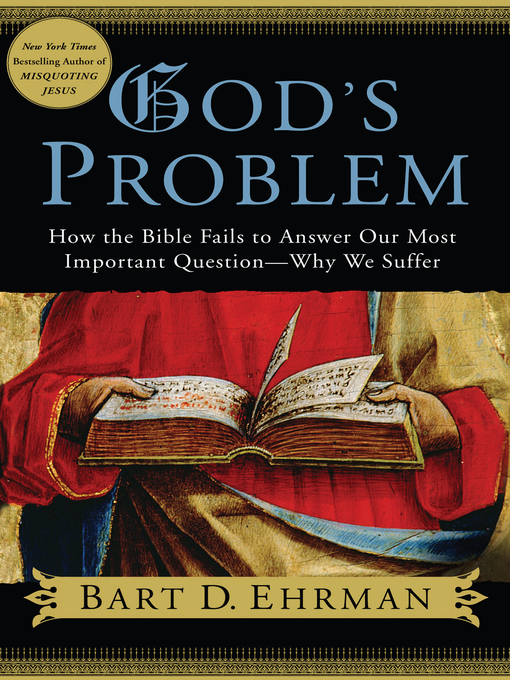
Bart's Problem, Or: How His Interpretation of the Bible Fails to Answer His Most Important Question

Now that I have finished reading God's Problem, I see that the entire work serves as an apology for why Bart Ehrman can no longer believe in the Christian faith. Ehrman, a fundamentalist born-again Christian, feels hurt and betrayed that the Bible is contradictory. Instead of seeing scripture as a collection of different people's attempts to make sense of God, (which is how I like to look at it), he points out its failure to present a cohesive answer to the question of why suffering exists. I can't help but feel that the man, not being able to fit the Bible to his fundamentalist theology, rejects it wholesale. He refuses to believe in a God who doesn't directly intervene in human affairs. He now self-identifies as an agnostic: "If there is a God, he is not the kind of being I believed in as an evangelical" (p. 125).

Instead of looking for a Deity that might more closely fit Biblical and philosophical thought, Ehrman completely rejects Christianity and uses the book as a soapbox to explain why there is no answer to the question of why God allows human suffering.

Since the problem is complex and there are many attempts by Biblical authors to address the question, it is not surprising that Ehrman's attempt fails. He has presented three main interpretations to the problem of theodicy and discussed each separately, pointing out the difficulties with each. I appreciate his efforts to make this subject understandable to the general reader. But in doing so, he has greatly oversimplified what philosophers have been grappling with for centuries. Perhaps there is more than one reason why God allows pain and evil to exist. (Come back tomorrow as I present an interesting LDS attempt to consolidate them!)

I also had issues with Ehrman's interpretation of the Bible. He jumps back and forth between what he presents (and ridicules) as the "Christian" view, and a more secular interpretation. Neither, in my opinion, is doctrinally correct. Just one example is his refusal to see a Messianic figure in any of the Old Testament writings, though the New Testament authors clearly present Jesus as the fulfillment of prophecy. A review of this book at Time magazine opines:
...his biblical expertise is a help and a hindrance, since his conceit is to
examine only explanations of suffering that appear in Scripture.
I would add that his conceit is to examine only his interpretation of what scripture has to say about the subject, ignoring those explanations presented by other theologians which he considers "pat," "simplistic," or "flawed." Having read Ehrman's Misquoting Jesus, which I felt was very thoughtful and enlightening, I was disappointed in this book.

Bart's problem may come down to one of human pride. Because he with his superior intellect and advanced Biblical training doesn't fully understand how a good, all-powerful God can coexist with a world that includes suffering, he assumes that God must therefore not exist.

Wednesday, July 9, 2008

I Don't Have a Problem With it...

Today I'm reading Bart Ehrman's God's Problem with the Exponent 2 group. I read another book of his, Misquoting Jesus, and reviewed part of it here for a Mind on Fire reading group. I adore this author for his zeal as a born-again Christian, seminary student and minister, and also for his later searching, questioning and doubting.

There are many problems with Christianity that I struggle with, but the one which led Ehrman out of traditional belief isn’t one of them. Not that it isn’t fascinating to read about Ehrman’s crisis of faith, because I can relate to this struggle.

He posits three assertions that all seem to contradict each other:

God is all-powerful

God is all-loving

There is suffering
Ehrman says that theologians and philosophers cannot reconcile all three. But for me, it makes sense that if suffering transforms us into the kind of being we need to become, God will allow this suffering because he loves us, and he will not use his power to take this suffering away.

Heb. 2:9-11 tells of how Jesus was made perfect through his suffering, and that we are sanctified the same way.

Now, I’m not finished with the book yet (just got it from the library yesterday!) but skimming through the part I haven’t read, I don’t see that Ehrman really addresses this view. The closest he comes is his notion of “redemptive suffering” where suffering can bring glory to God, or a greater good. He wonders why an all-powerful God could not have brought about the greater good in a different way.  He also covers the explanation I hear from Mormons all the time, about how God allows free agency, and he blasts that one pretty well.

As far as I have read in the book, he really hasn’t considered the view that suffering makes us saints (or gods, in the LDS view), and though suffering causes earthly pain and anguish, it really is the best way to make us more compassionate and perfected beings. 

I'll probably have more to say about this book as I get further into it.  Until then, please go visit Exponent 2 blog and participate in the discussion!

Tuesday, July 8, 2008

Making Waves

Today I got a surprise in my email from a little mouse...


I appreciate that this is a little odd but I found a card and thought of you. I don't have an address nor do I know when your birthday is but I thought I'd send it anyway. Hope you like it.

I love it, I love it! This is perfect for me. If I could, I would lie on the beach all day in exactly this pose. AND I have a bathing suit just like this, but in black. (It solves the thigh problem without having to wear a skirt.) And of course readers, you know how I love making waves!

FYI, my birthday is close to Thanksgiving. All cards graciously accepted.

Thursday, July 3, 2008

"It's a Free Country"

That's what I used to say to my brother when he objected to anything I did, like changing the TV channel, or throwing trash into his room. Even while abusing the phrase so flagrantly, we were always aware of what a momentous benefit it was to be living in one of the few truly free countries in the world. We learned about the precious privilege of freedom in social studies and history classes from first grade onwards, and we flamboyantly celebrated freedom each year on the Fourth of July.

In the upper-middle-class community where I grew up, students were given the opportunity to enter a Freedom contest every year by writing an original essay. I didn't keep mine, but I do remember one of my essays contained a quote from something I'd read in the Reader's Digest. In the story, a Soviet visitor was being shown around a U.S. city when he first arrived. His hosts pointed out some of the more interesting sites such as architectural landmarks, museums, universities. Each time, the Russian would reply that there were many similar places in his home country. The hosts soon tired of trying to impress the man. Then on their way home, the group stopped at a grocery store, and the Soviet visitor stood in the aisle in awe, tears running down his face as he gazed at rows and rows of food. Hundreds of boxes of cereal, many brands of canned vegetables, and a bakery where no one stood in line all day for a loaf of bread. This story impressed me and filled me with a sense of nationalistic pride. My young heart would nearly burst each year as I lay on grassy hillsides watching fireworks flare above me to the tunes of "America the Beautiful" or "The Star-Spangled Banner."

From a tender age, Americans are imbued with appreciation for our nation's freedom and the blessings of democracy and capitalism. We value them so highly we are willing to allow even those who do not believe in these precepts to speak and demonstrate against them. Living in such a pluralistic society gives us the special advantage of being able to understand paradigms. Perhaps I don't believe in socialism, for example, but I can comprehend the concept and see why those who hold certain views would behave or live the way they do. I wouldn't handle poisonous snakes, but I truly "get" the impulse of obscure Christian groups to demonstrate faith by putting themselves in a dangerous situation and placing their trust in a higher power. Likewise, I certainly hope that those not of my LDS religion might attempt to persuade me otherwise, but in the end respect my freedom to worship according to my conscience. If we want freedom of thought to exist in this country, we have to allow others to think differently than ourselves.

These beliefs place us in a precarious position. If the pendulum swings too far, we may find ourselves sanctioning pernicious practices that are truly harmful to society in the name of freedom. Might a vigilante be justified in killing child pornographers, for example? Can this vigilante also exterminate abortion doctors? Where does one draw the line?

This year we have seen how fuzzy the line of freedom can get in the case of the FLDS and Texas law enforcement. It has been difficult to determine if the YFZ group has crossed the line of harming women and children by their marriages to older men, or if this indeed is a situation where their religious paradigm is different but equally as valid as that of the majority.

This line of reasoning has led me to a more nuanced view of the Church's stand on same sex marriage. Many of you know that my personal beliefs support marriage for same sex couples, as well as provision for polygamous marriages. I see no harm coming from loving unions or from them using the word "marriage." I do wish that the Church would draw their line where it would not harm those who sincerely wish to live together without harm to themselves or others. I have no desire to wound those who I know to be sincere and loving. I wouldn't be surprised if a few years into the future the Church's stand on this will have greatly softened. But perhaps there is something I am unable to perceive in the mix. With all the pornography and child prostitution and the many evils that exist in today's society, should the line of freedom be drawn here to keep our society from descending into anarchy and licentiousness? This is a very real danger that comes from living in a free society.

To be clear, I haven't been convinced to throw my wholehearted support to the Church's efforts to define marriage. But I am starting to find a way to make sense of the paradigm.

As I celebrate freedom in the United States this Fourth of July, I wish to honor the many brands of cereals we have in the aisles of our grocery stores. I wish to salute each church on every corner of the streets of Summerville, South Carolina. I want to rejoice in the diverse colors and convictions of the people in my town and country. Let me see through their eyes for just an instant as I shake their hands. I want to stand in the aisle of the supermarket and cry at the amazing variety that I see.

Wednesday, July 2, 2008

BiV's Blog of the Month

Sometimes it gets a little intense over at Feminist Mormon Housewives. So here's the perfect blog for you when you want to lay back and have a chuckle or two :

Normal

Mormon

Husbands


The Normal Mormon Husband blogs about sports, TV, fast food, and family life with a great sense of humor. The blog has been around for three years, so some of you may have heard of it, but lately NMH has been putting out a couple of posts a week, and they are fun to read. This month he has given advice on multi-level marketing

If we are obviously not interested, please do not ask us for the contact information of any of our mutual acquaintances. Giving out their contact info makes us feel like Ralphie in "A Christmas Story" when he tells his mom that his friend Flick taught him how to swear. Ralphie knew he was throwing his buddy under the bus, but he was backed into a corner and had no other choice. Please, guys, don't back us into the corner.

He describes his experiences with anger management
The NMW and I invited two of our friends who were also big Lakers fans over to our apartment to watch the Lakers close out the series and then celebrate the championship together. We never popped the celebratory Martinelli's (you gotta love those rip roarin' Provo celebrations) that night because the Lakers got destroyed 120-87. In the midst of the blowout, I completely lost it. At one point during the game I got so upset with the Lakers that I picked up a copy of Sports Illustrated, tore it in half, yelled at the TV, and then threw the SI across the room. The other three people in the apartment looked at me with the same horrified expression that Ben from Lost had on his face when his daughter was shot. It was one of the single most embarrassing moments of my life and I still regret it today.

Read his Father's Day post full of affection for a dad who always urged him to put "more arch" on his basketball shots:
It got to the point where I thought my dad should just adopt Darrell Griffith of the Utah Jazz so that at least one of his sons always had enough arch on his shot. By saying this I don't want to give the impression that my dad is an overbearing David Archuleta-type parent who would lock me in a root cellar if I didn't score 20 points per game. He was involved and active, but never crossed that line. The phrase "More arch!" will always remind me that my dad cared enough to come to my games. He cared enough to be get involved. He cared enough to help me when I needed it. A lot of kids did not have that from their dads. I was fortunate that I did.

Most importantly, the Normal Mormon Husband gives invaluable advice to husbands on dealing with their wives. For example, he has urged husbands of expecting women to ditch the title "labor coach" in favor of terms such as "Water Boy" or "Sweat Mopper-Upper."
As a kid I used to envy the teen-agers who would frantically mop the sweat off the the floor at Jazz games after Mark Eaton or other large, sweaty men would fall down in the lane. Big Mark and his 7'4" body use to leave so much perspiration on the floor that a man once caught a 9-lb. bass in one of Eaton's sweat puddles. The role of the sweat-mopper-upper is a good model for husbands during labor for three reasons: 1) He keeps his job simple. 2) He plays an important role in ensuring peoples' safety. 3) He stays behind-the-scenes and only emerges when absolutely needed. This seems to be exactly what women want...

Also, if you really get into the NMH, go back to some of his early posts, such as "Manliest Movie Quotes." Be sure to read the comments!

Well, this is great summer reading, folks. I heartily recommend this blog.

Tuesday, July 1, 2008

Peace in Israel

The truce deal between Israel and Palestinian terrorist groups being brokered by Egypt went into effect a little over a week ago, and did not receive much attention. Perhaps this was because it was seen as very fragile. Indeed, it wasn't long before rocket attacks by Gaza militants and the beating of Palestinian journalist Mohammed Omer who was returning to his home after receiving an award in Great Britain occurred. Under the terms of the ceasefire, Israel was supposed to increase the amount of goods being transferred across the border, but due to the violations Israel instead closed most of the Gaza crossings. Today Israel has told Hamas it will fire "warning shots" at Palestinians who enter an area west of the Gaza Strip border fence, extending for several hundred meters. This announcement is expected to further raise tensions and weaken the truce.

It pains me to see that these groups are unable to beat their swords into plowshares. My time in the Middle East has shown me the volatility that exists in the region. There is much religious fervor on both sides. Jews and Muslims both have an ancient heritage which is tied to the land, and neither will back down. It is absolutely necessary that they learn to peacefully coexist.

I am not sure what could possibly bring about this change of heart on both sides. Perhaps education and personal exposure to other cultures could have an effect. I am not anti-Zionist, but I believe that the gathering of the Jews is more idealogical than physical at this point. The Jews' physical possession of the land of Israel may only come to fruition at the literal appearance of the Messiah. In fact, I am beginning to think that the Jews embracing their "tainted" diaspora natures could in fact be the means for them to approach peace with their neighbors.

Saturday, June 28, 2008

Writing Pink Notes

Many gems among the pages of the Women's Exponent demonstrate that although the magazine had the approval and encouragement of the General Authorities of the Church, the days of correlation had not yet begun. The first edition stated: "The aim of this journal will be to discuss every subject interesting and valuable to women." [1] It is remarkable how many diverse views and opinions were represented. Recently I came across this little item written by a non-Mormon:

WOMEN LOVERS


Perhaps you do not know it, but there are women who fall in love with each other. Woe be to the unfortunate she, who does the courting! All the cussedness of ingenuity peculiar to the sex is employed by the "other party" in tormenting her. She will flirt with women by the score who are brighter and handsomer than her victim. She will call on them oftener. She will praise their best bonnets and go into ecstacies over their dresses. She will write them more pink notes, and wear their "tin types," and when despair has culminated, and sore-hearted Araminta takes to her bed in consequence, then only will this conquering "she" step off her pedestal to pick up her dead and wounded. But then, women must keep their hand in. Practice makes perfect.
--FANNY FERN [2]

Affirmation, an organization for Gay and Lesbian Mormons, has suggested that relationships between women within the LDS community in the late nineteenth century were often celebrated or encouraged. They cite the following examples:
  • In 1891 the gay-associated Bohemian Club of Salt Lake was incorporated with both women and men included as members. Katherine Young Schweitzer, granddaughter of Brigham Young, was a chief organizer and benefactor.

  • Mormon suffragist Emmeline Wells reportedly praised the same-sex relationship of Francis Willard, President of the National Women’s Christian Temperance Union.

  • In 1903, the Young Woman's Journal published a poem by Kate Thomas, a devout Mormon who never married, apparently celebrating her same-sex love. Thomas wrote of her lover, "from her lips I take Joy never-ceasing." (Yeah, I would say this was just a poem written from the point of view of a man. But...)

  • In 1912 the same magazine paid tribute to "Sappho of Lesbos." (So were the editors just completely clueless?)

  • In 1919, the story of Primary general president, Louise B. Felt, and her first counselor, May Anderson appeared in the Children’s Friend. Their loving relationship was described as the "David and Jonathan" of the Primary General Board. [3]

  • From 1920 to 1938 Mildred J. Berryman conducted a study of lesbians living in Salt Lake City. One of the women Berryman interviewed for her study, Cora Kasius, was a staff member of the Relief Society who went on to become a faculty member at Barnard College and a liaison officer for the United Nations. [4]

It was not until decades later, in 1952, that J. Reuben Clark of the First Presidency officially addressed the existence of lesbianism, warning Church members against the practice.

Do you see these instances as understanding and acceptance by the LDS community of same-sex relationships between women? Did the warnings of J. Reuben Clark represent a change in Church policy, or was it the beginning of a greater awareness of the issue? Include in your response your thoughts on how an article such as "Women Lovers" could appear in the pages of the Exponent.


_______________________________________________________

[1] The Woman's Exponent 1872-07-15 vol. 1 no. 1, p. 32.

[2] The Woman's Exponent 1873-04-15 vol. 1 no. 22, p. 175

[3] Also in the Ranks: Lesbian Mormon History, 1998 Affirmation Gay and Lesbian Mormons. Not having access to the original sources, I have no opinion as to whether these references represented female homo-eroticism or whether they were cases of deep non-sexual friendships among women. Affirmation presents them as examples of acceptance of lesbian relationships in the Mormon community.

[4] Also in the Ranks. Berryman’s work has the distinction of being the first community study of lesbians performed in America.

[5] Relief Society General Conference, 2 Oct, 1952. Second Counselor J. Reuben Clark warned the women of the Relief Society against "self-pollution," prostitution, and "homosexuality, which it is tragic to say, is found among both sexes."

Monday, June 23, 2008

Cat on a Hot Tin Roof

I swear I must have a split personality.

We went to our new ward on Sunday. I felt really happy when we walked in. It's such a comfort to go anywhere in the world and have a ready-made family to go to when you arrive. You know that the three men sitting on the stand are the Bishop and his counselors; that Gospel Doctrine will probably be held in the chapel; that the Relief Society room is the one with the comfortable chairs. You know the Elders Quorum president can help you out if you need some heavy lifting done for your move. You'll be within one SS lesson of where you left off in your old ward. All those things were so nice. After Sacrament Meeting it turned out that the family who sat in front of us lived in the same subdivision we will be moving in to. They have a nine-year-old daughter. To find out if they would be in the same Primary class, my LDS-savvy nine-year-old daughter asked her when her birthday was. The child replied by giving the exact same date my daughter was born!

I felt completely at home in the ward. I answered a question in RS with a standard Mormon reply and I really believed what I was saying. I was invited to a book club group and promised to attend. I was deeply immersed in my Mormon brain, and everything was perfectly OK.

I don't know what to say. I want to get along here. I don't want to be the odd duck. I want to have validity in the ward. I want to be a nice Mormon mommy. I feel happy, I feel the Spirit when I spout the Mormon line. I know I can project a version of myself which will be welcomed and accepted here. So why do these things bother me:

  • The bishop gave a sacrament meeting talk on the importance of "the family."

  • The Gospel Doctrine teacher mentioned 3 times during the lesson that he was the former Bishop. In spite of this, he taught some very disturbing views of Alma 5, including the necessity for members to "forgive themselves," and that we are saved by "all that we can do."

  • The RS lesson was a talk by a GA which was given to a group of priesthood holders. Little was changed, except to note that as women, we could "apply it to ourselves," and a question was inserted in the middle somewhere about how could we encourage the brethren to magnify the priesthood.

  • The sisters meet monthly for a Deseret Book club.

Is it just the natural man which prompts me to dissect and criticize these aspects of my ward experience? I'm truly a kinder and a better person when I live the Mormon gospel. Why can't I excize the strange liberal being who doesn't want to eat red jello, live in a subdivision, vote Republican, or drive a mini-van? Why is there such a huge separation between the two of me? It seems that others on the Bloggernacle have somehow fused their diversity and their Mormon-ness, but not me. It's like I'm either completely Molly-fied or flaming radical. I'm standing on a barbed-wire fence longing to throw myself over to one side or the other. Instead, I painfully perch on the barbs, facing this way one day and that way the next.

Ouch.

Friday, June 20, 2008

Unity and the NAS

If Blogger works properly, this will post while I am in the air on my way back to the States. Last Friday DH and I gave talks on unity in Church. If you were there, you would have found them quite interesting, for, as he said in his remarks, we are not exactly poster children for unity.

I won't reproduce my talk here, for I plan to use several points from it in my presentation at Sunstone in August. But I had an experience with it that was interesting. In one of the scriptural citations I used in my talk, I quoted from the New American Standard Version of the Bible. I almost always use the King James Version in both my study and my teaching. I feel quite comfortable with the Old English, having studied the Bible in this version from my youth. But occasionally I will compare versions, especially when there is a doctrinal sticking point. Friday I used Phillippians 21-5: in the NAS just because I liked the turn of phrase a little better (I don't like the word bowels), and it seemed to make my point about unity a little clearer:

1 Therefore if there is any encouragement in Christ, if there is any consolation of love, if there is any fellowship of the Spirit, if any affection and compassion, 2 make my joy complete by being of the same mind, maintaining the same love, united in spirit, intent on one purpose. 3 Do nothing from selfishness or empty conceit, but with humility of mind regard one another as more important than yourselves; 4 do not merely look out for your own personal interests, but also for the interests of others. 5 Have this attitude in yourselves which was also in Christ Jesus…

(Click here to compare the KJV.) Interestingly, several people came up to me afterward and asked for this particular scripture reference, saying they were very touched by it. I gave them the reference without mentioning that I had used the NAS. I didn't mention it in my talk, either.

It's odd that I've felt pricked by my dishonesty. I'm trying to figure out what's been bothering me. Is it because I used an "unauthorized" version? Or that I wasn't straightforward about its provenance? Perhaps it's more that I didn't do justice to my source. If I'm not ashamed of the gospel of Christ in the NAS, should I necessarily have to proselyte for it?

Do you use other versions of the scriptures? Do you do it secretly, like I do?

Thursday, June 19, 2008

Thirty Minutes and Counting

In thirty minutes they will come and unhook me from my I.V.--I mean, from my internet access. So wish me luck on my move, bloggy friends. Tomorrow we will attend our meetings in the late afternoon then head off to the airport where we will catch a flight at 1 AM for the States. There are a lot of strange emotions stirring up around here, so I'll keep notes and let you know how things went when I get my blog back!

Namaste.

Monday, June 16, 2008

Call to Prayer


Although I am thrilled to be returning to the States, there are a few things I will certainly miss. This is a picture I took from the roof of our building here in the Diplomatic Quarter in Riyadh. The building you see in front is a mosque. Every morning about sunrise (and 5 times throughout the day) the call to prayer echoes from the top of the spire and from another mosque nearby. I'm really going to miss the beautiful haunting quality of the muezzin's voice as he chants the Arabic invitation, "Make haste towards prayer." (Listen to the adhan here.) Each one has a distinctive voice, and you can often hear two or three voices blending if you are within the sound of several minarets. This has been the start of my day for 8 months now, and it helps me to remember to turn my thoughts toward the Divine each day as I awaken.

Sunday, June 15, 2008

Compartmentalization Woes

I wouldn't describe myself as an integrated person. I like to compartmentalize my life. I go to Church on Sunday and I can be the Seminary Teacher/mom with 8 kids/faithful Mormon and I know how to talk the talk. Then I go on my blog and emote about feminist issues and polygamy and the washing of feet. But now that DH is a blogger he actually TELLS REAL PEOPLE where to find me online. And someone who knows me through blogging has MOVED IN TO MY WARD!! (Hi, Tim!) Recently I joined Facebook and GoodReads, and I made the awful mistake of adding Church friends, my children, Seminary students, and blog friends. It's caused the most awful angst.

For example, there are books I want to review intellectually on Goodreads but because of my audience I'm feeling a strange compulsion to say things like, "you don't want to read this book, there was way too much sex in it--wait, this is a book everyone should read because it deals with issues we should never forget!"

And then my kids were checking out my friends on facebook and wanted to know who "Nick" was. (A gay guy I met blogging. Great example of online behavior, Mom.)

So all this makes me think. When I get to my new ward, who will I be? Will I sit back quietly and let everyone see me as Molly Mormon? Will I compartmentalize the difficult and unorthodox parts of myself?

Friday, June 13, 2008

The Complete Moving Story

OK, I've finished up with classes, planned and executed the end-of-year Seminary scripture chase activity, ditto Seminary Graduation, written and presented my final Sacrament Meeting Talk, been around turning in keys, library materials and supplies, and am down to 2 days of proctoring finals (oh, and I still have to pack). But I'm feeling some relief and have some time to post an update on our moving plans!! They haven't been really finalized until quite recently. But DH has accepted a job back in the States, so we are moving to....


South Carolina!!


I'm very thrilled with this decision, since we will be close[r] to my parents, who I haven't seen in several years. It's a very nice community close to Charleston, and I hear that housing is affordable right now. The one thing I'm not thrilled about is gas prices. Gasoline here is about 21 cents per gallon. Yup, 21 cents. But then again, women aren't allowed to drive here, so I guess that is the trade-off. I'll be going to a place I can legally drive, but won't be able to afford road trips. Bummer.

My plans for myself are to enjoy my summer sitting around the pool and getting a tan, working out at the gym, losing 10 pounds, jetting off to a few conferences, vacationing in the mountains and at the beach, setting up a new household and replacing all the essentials I had to get rid of when we moved to Saudi--in short, living the cushy life of a suburban housewife.

Then I have a few writing projects I'm hoping to finish up. But no pressure. I DO NOT plan on: Getting a job, getting pregnant, any of my children getting pregnant, having my older children move back home, getting called as the early morning Seminary teacher.

The plane takes off June 21, 1:00 AM!!

Saturday, June 7, 2008

Conversion: Alma vs. McConkie

In our Sunday School discussion this week the lesson manual asks the following: "Throughout his address to the people in Zarahemla, Alma spoke of experiencing a “mighty change” of heart and being “born of God” (see Alma 5). We often use the word conversion when we speak of this experience. What does it mean to be converted? Is conversion a single event or a process?" Our class was unable to come to a consensus on this question. What do you think? Have you experienced conversion? For you, was it a single event, or a process?

When I read Alma 5, it seems to describe a born again experience much like that extolled by the evangelical Christians. I myself had a "born again" experience at age 18. Though I was raised in a Christian home with a father who was a Protestant minister, this was an experience during which I came alive to the things of the Spirit. For me it was a single event, though there has been a process of sanctification including my decision to join the LDS church and the development of testimony of several aspects of the Gospel.

Elder Bruce R. McConkie taught:

“Except in … unusual circumstances, as with Alma (Mosiah 27), spiritual rebirth is a process. It does not occur instantaneously. It comes to pass by degrees. Repentant persons become alive to one spiritual reality after another, until they are wholly alive in Christ and are qualified to dwell in his presence forever” (Lesson 22: “Have Ye Received His Image in Your Countenances?”, Book of Mormon Gospel Doctrine Teacher’s Manual, (1999),98)

When this quotation was read during our class, I felt that it referred more to the process of sanctification than what Alma is describing in Alma 5. Somehow I doubt that my spiritual rebirth is "unusual." I've heard many Mormons, converts and lifelong members, describe a mighty change as a single experience which they can pinpoint.

But I wonder if McConkie deserves more credence than I have heretofore supposed. In a recent FHE, we were speaking to our teenaged daughters about their testimonies of the Book of Mormon. They felt uncomfortable with the admonition of Moroni to pray about the book. They insist that as long as they have been aware, they have known the Book of Mormon was a true scriptural record, and that to pray about it would be a lack of faith. They relate better to a process-oriented approach, where they continue to learn more about the scriptures and develop more skill in applying them to their lives. In their case, and in that of many life-long members, is "conversion" unnecessary?

I continue to worry about this, for the Lord told Alma:
Marvel not that all mankind, yea, men and women, all nations, kindreds, tongues and people, must be born again; yea, born of God, changed from their carnal and fallen state, to a state of righteousness, being redeemed of God, becoming his sons and daughters; And thus they become new creatures; and unless they do this, they can in nowise inherit the kingdom of God.

Thursday, June 5, 2008

Women in God's Image

So God created man in his own image, in the image of God created he him; male and female created he them.

What does this scripture reveal about the gender of Deity? Interpretations have been wildly variant. Some feminist exegesis goes as far as to suggest that this scripture shows that God is neither feminine nor masculine and possesses no physical body. For Mormons, it is just the opposite. If we are created in the image of God, Latter-day Saint theology teaches, "God" must have a physical body and manifest as both a Heavenly Father and a Heavenly Mother. Paradoxically, scripture focuses exclusively upon the masculine aspect of God, and even the more nurturing qualities mentioned in Holy writ are attributed to God the Father.

The contemporary women's spirituality movement which traces its beginnings to the 1970's has given women the impetus to search for the feminine aspect of the Creative Force. Once again, Mormon women were ahead of their time, with their poems, hymns, and yearnings to understand the Heavenly Mother beginning in the nineteenth century with Eliza R. Snow. But now that modern woman has accepted the possibility that there is a Feminine being in whose image they are created, Latter-day Saints have been curtailed in their approach to the female component of the Godhead. We have been cautioned that it is inappropriate to pray to a Mother in Heaven:

“Logic and reason would certainly suggest that if we have a Father in Heaven, we have a Mother in Heaven. That doctrine rests well with me. However, in light of the instruction we have received from the Lord Himself, I regard it as inappropriate for anyone in the Church to pray to our Mother in Heaven...Search as I have, I find nowhere in the standard works an account where Jesus prayed other than to His Father in Heaven or where He instructed the people to pray other than to His Father in Heaven. I have looked in vain for any instance where any President of the Church, from Joseph Smith to Ezra Taft Benson, has offered a prayer to ‘our Mother in Heaven.’ I suppose those...who use this expression and who try to further its use are well-meaning, but they are misguided. The fact that we do not pray to our Mother in Heaven in no way belittles or denigrates her.” (Gordon B. Hinckley, “Daughters of God,” Ensign, Nov 1991, 97.)

Because of this admonition, some Latter-day Saints are hesitant to search for more information about the Divine Feminine. They may feel it is a useless endeavor since we have no revealed knowledge of Her. But this attitude flies in the face of everything we know about God. Since the beginning, when man and woman were cast out of the symbolic Garden of Eden, they have been on a quest to return to the presence of God. Religious teachings in our scriptures and in the Temple urge us to search for Deity and strive for union. Revelation comes through striving and asking. Mankind has developed whatever knowledge we have of God through this search. Whenever prophets or spiritually attuned men and women have gained revelation, they have attempted to share this with their compatriots. Rudger Clawson opined: "It doesn't take from our worship of the Eternal Father, to adore our Eternal mother, any more than it diminishes the love we bear our earthly fathers, to include our earthly mother in our affection." (Rudger Clawson, "Our Mother in Heaven", Latter-day Saints Millenial Star 72 [29 Sept 1910]: 619-20).

Voltaire remarked, "Dieu a cree l'homme a son image, et l'homme le lui a joliement rendu. (God made man in his own image, and man has returned the compliment.)" In many of our human cultures, the search for God has been the province of males. This has returned to us a remarkably well-developed picture of the masculine manifestation of Deity. But what is the effect upon women of the habitual exclusion of the Divine Feminine? Amber Satterwhite has asked:
"Our image of Her dictates the role of women in mortality. If that role is subservient and devoid of respect and power, then that is the attitude we will have toward mortal women as well. If Heavenly Mother is silent, unapproachable, and beyond mystery in heaven, is it any wonder that Her earthly daughters also feel ignored, silenced, and misunderstood, too?" (Amber Satterwhite, "God the Mother in Mormonism")

I think the deliberate distance patriarchal religion has maintained with the female aspect of God has made many women of previous generations hesitant to fully participate in the discovery and revelation process. A marvelous new generation of women has now come of age in the Mormon world. These women have grown up in a society where females are powerful, valued and contributing members of the family and the community. Men of this younger generation have negotiated relationships with powerful women. They work with these women, they are married to them, they may even be their sons. Members of the Church increasingly find it difficult to imagine a Heavenly Mother who is uninvolved and subservient. They are ready for a more fully developed revelation of the Divine Feminine.


What difference could it make in women's spirituality to be able to image God as the one to whom they are alike? What difference could occur in men's lives to perceive God as a nurturing Mother figure? What types of new understandings would flow from these images of God?

Monday, June 2, 2008

A Singing God

God sang to me on an early autumn day in Texas.

Two years ago, I was at the end of my rope. I had planned a day to Galveston with friends, to get away from it all. We were to leave after the children were in school, drive the hour down from Houston, and spend some peaceful time on a lonely stretch of sand, walking, dipping toes in a cool ocean, and searching for shells. We'd be back before the children were home, and our trip would bother no one.

But plans fell through, as they often do, and the day had to be sacrificed on the altar of being a responsible person. I was devastated. The hope of this day was the only thing getting me through, and I didn't know how I could carry on without it. My sandals still on my feet, I climbed into the car and beat my fists against the steering wheel. I cried a bit (not enough to run my mascara), and blew my nose. I sent a thought up in the air to whoever might be listening that this was not fair, that it was more than I could bear. Then I turned the key to the ignition, and flipped the dial to the radio. It turned to a station I never listened to, and I heard a song I hadn't heard or remembered for years. (I'm not that into country, but who wasn't familiar with this song in the Vietnam era?)

"Galveston, Oh Galveston," Glen Campbell crooned. "I still hear your seawinds blowing." Along with the music came a peace I could not have imagined. It was as if a loving Father was telling me in song that he knew I wanted to go to Galveston that day. He reflected the longing and the sorrow I felt back to me in the words and the music. He was sorry that it couldn't be, but he would send me the refreshment I craved from the unrealized day away.

I've pondered this experience many times since then. Are these coincidences simply serendipities which befall us, devoid of the higher meaning we wish they portended? Or are they synchronicities such as Carol Lynn Pearson teaches, evidences of the hand of God in our lives?

...you may say that I'm a dreamer, but I'm not the only one.