Your comments?










A gust of movies flings itself upon us
1 week ago
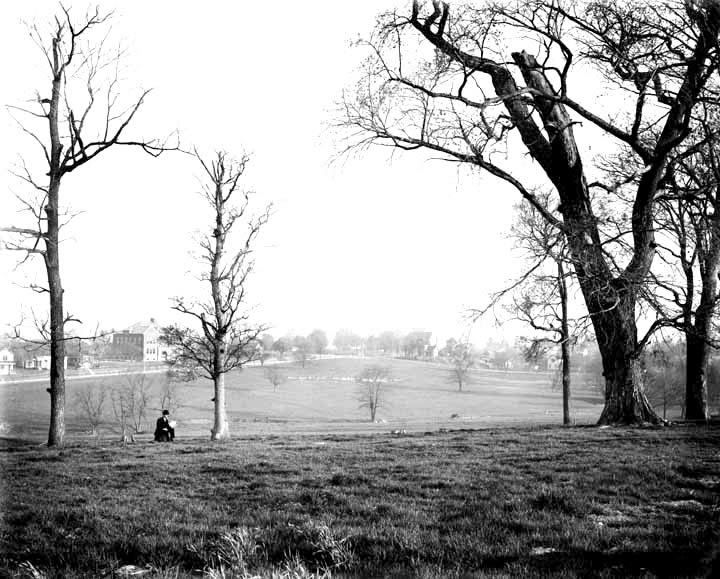
I sometimes wish that every member of the Church could have the privilege of going to Liberty, and Richmond, Far West, Adam-ondi-Ahman, and Haun's Mill, on their way east or west, as they come through the Central States Mission, for the impression that it gives them, for the increase in their faith and their reverence for the work that has been performed in this Church by its founders and leaders. One cannot stand upon the hill overlooking the valley of Adam-ondi-Ahman without being very deeply impressed with the sacredness of the place. (Conference Report, October 1938, p. 73.)
originally posted at Juvenile Instructor
Doctrine and Covenants 84:3-4 instructs the Latter-day Saints concerning the city of Zion, which was to be their "New Jerusalem:"
3 Which city shall be built, beginning at the temple lot, which is appointed by the finger of the Lord, in the western boundaries of the State of Missouri, and dedicated by the hand of Joseph Smith, Jun., and others with whom the Lord was well pleased.
4 Verily this is the word of the Lord, that the city New Jerusalem shall be built by the gathering of the saints, beginning at this place, even the place of the temple, which temple shall be reared in this generation.
"And when we get into Jackson county to walk in the courts of that house, we can say we built this temple: for as the Lord lives we will build up Jackson county in this generation." [3]
"Here then we see a prediction, and we believe it. Yes! The Latter-day Saints have as firm faith and rely upon this promise as much as they rely upon the promise of forgiveness of sins when they comply with the first principles of the Gospel. We just as much expect that a city will be built, called Zion, in the place and on the land which has been appointed by the Lord our God, and that a temple will be reared on the spot that has been selected, and the corner-stone of which has been laid, in the generation when this revelation was given; we just as much expect this as we expect the sun to rise in the morning and set in the evening; or as much as we expect to see the fulfillment of any of the purposes of the Lord our God, pertaining to the works of his hands. But say the objector, 'thirty nine years have passed away.' What of that? The generation has not passed away; all the people that were living thirty-nine years ago have not passed away; but before they do pass away this will be fulfilled." [4]
I've known people who have been promised in their patriarchal blessings that they would live to see the temple built and some of them are dying and haven't seen the temple built. Do you know why? In my estimation, the Lord's time table is directed a good deal by us. We speed up the clock or we slow the hands down and we turn them back by our activities or our procrastinations. And do you know why I think people who are actually promised that they would live to see the temple built are dying before the completion of the temple? Because we haven't converted the Indians in large enough numbers; never shall we go to Jackson County until we have converted and brought into this church great numbers of Lamanites. Now you just as well set that down as a basic fact. [7]
Myth #1: We’re going to walk to Missouri to prepare for the Second Coming. Scripture makes it clear that Missouri has a prophetic role to play in the Second Coming and it seems logical that some people will need to go there to assist in portions of that work. But the scriptures contain no references that spell out in detail how that assistance will be given.
One of the quotations I hear frequently repeated is part of a sermon by Joseph F. Smith in 1882: “When God leads the people back to Jackson County, how will he do it? Let me picture to you how some of us may be gathered and led to Jackson County. I think I see two or three hundred thousand people wending their way across the great plain enduring the nameless hardships of the journey, herding and guarding their cattle by day and by night. … This is one way to look at it. It is certainly a practical view. Some might ask, what will become of the railroads? I fear that the sifting process would be insufficient were we to travel by railroads.” (Journal of Discourses, 24:156–57.)
This is a vivid mental picture, but people frequently remember the picture and forget he said “some of us” and “may be gathered.” We should also keep in mind that he said this is “one way to look at it,” remembering also the perspective of 1882. From our perspective in 1979, it seems even less likely that we would sell our automobiles and herd cattle along our freeway systems. But we simply have no scriptural information about who—if any general Church members—will be called to go back and the means that they might use. The prophets of our day have not found it timely or necessary to speak on the matter. [8]
Latter-day Saints are exceptionally good at following our health code which we call "the Word of Wisdom." Hundreds of thousands of members have found a way to live without tobacco, alcoholic beverages, and coffee and tea. But does our adherance to this code make us less vigilant in identifying other substances which are also unhealthy and should be eliminated from our diet? Besides the avoidance of the above-mentioned substances, American Mormons follow a diet which is quite similar to that of the rest of the country. It is high in unhealthy fat and refined sugars and flours. The world is beginning to realize that this diet is slowly poisoning us.
Farmers across the country will soon be planting Monsanto's Roundup Ready (RR®) sugar beet, genetically engineered for resistance to Monsanto's herbicide glyphosate (marketed as Roundup). John Schorr, agriculture manager for Amalgamated Sugar, estimates that 95 percent of the sugar beet crop in Idaho will be of the new GM variety in 2008, or a total of 150,000 out of 167,000 acres.

Jamie Lee Curtis has said that there is nothing sexier than a man in a white shirt, and I am going to have to agree with her statement. MoJo says it's one of the top ten fashion essentials for men (make sure it's crisp, white cotton). A fitted, white shirt was the look of the month on the men's fashion blog iluwfashion in May (check the link to read about the holy aura it has, and for tips to keep your shirt whiter than cocaine). Yes, there's a reason James Bond wears a white shirt.
On a spiritual note, my mission president in the MTC said that seeing all the missionaries dressed in white shirts reminded him symbolically of the white stones the Jaredites kept in their barges, giving light to steer by. In 1996 Elder Holland called the white shirt worn while passing the sacrament "ceremonial clothing." And in our recent General Conference Elder Oaks used white shirts to connect the ordinances of baptism, the sacrament, and temple covenants. So really, what man wouldn't want to avail himself of the privilege of wearing a white shirt on Sundays?
Who wouldn't want to arrive at Church looking like Orlando Bloom at Loews Lincoln Square NYC?
And you can always ditch the tie after passing the sacrament for the Johnny Depp look:
But if the above tips aren't individual enough for you, take some hints from SNL on making the white shirt the "best look in the world!"
Some of my readers might be surprised at the blog I am showcasing as the Blog of the Month for September. It certainly comes from a much more conservative viewpoint than what I am likely to espouse. But I have been fascinated by this blog and I think you will be, too. It's called:
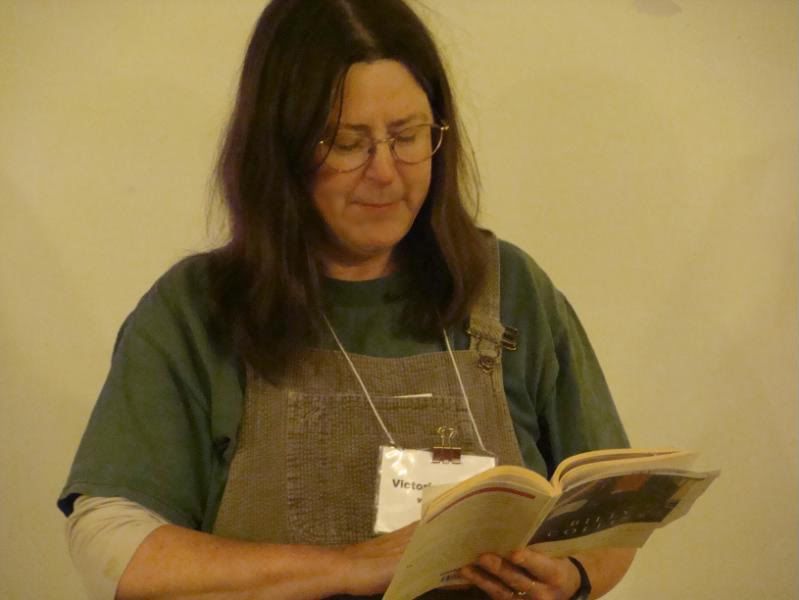
The Bretton Woods agreement of was an attempt to stabilize money. After the Great Depression, developed countries met together to plan a post-war economic order. The United States wanted to make the dollar the standard in a world economy. In exchange for this, we agreed that foreign countries could exchange their dollars at a fixed rate for gold. This worked for a number of years. In 1971 in response to the Vietnam War and accelerated inflation, Nixon abolished the gold standard. Thus the dollar became unrestricted. U.S. debt has gone up dramatically since then, until we now have a deficit of over 9 trillion dollars. (Please follow this link to better understand just how much a trillion dollars is!) Victoria convinced us all that every civilization that has faced this type of situation has responded by inflating currency (devaluing the dollar). Societies can go through depression, she warned, but do not survive hyperinflation.
In addition to these problems, Victoria addressed the issue of finite resources. Peak oil is the rate at which oil producers can extract oil at the maximum level possible. U.S. oil production reached a peak in 1970. Some people believe that world oil production peaked in 2005. From now on, there will be less oil available for an increasing population. Victoria briefly covered each of the remaining options (Ethanol, Coal, Hydrogen, Nuclear, Solar, Wind, Animal energy, Firewood, and others) and why each of these will soon be exhausted or are not feasible at the present time.
This may all seem like doom and gloom to you. But Victoria actually presented this very matter-of-factly and with the idea that the decline of the U.S. was a foregone conclusion. After all, from 1900 to 1970, we had all the oil, and that was why we had all the power. Now our position is not so secure. It actually made me feel better to just accept that we are in for a depression. Now we can decide how to handle things spiritually and physically.
Victoria's conclusion is that the seeds of our present decline began in the early 1800's. This is when population began to grow exponentially, when we began to rely on industrialization, and when humans began to be the only species on earth who are a detriment to the planet. She sees the Restoration as the Lord's answer to how to navigate the problems that await us. The disasters will come slowly, a bit at a time, and we have time to learn how to conserve, to grow things, to form networks, to learn how to produce commodities.
As an illustration of her suggestions for us, she told of her family and a group of her neighbors who got together to buy an oil press from Europe. It fits in someone's barn, and the group plans to grow canola and rapeseed and make oils out of the plants. Right now these oils are mostly imported. By starting this business they will have a commodity to trade when the economy fails and a necessary food product made locally.
I appreciate Victoria's concise and valuable history lesson and her leadership in showing us how to be wise stewards and to navigate the Anthropocene epoch.
Last week I had a marvelous time visiting my sister in Boston and then attending the Exponent II retreat. I just got back this evening but I thought I'd share some of my pictures of the event. I intend to blog about some of the workshops, so check back!


Today I wrote a post for Mormon Matters discussing the School of the Prophets in the time of Joseph Smith and how different our religious education is today. For many years now I have tired of the same 4-year round of scripture pablum which is offered in our Sunday Schools.
Learning the Bible in the original languages is a pastime which has intrigued me and which I have attempted on my own. I've often wished we could include some Hebrew and Greek studies into our Sunday School classes. Lest any think that doing this might prove too hard for the average member, I want to present an example of what this might look like, and get your opinion on whether you think a run-of-the-mill Gospel Doctrine teacher could handle teaching such material. The following comes from Jeff A. Benner's Biblical Hebrew E-Magazine, September 2008, Issue #046.
Biblical Word of the Month - Eleph אלף
The oxen likewise and the young asses that till the ground shall eat savory provender, which hath been winnowed with the shovel and with the fork. (ASV, Isaiah 30:24)
In the verse above is the Hebrew noun אלף (eleph, Strong's #504) meaning oxen. Oxen are the largest of the Ancient Hebrews' livestock and were most frequently used for plowing the fields, usually in pairs. An older ox would be yoked to a younger one in order for the older one to teach the younger through association. This same noun is also found in Judges 6:15 where it is translated as "family." In a family, the children learn from the parents, in the same manner as the oxen, through association.
The verbal root of this word is אלף (A.L.Ph, Strong's #502) and means "learn," but more literally, to learn through association, as can be seen in the following verse.
Make no friendship with a man that is given to anger; And with a wrathful man thou shalt not go: Lest thou learn this ways, And get a snare to thy soul. (ASV, Proverbs 22:25)
As oxen are "very large" animals, the word אלף (eleph) is also used for a "thousand," a "very large" number. (While this is the same word discussed previously, Strong's dictionary has assigned this word the number 505 when used for a "thousand.") From this aspect of the noun, a second verb is formed. Normally, Hebrew nouns are derived out of verbs, however on occasion, a verb is derived out of a noun, this verb is called a demonstrative verb. The demonstrative verb formed out of אלף (eleph) is אלף (A.L.Ph, Strong's #503) meaning to "give a thousand." In summary, the Hebrew word אלף can be;
One other note about the word eleph, it may be the origin of the word elephant, a "very large" beast.
________________________________
(If you are a Latter-day Saint who does not know what the "Strong's numbers" above refer to, shame on you! Or shame on your religious educators who have not taught you about such a valuable learning tool in gospel study!)
I can picture a very engaging lesson from the previous information, including unique Latter-day Saint teachings such as the importance of the family and the need for good associations. I can also imagine facilitating some interesting discussion on the large numbers of "thousands" of people in the Bible and the Book of Mormon and what the Hebrew meaning of this word might suggest.
I think these are the kinds of things Brother Joseph and his compatriots in the School of the Prophets were learning when they hired Joshua Seixas to teach them Hebrew for ten weeks--two hours a day and five times a week. Just learning the one word "Berosheit" inspired Joseph to redefine the nature of God and the creation account.
What do you think? Could learning a few Hebrew words inspire a bit of prophecy in your ward? Or do we need to go over the importance of the keystone in an arch one more time?
It has come to my attention that a member of the Church may soon face a disciplinary council for his opposition to Prop 8 in California. I thought it would be interesting to review what the Church Handbook of Instructions has to say about disciplinary councils:
Disciplinary Councils
Because formal Church discipline is ecclesiastical, not civil or criminal, court procedures of the state or nation do not apply. However, procedures in a Church disciplinary council must be fair and considerate of the feelings of all who participate.
When a Disciplinary Council Is Mandatory
A disciplinary council must be held when evidence suggests that a member may have committed any of the following transgressions.
Murder
As used here, murder refers to the deliberate and unjustified taking of human life. It requires excommunication. Abortion is not defined as murder for this purpose. If death was caused by carelessness or by defense of self or others, or if mitigating circumstances prevail (such as deficient mental capacity or wartime conditions), the taking of a human life might not be defined as murder. Bishops refer questions on specific cases to the stake president. He may direct questions to the Office of the First Presidency if necessary
Incest
As used here, incest refers to sexual relations between a parent and a natural, adopted, or foster child or stepchild. A grandparent is considered the same as a parent. Incest also refers to sexual relations between brothers and sisters. It almost always requires excommunication. Bishops refer questions on specific cases to the stake president. He may direct questions to the Office of the First Presidency if necessary.
Child Abuse
As used here, child abuse refers to a sexual offense against or serious physical abuse of a child. If priesthood leaders learn of or suspect child abuse, they should follow the instructions on pages 157-58.
Apostasy
As used here, apostasy refers to members who:
1. Repeatedly act in clear, open, and deliberate public opposition to the Church or its leaders.
2. Persist in teaching as Church doctrine information that is not Church doctrine after they have been corrected by their bishops or higher authority
3. Continue to follow the teachings of apostate sects (such as those that advocate plural marriage) after being corrected by their bishop or higher authority.
In such cases, excommunication may be necessary if repentance is not evident after counseling and encouragement.
Priesthood leaders must take disciplinary action against apostates to protect Church members. The Savior taught the Nephites that they should continue to minister to a transgressor, but "if he repent not he shall not be numbered among my people, that he may not destroy my people" (3 Nephi 18:31; see also Mosiah 26:36).
Total inactivity in the Church or attending or holding membership in another church does not constitute apostasy.
Serious Transgression While Holding a Prominent Church Position
A disciplinary council must be held for a member who commits a serious transgression while holding a prominent Church position, such as Area Authority Seventy; temple, mission, or stake president; patriarch; or bishop. As used here, serious transgression is defined as a deliberate and major offense against morality. It includes (but is not limited to) attempted murder, rape, forcible sexual abuse, spouse abuse, intentional serious physical injury of others, adultery, fornication, homosexual relations, deliberate abandonment of family responsibilities, robbery, burglary, theft, embezzlement, sale of illegal drugs, fraud, perjury, and false swearing.
Transgressor Who Is a Predator
A disciplinary council must be held for a member who commits a serious transgression that shows him to be a predator with tendencies that present any kind of serious threat to other persons.
Pattern of Serious Transgressions
A disciplinary council must be held for a member who demonstrates a pattern of serious transgressions, especially if prior transgressions have resulted in Church discipline.
Serious Transgression That Is Widely Known
A disciplinary council must be held for a member who commits a serious transgression (as defined under "Serious Transgression While Holding a Prominent Church Position" on this page) that is widely known.
When a Disciplinary Council May Be Necessary
Serious Transgression
Formal Church discipline may be necessary for any member who commits a serious transgression as defined under "Serious Transgression While Holding a Prominent Church Position" on this page.
Abortion
Presiding officers review carefully the circumstances of members involved in abortions. Formal Church discipline may be necessary for members who submit to, perform, encourage, pay for, or arrange for abortions. However, Church discipline should not be considered for members who were involved in an abortion before they were baptized or because (1) the pregnancy resulted from forcible rape or incest, (2) the life or health of the mother was in jeopardy, or (3) the fetus was known to have severe defects that would not allow the baby to survive beyond birth (see page 157). Bishops refer questions on specific cases to the stake president. He may direct questions to the Office of the First Presidency if necessary.
Transsexual Operation
Church leaders counsel against elective transsexual operations. If a member is contemplating such an operation, a presiding officer should inform him of this counsel and advise him that the operation may be cause for formal Church discipline. Bishops refer questions on specific cases to the stake president. He may direct questions to the Office of the First Presidency if necessary.
Request for Name Removal
If a member requests that his name be removed from the records of the Church, a disciplinary council may still be necessary if he has committed a serious transgression. Name removal should not be used as a substitute for or alternative to Church discipline. For instructions in these circumstances, see page 130.
When a Disciplinary Council Is Not Necessary
A disciplinary council normally is not necessary in the following instances.
Failure to Comply with Some Church Standards
A disciplinary council should not be held to discipline or threaten members who do not comply with the Word of Wisdom or whose transgressions consist of omissions, such as failure to pay tithing, inactivity in the Church, or inattention to Church duties.
Business Failures or Nonpayment of Debts
Leaders or members should not use the threat of Church discipline as a form of harassment or as a device to settle business controversies. Business failures and nonpayment of debts are not reasons for convening a disciplinary council. However, a disciplinary council may be held for deceptive practices, false representations, or other forms of fraud or dishonesty in business transactions.
Civil Disputes
Disciplinary councils should not attempt to resolve disputes over property rights or other civil controversies. However, if such a dispute involves accusations that a member has committed acts that would justify Church discipline, the accusations should be treated like any other accusations of transgression.
IF Church leaders are asked to help settle civil disputes, they should act as unofficial, private advisers and should not involve the Church.
Passage of Time
If a member voluntarily confesses a serious transgression that was committed long ago and his faithfulness and service in the intervening years have demonstrated full reformation and repentance, a disciplinary council often is unnecessary.



While researching Church history for my last post over at Mormon Matters, I came across an interesting tidbit regarding our Mother Eve.
Early Church member Zebedee Coltrin tells a story about an experience he had with the Prophet Joseph while traveling to a conference in New Portage, Ohio. At one point, Joseph, with a far off look in his eyes, took Brother Coltrin and Oliver Cowdery by the arms and set out on a stroll. Coming to a scenic spot, Joseph suggested, "Let us pray." After each prayed in turn they lay down on their backs, the two men leaning against Joseph's outstretched arms. "Now brethren, we will see some visions," Joseph promised.
"The heavens gradually opened, and they saw a golden throne, on a circular foundation, something like a light house, and on the throne were two aged personages, having white hair, and clothed in white garments. They were the two most beautiful and perfect specimens of mankind he ever saw. Joseph said, "They are our first parents, Adam and Eve." Adam was a large, broad-shouldered man, and Eve as a woman, was as large in proportion." (Minutes, Salt Lake City School of the Prophets, October 11, 1883.)
...to Joseph Smith's very first First Counselor?
Learn about the mystery in my post over at Mormon Matters, and join the Bloggernacle in trying to solve it!
originally posted at Mormon Matters
This week our BYU student daughter called to ask us to help her with an assignment: she was supposed to find a question that could stump her Doctrine and Covenants teacher. Immediately DH suggested: "What happened to Jesse Gause? "
"Jesse Gause?" both of us questioned at the same time. Neither one of us had heard of him.
"What did happen to Jesse Gause?" I asked.
"No one knows," DH replied smugly.
Of course I took that as a challenge! So guess what I've been studying this weekend?
Some of you students of the D&C may know that Jesse Gause served as a counselor to Joseph Smith in the First Presidency. His name was almost unknown in the Church until Robert J. Woodford wrote a BYU Studies article on him in 1975 (Jesse Gause, Counselor of the Prophet). DH recalls that Michael Quinn led an effort to put Gause's name back into the D&C when the new edition came out in 1981 (see the preface to Section 81). Thereafter, Quinn's article Jesse Gause, Joseph Smith's Little-Known Counselor appeared in BYU Studies in 1983. Most recently, Erin B. Jennings published The Consequential Counselor: Restoring the Root(s) of Jesse Gause in the Spring 2008 edition of the Journal of Mormon History.
Jesse showed conflicting feelings toward religion in several instances. He was a participating Quaker in good standing since age 22, and thus bound by conscience to shun military service. At age 30 he nevertheless joined the militia in Delaware during the War of 1812. He married relatively late in life, had 4 children, and was about 44 years old when his wife, Martha, died as a consequence of childbirth in February of 1828. In the next few years, a whirlwind chain of events swept him into the mainstream of Mormon history. First, he took his children with him to live close to his sister Ruth in the Shaker community of Hancock Village, Massachusetts. He resigned his Quaker membership on November 15th of that year and united with the Shakers, encouraging several of his friends to do the same. He formally affiliated with the Shaker religion in early 1829. Interestingly, he renewed his childrens' transfer certificates to the Quaker meeting so that they could return in the future if they chose. The Shaker group which Jesse had joined was strictly celibate, discouraging marriage. In spite of this, he met Minerva Hancock, another Shaker living at the village, and both departed to marry on August 30, 1830. The four children were left with Ruth and the Shakers. Exactly nine months later, on May 30, 1831, a child, William was born to Jesse and Minerva. The small family was drawn back to the Shakers, and by the time William was five months old they were living in the Shaker community of North Union, Ohio, nineteen miles from Kirtland. Here, somehow, Jesse encountered Mormonism. While his wife remained with the Shakers in North Union, Jesse was baptized in 1831. Only a few months later, on March 8, 1832, the Kirtland Revelation Book states that Joseph Smith "chose this day and ordained brother Jesse Gause and Broth[er] Sidney [Rigdon] to be my counsellors of the ministry of the presidency of the High Priesthood." Michael Quinn speculates that Gause, a recent convert, was chosen for such an important calling due to his experience with communal society among the Quakers and Shakers; and Erin Jennings claims that much of early Mormonism’s communitarianism can be traced to Gause’s influence. Gause did accompany Joseph to Jackson County in the Spring of 1832 to set up the Law of Consecration.
Unbelievably, by the end of the year, Gause had been excommunicated from the church in absentia and his name stricken from the revelations, with the name of "F. G. Williams" written above. I was shocked to realize that every successive publication of this revelation which became D&C 81 has replaced Jesse's name with Frederick G. Williams. Doctrine and Covenants study manuals now explain this by the principle of "command and revoke" (see also D&C 56). If an individual does not respond properly to the assignment given unto him the Lord will replace him with another. The revelation in Section 81 contains instructions, duties, and promised blessings to the counselor in the First Presidency so now it appropriately pertains to Frederick G. Williams, these manuals teach.
Here comes the mystery: On his way back to Kirtland from Jackson County, Gause stopped by to see his wife, and beg her to join him with the Saints. A letter written by Shaker Matthew Houston to Seth Wells describes this heartbreaking encounter:
And sure enough I presume you was acquainted with Jesse Gause from Hancock he was here a few days since after his wife Minerva--she utterly refused being his slave any longer--he had to go away without her. altho he tryed what the law could do for him he was very much inraged threatened to take away Minerva's child--she presented it to him but he went away without it and her--he is yet a Mormon--& is second to the Prophet or Seer--Joseph Smith--this state of exaltation may tend to steady him or keep him away from us a little longer--for which I am heartily glad for he is certainly the meanest of men.
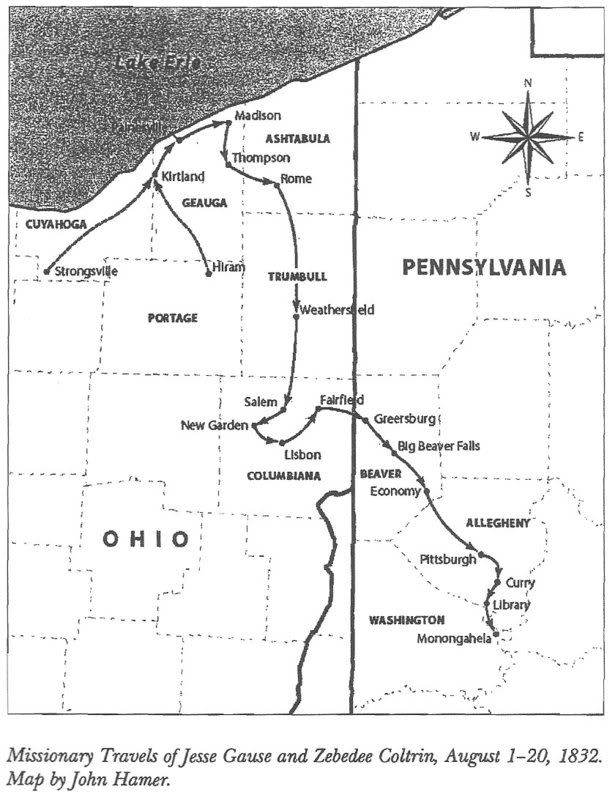 Immediately following this incident, Jesse departed on a mission with Zebedee Coltrin on August 1, 1832. Since the Houston letter was written on August 10, Michael Quinn theorizes that Jesse's visit with his wife took place after he left for his mission. But though North Union was close to Kirtland, Zebedee Coltrin's daily log does not allow for a 19 mile trip in the westerly direction. Woodford, I believe, is correct in placing this event before the start of the mission. It doesn't seem to make sense that Jesse would have gone for his wife after beginning the responsibilities of a mission. But the time frame makes it likely that Jesse had already received a mission call at the time he visited Minerva and their son.
came to the conclusion that it was not my duty to preced any further to the East. I have been afficted with a pain in my head every day Sinse we Started. We endeavoured to be faithful in embracing every oportunity of declaring our testimony for the Gospel in its fullness in the last days. & for the book of Mormon, & the Judgments that God was about to pour out upon the impenitent...
Last night as DH and I were driving the children to a swim meet, we became aware of a very odd thing. Cars were beginning to line up at the gas stations, congesting lanes of traffic for several blocks. We realized something out-of-the-ordinary was happening, and we turned on the radio to discover what it was. A local station was loudly advising people not to panic. A rumor had been started, the announcer said, that gas prices were going up to $5.00 a gallon by 5:00 pm. This was not true, the DJ insisted. "Don't text anyone, don't top off your tank," he told his listeners. But as we drove along the panic became worse. I have not seen such a thing since the '70's when there were widespread oil shortages. Every person in the city must have been at the gas pumps. It was impossible to drive anywhere. You would get past one gas station and immediately be placed in the queue for the next one down the road.
This morning it's a lot calmer, but gas prices have gone up. The station closest to us has raised its prices by 10 cents a gallon. Because Hurricane Ike is headed straight for Texas, the nation's biggest complex of refineries and petrochemical plants, people are worried. The upper Texas coast accounts for one-fifth of U.S. refining capacity. I hear that some service stations in the Southeast are limiting customers to 10 gallons of gas during the weekend to guard against running out.
What are gas prices in your area? Ours have risen to $3.75 but I think this may be low compared to many states. Are you seeing the same kind of panic we are? Are Mormons better prepared for this type of emergency than their neighbors? Does this post make you want to go out and fill up your car?
This is the great promise the Lord gives to those who repent of their sins, "Behold, he who has repented of his sins, the same is forgiven, and I, the Lord, remember them no more." What's more, he tells us that he is the one to decide if someone has repented, not us: "I, the Lord, will forgive whom I will forgive, but of you it is required to forgive all men." Finally, we are promised great blessings if we will forgive our fellow man. "To whom ye forgive any thing, I forgive also: for if I forgave any thing, to whom I forgave it, for your sakes forgave I it in the person of Christ."
On this September 11, it saddens me that so many nationalists are unwillling to forget and forgive the great tragedy which happened 7 years ago. I found this on the blog of someone I respect a great deal, and I wonder what it is he wants to remember about the infamous day:
I've saved the special edition newspapers that came out that day, and the day after. I've laminated them and now I hang them up in my classroom every year on September 11th. They are a dramatic reminder of the horrific images and the magnitude of that day. And I'm determined never to forget. I won't forget what happened that day or the days following. I won't forget what a great land we live in. I won't forget the sacrifices of those who have gone before to make America great. And I'll try to do all that I can so that my students won't forget either.
This is my song, O God of all the nations,
a song of peace for lands afar and mine;
this is my home, the country where my heart is;
here are my hopes, my dreams, my holy shrine:
but other hearts in other lands are beating
with hopes and dreams as true and high as mine.
My country's skies are bluer than the ocean,
and sunlight beams on cloverleaf and pine;
but other lands have sunlight too, and clover,
and skies are everywhere as blue as mine:
O hear my song, thou God of all the nations,
a song of peace for their land and for mine.
Former Mormon Instructs YouTube Listeners on LDS Doctrine
This is a must see. Just a few suggestions:
1. If you are going to film with significant other(s?) lying on a bed in the background, tell them to hold very, very still. That hand between the breasts at 1:55 was a teeny bit distracting.
2. You might want to blow your nose before filming so you don't have incidents like :54, and thereafter throughout the video.
3. If your audience consists of Latter-day Saints, you'll want to shave the moustache. I have to agree with Amri that it gives you that "pervy look," especially at 8:22.
Doctrinal Points Covered in the Video:
Admit it! You've prayed for God to help you find your keys, or something equally as trivial. You opened your eyes and there they were. Then you've wondered why a loving God would answer your prayer and not those of the millions of starving people in Africa. Perhaps you begin to feel like the following blogger:
"If God is an interventionist, He's doing a piss poor job. He helps middle-class americans find their keys while thousands suffer and die in other parts of the world. If God is an interventionist, I don't think He's worthy of worship. If God isn't an interventionist, and we are on our own, what practical difference does it make if we believe in Him or not? Either way, I just don't see the point in worrying about God anymore. Either what He is like, what He wants, or even if He exists."

After a few days of engagement on the issue of being saved by grace/works, I have concluded that the Mormons and evangelicals have simply been setting up strawmen consisting of what they imagine the other believes about salvation. Then they gear up to fight with all their might against what they have constructed.
Mormons do not believe that a person can be saved by works. Neither their scriptures nor their leaders advocate any such doctrine. However, we tend to preach the importance of works, probably as a reaction to the evangelicals' "saved by grace" emphasis. The LDS assume that the Christian rejects any commitment of action, which is also an unfair portrayal.
I've been trying to promote an interfaith dialogue wherein each group would accept at least the basic idea that we believe in the same Christ. Is this even possible? Sure, guys, we have a few differences. But c'mon. How many white-robed bearded men had a mother named Mary, a father named God, lived in Judea and Jerusalem around 0-33 AD, claimed to be the Messiah, rose from the dead and founded a world religion based on his teachings?
The majority of thinking Christians of all stripes have recognized the tension between the saving grace of the Savior Jesus Christ and the necessity of good works and have made their peace with the issue. It is quite obvious that both grace and works play an important role in salvation. Two key scriptures from the New Testament are cited:
1. Ephesians 2:8-9 For by grace are ye saved through faith; and that not of yourselves: it is the gift of God: Not of works, lest any man should boast.
2. James 2:14, 17 What doth it profit, my brethren, though a man say he hath faith, and have not works? can faith save him? Even so faith, if it hath not works, is dead, being alone.
"And moreover, I say unto you, that salvation doth not come by the law alone; and were it not for the atonement, which God himself shall make for the sins and iniquities of his people, that they must unavoidably perish, notwithstanding the law of Moses. And now I say unto you that it was expedient that there should be a law given to the children of Israel, yea, even a very strict law; for they were a stiffnecked people, quick to do iniquity, and slow to remember the Lord their God; Therefore there was a law given them, yea, a law of performances and of ordinances, a law which they were to observe strictly from day to day, to keep them in remembrance of God and their duty towards him. But behold, I say unto you, that all these things were types of things to come. And now, did they understand the law? I say unto you, Nay, they did not all understand the law; and this because of the hardness of their hearts; for they understood not that there could not any man be saved bexcept it were through the redemption of God."
...they began to be a righteous people; and they did walk in the ways of the Lord, and did observe to keep his commandments and his statutes. Yea, and they did keep the law of Moses; for it was expedient that they should keep the law of Moses as yet, for it was not all fulfilled. But notwithstanding the law of Moses, they did look forward to the coming of Christ, considering that the law of Moses was a type of his coming, and believing that they must keep those outward performances until the time that he should be revealed unto them. Now they did not suppose that salvation came by the law of Moses; but the law of Moses did serve to strengthen their faith in Christ; and thus they did retain a hope through faith, unto eternal salvation, relying upon the spirit of prophecy, which spake of those things to come. (Alma 25:14-16)
"Wherefore, whoso believeth in God might with surety hope for a better world, yea, even a place at the right hand of God, which hope cometh of faith, maketh an anchor to the souls of men, which would make them sure and steadfast, always abounding in good works, being led to glorify God."
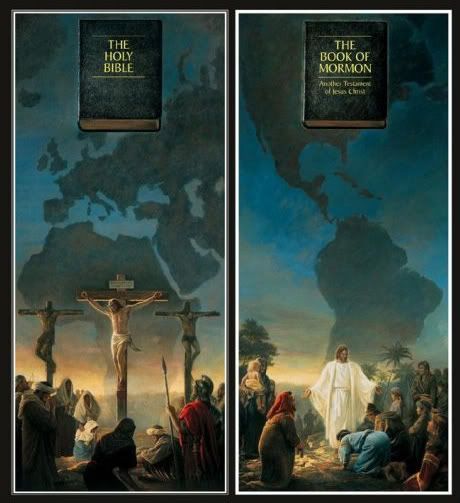
(you may have to scroll down, since my first attempt at HTML tables didn't work very well.)
| Believers in Christ enter into his rest | Moroni 7:3 Wherefore, I would speak unto you that are of the church, that are the peaceable followers of Christ, and that have obtained a sufficient hope by which ye can enter into the rest of the Lord, from this time henceforth until ye shall rest with him in heaven. | Heb 4:3,11 For we which have believed do enter into rest...Let us labour therefore to enter into that rest, lest any man fall after the same example of unbelief. |
| Christ's followers cannot be servants of the devil | Moroni 7:11 For behold, a bitter fountain cannot bring forth good water; neither can a good fountain bring forth bitter water; wherefore, a man being a servant of the devil cannot follow Christ; and if he follow Christ he cannot be a servant of the devil. | Luke 9:50 And Jesus said unto him, Forbid him not: for he that is not against us is for us. |
| Prophets testified that Christ would come | Moroni 7:23 And God also declared unto prophets, by his own mouth, that Christ should come. | Acts 3:20-21 And he shall send Jesus Christ, which before was preached unto you: Whom the heaven must receive until the times of restitution of all things, which God hath spoken by the mouth of all his holy prophets since the world began. |
| We are saved by faith in Christ's name | Moroni 7:26,38 And after that he came men also were saved by faith in his name; and by faith, they become the sons of God. For no man can be saved, according to the words of Christ, save they shall have faith in his name | Acts 16:31 Believe on the Lord Jesus Christ, and thou shalt be saved, and thy house. |
| After he finished his work on the earth, Christ ascended to heaven and sat on the right hand of God | Moroni 7:27 Christ hath ascended into heaven, and hath sat down on the right hand of God | Mark 16:19 So then after the Lord had spoken unto them, he was received up into heaven, and sat on the right hand of God. |
| Those who have faith in Christ will have great power | Moroni 7:33 And Christ hath said: If ye will have faith in me ye shall have power to do whatsoever thing is expedient in me. | Matthew 17:20 And Jesus said unto them...If ye have faith as a grain of mustard seed, ye shall say unto this mountain, Remove hence to yonder place; and it shall remove; and nothing shall be impossible unto you. |
| Through the atonement and resurrection of Christ, humankind can be raised to eternal life | Moroni 7:41 Behold I say unto you that ye shall have hope through the atonement of Christ and the power of his resurrection, to be raised unto life eternal, and this because of your faith in him according to the promise. | John 11:25 Jesus said unto her, I am the resurrection, and the life: he that believeth in me, though he were dead, yet shall he live: |
| True followers of Christ will become like him | Moroni 7:48 ...that ye may become the sons of God; that when he shall appear we shall be like him, for we shall see him as he is | 1 John 3:2 Beloved, now are we the sons of God, and it doth not yet appear what we shall be: but we know that, when he shall appear, we shall be like him; for we shall see him as he is. |
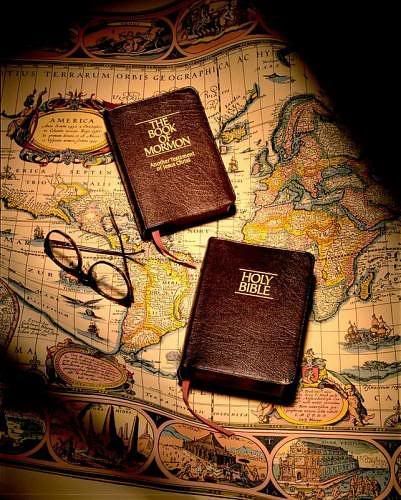 This exercise has had the effect of strengthening my conviction that the Savior taught by the Book of Mormon and to the Latter-day Saints is that same being who is worshipped by orthodox Christians and who is found within the pages of the Bible. I am an amateur genealogist, and when I check my work on the Church's genealogy program, family search, I am often given a program to compare my ancestor with someone in the database. I have found that when I have a person with the same first and last name, birth date, place of birth, who has the same spouse and children, that this person is most likely the same though I may have a different middle name than the one on the program.
 “…older adolescents who have a bedroom television are less likely to engage in healthy activities such as exercising, eating fruits or vegetables, and enjoying family meals. They also consumed larger quantities of sweetened beverages and fast food, were categorized as heavy TV watchers, and read or studied less than teens without TVs in their bedrooms.”

"Alienation means you don't feel at ease in any situation, any place, or with any person, not even with yourself. You are always trying to get "home" but never feel at home."
These all died in faith, not having received the promises, but having seen them afar off, and were persuaded of them, and embraced them, and confessed that they were strangers and pilgrims on the earth. For they that say such things declare plainly that they seek a acountry. And truly, if they had been mindful of that country from whence they came out, they might have had opportunity to have returned. But now they desire a better country, that is, an heavenly: wherefore God is not ashamed to be called their God: for he hath prepared for them a city. (Hebrews 11:13-16)
 Tolle claims to have an answer to this dilemma of human existence. His book details how a seeker can awaken to the inner soul and disassociate from the mind, or the ego. I appreciated many things about Tolle's rather new age thinking, and I wonder if it can be accomodated within Christian thought. Have you ever felt this "longing for home," this feeling of being a stranger upon the earth? Do you think scriptural teaching supports Tolle's proposition that humans can overcome their natural man and become integrated beings by getting in touch with the true self? Is this something we can accomplish while here on the earth, or will we always be a little homesick for our heavenly abode?
This weekend just happens to be the perfect time to showcase a blog that I have recently discovered. It's called:
PoliticaLDS
The blog is made up of Amy, Joel, KWS, and Stephanie from the right, and bigbaldDave, Mike, Rick, and the Wizzle from the left. The blog has been up since January, and averages maybe ten posts a month. This leaves time for plenty of discussion, and they've had anywhere from 9 to 188 responses to the posts. As one would expect, there is commentary on health care, California's Proposition 8, abortion, and the U.S. Presidential elections. But the group also includes fun and interesting posts such as Fat America and The Value of Not Cheating on Your Flippin' Wife.
The posts are imbued with an LDS viewpoint, whether liberal or conservative. One of the recent posts introduces all of the permabloggers. They have fascinating stories and it's interesting to see how they came to develop their particular political views. If you love politics and debate, head on over and make a few comments.


 Posts
All Comments
Posts
All Comments


