Sunday, February 25, 2007

Peace Vigil


Readers and Friends, a few concerned citizens would like to announce a peace vigil to be held Sunday, March 4, 2007. We are concerned at the escalating tensions in the Middle East and desire to send positive energy into the universe toward this situation. If you would like to participate, we urge you to pray, fast, or meditate that American and world leaders will be directed to work in peaceful ways for the solutions to political tensions. We hope that many of you will feel directed to write blog posts announcing the vigil and calling for peace and positive solutions.

Book Meme


I found that I had read many of the books on this book meme. I have read the ones in bold, and the ones in italics I read with my book club in Houston (I miss them!)
Which ones have you read? Am I missing anything important?

1. The Da Vinci Code (Dan Brown)
2. Pride and Prejudice (Jane Austen)
3. To Kill A Mockingbird (Harper Lee)
4. Gone With The Wind (Margaret Mitchell)
5. The Lord of the Rings: Return of the King (J.R.R. Tolkien)
6. The Lord of the Rings: Fellowship of the Ring (J.R.R. Tolkien)
7. The Lord of the Rings: Two Towers (J.R.R. Tolkien)
8. Anne of Green Gables (L.M. Montgomery)
9. Outlander (Diana Gabaldon)
10. A Fine Balance (Rohinton Mistry)
11. Harry Potter and the Goblet of Fire (J.K. Rowling)
12. Angels and Demons (Dan Brown)
13. Harry Potter and the Order of the Phoenix (J.K. Rowling)
14. A Prayer for Owen Meany (John Irving)
15. Memoirs of a Geisha (Arthur Golden)
16. Harry Potter and the Sorcerer’s Stone (J.K. Rowling)
17. Fall on Your Knees (Ann-Marie MacDonald)
18. The Stand (Stephen King)
19. Harry Potter and the Prisoner of Azkaban (J.K. Rowling)
20. Jane Eyre (Charlotte Bronte)
21. The Hobbit (J.R.R. Tolkien)
22. The Catcher in the Rye (J.D. Salinger)
23. Little Women (Louisa May Alcott)
24. The Lovely Bones (Alice Sebold)
25. Life of Pi (Yann Martel)
26. The Hitchhiker’s Guide to the Galaxy (Douglas Adams)
27. Wuthering Heights (Emily Bronte)
28. The Lion, The Witch and the Wardrobe (C. S. Lewis)
29. East of Eden (John Steinbeck)
30. Tuesdays with Morrie(Mitch Albom)
31. Dune (Frank Herbert)
32. The Notebook (Nicholas Sparks)
33. Atlas Shrugged (Ayn Rand)
34. 1984 (George Orwell)
35. The Mists of Avalon (Marion Zimmer Bradley)
36. The Pillars of the Earth (Ken Follett)
37. The Power of One (Bryce Courtenay)
38. I Know This Much is True (Wally Lamb)
39. The Red Tent (Anita Diamant)
40. The Alchemist (Paulo Coelho)
41. The Clan of the Cave Bear (Jean M. Auel)
42. The Kite Runner (Khaled Hosseini)
43. Confessions of a Shopaholic (Sophie Kinsella)
44. The Five People You Meet In Heaven (Mitch Albom)
45. Bible
46. Anna Karenina (Leo Tolstoy)
47. The Count of Monte Cristo (Alexandre Dumas)
48. Angela’s Ashes (Frank McCourt)
49. The Grapes of Wrath (John Steinbeck)
50. She’s Come Undone (Wally Lamb)
51. The Poisonwood Bible (Barbara Kingsolver)
52. A Tale of Two Cities (Charles Dickens)
53. Ender’s Game (Orson Scott Card)
54. Great Expectations (Charles Dickens)
55. The Great Gatsby (Scott Fitzgerald)
56. The Stone Angel (Margaret Laurence)
57. Harry Potter and the Chamber of Secrets (J.K. Rowling)
58. The Thorn Birds (Colleen McCullough)
59. The Handmaid’s Tale (Margaret Atwood)
60. The Time Traveller’s Wife (Audrew Niffenegger)
61. Crime and Punishment (Fyodor Dostoyevsky)
62. The Fountainhead (Ayn Rand)
63. War and Peace (Tolsoy)
64. Interview With The Vampire (Anne Rice)
65. Fifth Business (Robertson Davies)
66. One Hundred Years Of Solitude (Gabriel Garcia Marquez)
67. The Sisterhood of the Travelling Pants (Ann Brashares)
68. Catch-22 (Joseph Heller)
69. Les Miserables (Victor Hugo)
70. The Little Prince (Antoine de Saint-Exupery)
71. Bridget Jones’ Diary (Helen Fielding)
72. Love in the Time of Cholera (Gabriel Garcia Marquez)
73. Shogun (James Clavell)
74. The English Patient (Michael Ondaatje)
75. The Secret Garden (Frances Hodgson Burnett)
76. The Summer Tree (Guy Gavriel Kay)
77. A Tree Grows in Brooklyn (Betty Smith)
78. The World According To Garp (John Irving)
79. The Diviners (Margaret Laurence)
80. Charlotte’s Web (E.B. White)
81. Not Wanted On The Voyage (Timothy Findley)
82. Of Mice And Men (John Steinbeck)
83. Rebecca (Daphne DuMaurier)
84. Wizard’s First Rule (Terry Goodkind)
85. Emma (Jane Austen)
86. Watership Down (Richard Adams)
87. Brave New World (Aldous Huxley)
88. The Stone Diaries (Carol Shields)
89. Blindness (Jose Saramago)
90. Kane and Abel (Jeffrey Archer)
91. In the Skin of a Lion (Michael Ondaatje)
92. Lord of the Flies (William Golding)
93. The Good Earth (Pearl S. Buck)
94. The Secret Life of Bees (Sue Monk Kidd)
95. The Bourne Identity (Robert Ludlum)
96. The Outsiders (S.E. Hinton)
97. White Oleander (Janet Fitch)
98. A Woman of Substance (Barbara Taylor Bradford)
99. The Celestine Prophecy (James Redfield)
100. Ulysses (James Joyce)

Friday, February 23, 2007

On Temple Rolls Today


I have been most disturbed about rumors of impending war in Iran. I believe in actively working for peace and finding other solutions to war. Yes, I love my family, home, and country, but if defending them means taking the lives of others, the price to pay is too large. If we truly believe that America is a Promised Land and a Divine Democracy, can’t we trust that the Lord will safeguard this country when our efforts are righteous and focused toward bringing peace?

Wednesday marked the deadline for Iran’s government to suspend their nuclear development plans in compliance with the U.N.’s demand. Now that this sanction has not been met, U.S. and world leaders are considering further measures. Tension in the Arabian Gulf has reached a point where any action by either side could trigger a major escalation of military activities. In his blog, John Dehlin stated, “When I pray, I pray that this won’t happen.” It made me think of my own prayers. I often pray for peace in the world. My own little private rebellion is that when I hear my fellow Church members praying for the troops, I will not add my “Amen” to that prayer. This does not mean that I do not wish for the safety and protection of each individual man and woman who serves in the military. Rather, I cannot in good conscience pray for the success of Americans as military units who are using mortal force to achieve their ends. I’ve especially been bothered when I hear this rhetoric in prayer circles in the temple. Only once have I heard someone pray for peace among the nations. Usually they are praying for the safety and success of our troops.

I’m not always confident of the effectiveness of prayer. It’s one of the things I ponder deeply and continue to practice. Today I plan to go to the temple and write on the prayer roll. This is what I will write, “I pray for peace in Iran and that American leaders will be directed to work in peaceful ways for the solutions to political tensions.” It comforts me to know that if it is aligned with the Lord’s will, the faith of many people will be directed to this prayer as it lies upon the altar of the temple today. Perhaps this isn’t a very large activist gesture. I’ll continue to look for ways to do more. But if prayer really works, who knows what could happen?

Saturday, February 17, 2007

Best Two Years

On Friday, Steve asked if the Mormon Mission was the "Best Two Years" or "A Waste of Time." I was interested to read Mark's response and spent a lot of time today thumbing through old missionary journals of my own.

I have the fondest memories of my mission. I was extremely idealistic. We were able to do many worthwhile projects such as teach English lessons, help build chapels, and give personal service to those in need. Yes, there was plenty of tracting, but I don't think of it as a waste of time. It helped me become disciplined and do tough work for a cause larger than myself.

Much of my mission was a cycle between killing myself working and keeping rules overzealously, then relaxing and letting standards drop, then repenting and another pendulum swing back to zealousness. One of my most shocking entries comes when I was in what was fondly known as "The Red Light District."

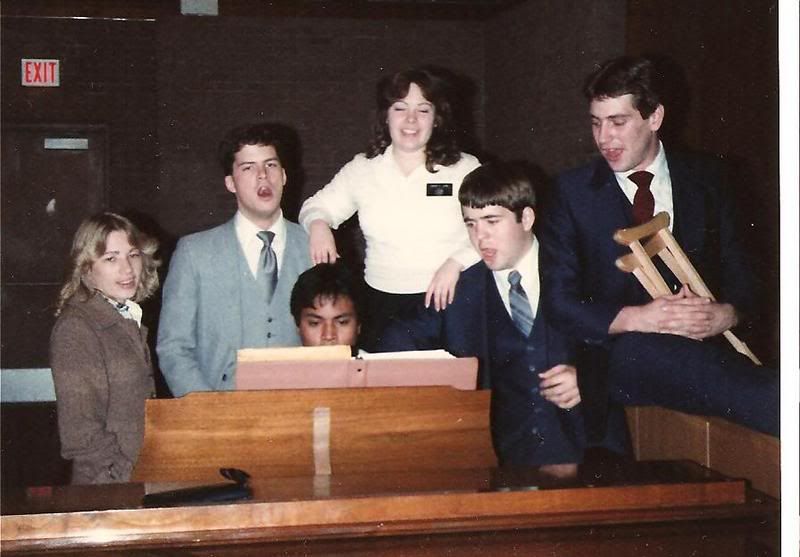
"Saturday was the Rev's last P-Day. (Note: we all had nicknames, mine was Tabitha. I forget why.) So we decided to spend the whole day together. We got up and went to the Elders' at 7:30 for a District breakfast of crepes. Then we all got on one bed and covered up with the sleeping bag and talked. It gradually turned into a pillow fight which was worse than our infamous football game. We later went into the country with an investigator, Pierrette, and her roommate. We were going to chop down a Christmas tree. While we were there, Tae (Elder Taetafa) and I were fooling around on a frozen lake. Well, you guessed it, the ice broke and we fell in. Can you imagine? Tae only got his legs wet but I fell all the way in and the Rev had to pull me out. So OK we went back and I put on Prince's jeans and sweater. Then we decorated the tree with the investigators.

For dinner we went to eat at I.P. Looneys. All the elders like to go there on their last P-Day because if you are wearing a tie the waitresses will come around and cut them off. We got there at 6:00 and they told us the wait was about 2 hours. So we thought we would go window shopping in the mall. Rev got in a shopping cart and Sister Fleming and I got in on top of him and the other Elders pushed. Then we went inside and sang Christmas carols in 4-part harmony to all the shoppers. As we walked back to the restaurant the Rev did a Fred Astaire dance up the side of the wall and when he came down he wiped out. He was in pain so the other Elders carried him back to the restaurant. The waitresses helped him to the table--one on each arm. We ordered dinner and finished eating around 12 pm.

The investigators took us back to our car. Then the Rev thought he'd better go to the hospital to get his leg checked. So we're sitting in the hospital at 1 am. Tae and Leggs are sleeping on the couch. Prince is in there with the Rev. Me and Elder Wood are sitting on another couch, talking about how to spiritually change the very material we are made of so we won't be burned as straw in the refiner's fire in the last days. The Rev ended up with crutches and a cast on his broken leg. We got home at 3am.

Then up for Church this morning--it was really strange. The Elders and us both overslept, but their phone rang at 8:00. They called us to see if it was us, and woke us up. We all would have missed Church! After Church we had a District DA (Dinner Appointment) at Tolley's, then back to Church for Brand & Brown's baptism. Brand, Wood and I sang "Look Inside." She was so beautiful and the Spirit was so strong. She was so fresh and pure when she came out of the water. After the baptism RL District stayed at the chapel and played the piano and sang songs until 12:30. I'm tired. Rev goes home tomorrow (with a cast!)"


The next several pages I am so ashamed of myself, I quit talking in English, will only speak in French (anybody remember SYLing?) and refuse to let myself open letters from home during the week (only on P-Day). I write a letter of confession to the Mission President and the ZL's come out to interview us!

My two oldest daughters just left on missions recently. One went to Korea in October and the other just left in January for Italy Rome. I'm glad they decided to serve missions. I have such happy memories of my 18 months, I wish I just had enjoyed the crazy times instead of feeling so much guilt. I felt like I did have opportunities to serve the Lord and my fellow man. The above journal entry to the contrary, I didn't feel it was a waste of time.


The Red Light District singing--Rev with his crutches

Wednesday, February 14, 2007

More on Valentinus

AmyB at Exponent 2 put up a post this morning entitled "What If?" which introduced me to a fascinating character named Valentinus, a man who narrowly missed being elected Pope in the second century AD. Eminently worthy of Valentine's Day sentiments, he strove for a unification of the Gnostic approach and the message of Christ. I was attracted to his theology by AmyB's statement that he taught that the deity was a dyad consisting of God the Father and God the Mother. My view of the Godhead is similar to this in that I picture an "Elohim" figure composed of unified male and female elements in addition to a Christ and Holy Spirit.

Stephen A. Hoeller writes of Valentinus' world view as the position that


"something is wrong. Somewhere, somehow, the fabric of being at the existential
level of human functioning has lost its integrity. We live in a system which is
lacking in essential integrity, and thus is defective. So-called orthodox
Christians as well as Jews recognize that there is a certain "wrongness" in
human existence, but they account for it chiefly in terms of the effects of
human sin, original or other. Jews and Christians hold that whatever is wrong
with the world and human existence is the result of human disobedience to the
creator. This means, that all evil, discomfort, and terror in our lives and in
history are somehow our fault. A great cosmic statement of "Mea Culpa" runs
through this world view, which permanently affixes to the human psyche an
element of titanic guilt. Valentinus, in opposition to this guilt-ridden view of
life, held that the above-noted defect is not the result of our wrongdoing, but
is inherent in the system of existence wherein we live and move and have our
being. Moreover, by postulating that creation itself is lacking in integrity,
Valentinus not only removes the weight of personal and collective guilt from our
shoulders but also points to the redemptive potential resident in the soul of
every human being."

Without diminishing the importance of Jesus, Valentinus reverences Christ's role as

"indeed Saviour, but the term needs to be understood in the meaning of the
original Greek word, used by orthodox and Gnostic Christian alike. This word is
soter, meaning healer, or bestower of health. From this is derived the word
today translated as salvation, i.e., soteria, which originally meant
healthiness, deliverance from imperfection, becoming whole, and preserving one's
wholeness."

My heart goes out to those I've spoken to recently who hate Valentine's Day. Those who may not get a card, a hug, or a kiss today. For those who live in defective relationships I invoke Valentinus' belief in redemptive potential and strivings toward unification. Beginning this day and continuing through the years, may we combat fear, hate, worldly and unauthentic thinking.

May we be facilitators of wholeness, to bring Gnosis and healing to all we encounter.

Biblical Knowledge Quiz

You know the Bible 100%!

Wow! You are awesome! You are a true Biblical scholar, not just a hearer but a personal reader! The books, the characters, the events, the verses - you know it all! You are fantastic!

Ultimate Bible Quiz
Create MySpace Quizzes


(Don't I just wish I knew the Bible 100%!!)

But I can answer 42 questions like this:

35. In Jesus' parable, who stopped to help a man in need?
Donald Trump
Donald Duck
Don Knotts
a Samaritan

Wednesday, February 7, 2007

feeding the rss

and now my rss takes my words to a place where they are
not wanted
scorned, mocked, analyzed
shreds of my soul
shaken and stepped on by heavy feet
found wanting i am
breathing bearing bleeding

and now i write knowing all is judged and
scathed scalded i clutch keyboard
holding the words
girdled to my chest
but they pour forth wildly
seeking
what is not there

and now again come words of sharpness
slicing searing spears
i cower

in the day
i cover pain with clothes
and smiles
work nurture serve
my mouth makes sounds

in the night
my skin must match my
inner wounds i press
the blade close
breathing bleeding blessed

Thursday, February 1, 2007

BYU Blondes

This was originally posted at The Cultural Hall. Go there for comments.
My daughter went off for her first semester at BYU and called me a week later, very upset. She couldn’t really articulate the cause of her agitation. The only explanation she had was that “all the girls here are blonde.”
“Surely,” I replied, “not all the girls are blonde.” Even when I was at BYU years ago there were different ethnicities represented at BYU.
“Yes,” she insisted, “everyone is blonde.”

I later learned that my daughter was reacting to the homogeneity of thought that one often encounters among large Mormon populations. This daughter had attended a very large high school with very few Mormon students. She had developed her own ideas, politics, and moral code while remaining true to LDS standards. When she went to BYU she discovered that it is difficult to be perceived as righteous if you are not wearing the “right” style of clothing, for example. Or if you don’t belong to the “right” political party. (pun intended)

These things that I believe are completely non-essential to being a believing Latter-Day Saint are emphasized to a greater or lesser extent within the stakes and wards of the Church. While still in a student ward, I had two children ages 1 and 2 and one on the way. I was perceived as being a thoroughly faithful TBM while others who were pursuing graduate degrees and had postponed their families were suspect. (little did they know I was clandestinely studying early Mormon history and post-Manifesto polygamy!)

For a while I believed this situation was improving in the Church. The word “diversity” was beginning to be mentioned in many Relief Society settings in a positive way. In a 1991 General RS meeting, for example, Chieko Okasaki, herself one of the few examples of racial diversity in the governing bodies of the Church said: look around the room you are in. Do you see women of different ages, races, or different backgrounds in the Church? Of different educational, marital, and professional experiences? Women with children? Women without children? Women of vigorous health and those who are limited by chronic illness or handicaps? Rejoice in the diversity of our sisterhood! At the time, my daughter was 6 years old. In the late 1980’s and early 1990’s there were several strong voices celebrating diversity in the Church.

But there soon came a retrenchment in thought regarding diversity. In 1996 in a news article announcing that more than half of Church members now lived outside the United States, Dallin H. Oaks was quoted as saying that that the growing diversity among the members is simply a condition, not a Church goal. The real goal is unity, not diversity, he wrote.
Boyd K. Packer said in 2003: If they throw the word diversity at you, grab hold of it and say, “I am already diverse, and I intend to stay diverse.” If the word is tolerance, grab that one, too. After the turn of the century (2000), one is hard pressed to find a positive mention of the word diversity in talks by Church leaders. The sole example I could find (in an admittedly quick search) was by Gordon B. Hinckley in CR May 2006 where he emphasizes the need for greater kindness in “accommodating” diversity and specifically mentions racial diversity. However, in almost the same breath, he lambastes men who will not go to work and force their wives to have a career to support the family.

By the time my child went off to BYU, there was perhaps greater actual racial diversity than I encountered there in the early ‘80’s, but less tolerance for other areas of diversity. Thus her perception of all the BYU coeds as being blonde.

I appreciate the efforts of John Dehlin and the “NOM movement” to legitimize those who diverge in a wide range of areas. There are those who believe that diversity can strengthen the Church, and those who fear it, especially when it manifests itself in religious thought. I have come to no certain conclusions about the matter. I only hope that I and my daughter have a place in this Church, for we are both brunettes.

Wednesday, January 31, 2007

Misquoting Jesus Chapter 4

The most significant thought I absorbed from the reading of the book Misquoting Jesus was not stated overtly in Chapter 4, but once I learned this principle it permeated the rest of my reading. Bart Ehrman suggests throughout this work that the writers of the Christian books of scripture each have their own perpectives and valuable things to teach us. Textual criticism can bring us closer to the actual words of the authors and help reconstruct their understanding of the Christian faith. (p.14) Previous to my reading this book I approached the New Testament with a "harmonization" tactic, attempting to fit the ideas of the different authors into a cohesive whole. With Ehrman's instruction I see the value of taking each writer on his own terms and discovering their intent in writing. For example, Luke wishes to present Jesus as full of confidence in his divine mission, never losing control, never in anguish over his fate. (p. 143) This portrayal will necessarily conflict with an author such as Mark, who focuses attention on Jesus' agony. Mark emphasizes Jesus' distress and agitation at Gethsemane, his thrice-repeated prayer for the cup to be removed, and his despair on the cross. (p. 142)
Understanding this paradigm opens one up to studying the writers of the New Testament books with a deeper understanding. Their themes and motivations become more clear despite mistakes in transmission and the changes of scribes to try to harmonize the accounts and clarify the doctrine.

Chapter 4 discusses textual variations in detail. Several conclusions can be drawn from the fact that so many textual differences exist. Ehrman mentions three main conclusions drawn from a faith-based perspective:

1. From the tradition of Richard Simon, a French Catholic author: the Christian faith can not be based solely on scripture but requires the apostolic tradition preserved in the (Catholic) Church. (p. 102)

2 From Daniel Whitby's response to Mill's Apparatus: Errors are a result of the frailties of men, but "God would never allow the text to be corrupted to the point that it could not adequately achieve its divine aim and purpose." (p. 85)

3. Errors exist but textual criticism enables modern scholars to reconstruct the original words, so the foundation of faith is secured. A corollary to this view is that errors exist because of he multiplicity of manuscripts, but variations actually help us to discover more correct readings. (p. 105)

I am interested in these three faith-based perspectives, especially with respect to how the LDS church responds to textual variation. There is no attempt by Mormon writers to deny the existence of variation. The 8th Article of Faith states that we believe the Bible "as far as it is translated correctly," with an understanding that much of it has not been transmitted in it's original form. I've seen conclusions #1 and #2 above promulgated in LDS thought. Although we recognize errors in the scriptures, they are not so dire as to lead members away from salvation. Additionally, the Church has an apostolic tradition which will correct deviations which its membership needs to be aware of.

Besides the example of Joseph Smith, I have not seen any attempt by the Church to embrace textual criticism as a method of reconstructing the original autographs of Biblical authors. (Conclusion #3 above) Joseph did do some work in "reconstructing" texts, mainly by revelation and his understanding of what the texts meant to convey. But since that time I have seen little interest by LDS scholars to utilize textual criticism. Mogget's recent post on LDS Biblical scholarship is a point in fact.

Perhaps some of the others following this book discussion might wish to speculate whether the LDS Church might be able to benefit from textual criticism or what holds them back from doing so. (See also this review, which discusses further aspects important to Chapter 4.)

Thursday, January 11, 2007

Changes in Latitude, Changes in Attitude, Changes in Vocabulary

This is a post I recently wrote for The Cultural Hall. Please leave comments over there.

I joined the Church at age 19, and it took me no time to learn Mormon vocabulary. By the time I left on my mission, no one could tell I wasn't born and raised in the Church. Recently, I've become interested in the reverse phenomenon. When a long-time member's Church vocabulary slowly begins to change, what alterations in their lives does this portend? What does it mean when "I know that God lives" changes to "I deeply believe that the universe was created by a Divine Intelligence?"
When "I know the Book of Mormon is true" changes to "I am convinced that living the principles taught in the Book of Mormon can lead to a fulfilling life?"
When "I know the Church is true" changes to "I have found joy and happiness in participating in the Church organization?"

(Now, I haven't read all of Fowler's Stages, only a synopsis.) So some of you may enlighten me: Did Fowler include a change in vocabulary as signifying entry into a different stage of belief? I'm postulating that all those who examine their faith deeply will begin to express themselves rather differently than with the standard Mormon usage. This includes those who will deepen their faith in the principles of the restored gospel as well as those who will eventually leave or who will come to consider themselves NOM's.

Mormon vocabulary is so distinctive it seems impossible to make much of a change without being noticed in the community. So I have some questions for the readers of this blog.
1. As your beliefs shifted, did you struggle with your use of Mormon language?
2. Did others notice a change in your vocabulary? Did this make you "suspect" in the eyes of traditional Mormons?
3. Have you noticed other Mormons who have transformed their vocabulary away from "Mormonspeak?" Does this generally portend changes in their religious affiliation?
4. What are some specific examples you've heard, read, or changed to? (For example, I no longer begin personal prayers with the phrase, "Dear Heavenly Father.")

Wednesday, January 10, 2007

Ignored, or Hated?

I read this post by One Dude where he asks the question, "Would you rathar be dumb and happy or smart and bitter?" What a synchronicity, on the bus home from the swim meet tonight we all discussed the question: "Would you rather be hated or ignored?" Most all of the high-schoolers said they would rather be hated because it would at least give them some kind of attention. Interesting. Do you think people's answers to this question might vary as a function of age? Me, I would rather be ignored. But that's just little old(er) me...

Thursday, December 28, 2006

Power, Freedom, and Grace

I picked up the book "Power, Freedom, and Grace" by Deepak Chopra recently to read as part of my spiritual triathlon readings and meditations. It seemed the "right book" to meditate upon when I read these words in the first chapter:

There is a reason why you were drawn to this book. Perhaps your soul is extending an invitation to you--an invitation to get in touch with the deepest part of yourself.

Reading this small volume has indeed been enlightening. There are several sections which have brought back experiences I needed to remember and write down. For example, here is one of the quotes I encountered.

...the real you--that you that we call pure consciousness, the field of intelligence, the inner self, the soul, the spirit, the infinite consciousness, the Being within you...If you get in touch with this presence, if you really become intimate with it because it's your own inner self, then you will know experientially, without anybody telling you, that this presence was there before you were born, and it will be there after you die.

Before I joined the Church I had concluded that there was some part of my essence which had always existed and I couldn't imagine that it would ever cease to exist. That is why the teachings on the premortal existence of spirits resonated so much. Sometimes I wonder if LDS who are taught this from an early age have an advantage or a disadvantage. It could be a disadvantage if it keeps one from gaining the experiential knowledge of one's own soul of which Chopra speaks. On the other hand, the teaching could encourage the search for a more intimate knowledge of the inner self.

Slowly, by spending time in silence, you notice that the scenery comes and goes, but the seer is always there. You realize that you are not the scenery; you are the seer, the witness of the scenery. As you shift your
identity from the scenery to the seer, everything starts to slowly awaken. You glimpse the soul, and you begin to experience more expansive states of consciousness...

I experienced this one time in the temple. I had arrived and finished the session early in the morning. I sat in the celestial room for quite a while, until the next session came through and left. And still I sat as time began to have no meaning. Two more sessions came and went, and I observed, detatched. People seemed to enter the room, move about, and exit hundreds of times. Then there would be a space of rest and contemplation. I seemed to see temple work being done over a period of many years, in many different places around the world. My being seemed to be above it all and disconnected from time and space.

In my conversion, one of the great appeals of Mormonism was the mystical experience of a living prophet, and the promise that each member could receive personal revelation. Years of experience in the Church have taught me that these manifestations must remain personal. Following commandments and the performance of good works are emphasized in talks, lessons and publications. It's not that we don't believe in personal encounters with Deity, rather, they are inappropriate to discuss publicly. Unfortunately, I have allowed the mystical to be relegated to the background of my spiritual life.

I do believe that the praxis of religion is important to the development of the soul, and I don't intend to deemphasize this aspect. But perhaps there is a reason I am being drawn back to the transcendental facet of religion. Perhaps my soul is extending an invitation to get in touch with the deepest part of myself.


The Baptism Blues

My youngest child turned eight this week. I'm not having the Baptism Blues because they grow up so fast, etc, etc. No, my angst stems from the fact that she is the first of my chilies to be baptized in Utah...and have a Stake Baptism! I first attended one of these illustrious events last year when I was asked to direct the music. I really was taken aback by the impersonal nature of the affair. In the mission field, baptisms are very intimate. Family, friends and ward members gather to celebrate this special rite of passage. The day of the baptism can be scheduled on the child's exact birthday, if desired. The eight-year-old often picks the music and the speakers. Mothers make refreshments. Siblings give prayers or lead the music. Talks are given directly to the child. In contrast, the Stake Baptism I attended was huge. The entire chapel was filled to overflowing. Children were called out of the chapel by wards to go into the baptismal font area. It seemed like a cattle call.

I'm really trying to have a good attitude toward this, so my baby girl will have happy memories. But I miss being out in the "mission field," and the precious experiences that all of our baptisms were.

Monday, December 18, 2006

The Last Ten Years

Photobucket - Video and Image Hosting
I enjoyed reading about Connor’s last ten Decembers, and thought I’d treat you to the same. I did pretty well at remembering, not because I have kept a journal every year, but there are always the yearly Christmas letters to look back on!

Dec 2005
First Christmas in Vernal. We tried to make it through Dec without turning on the heat. Many families in town were using their wood burning stoves and keeping themselves nice and toasty. After a most cruel and unusual punishment to the family, we turned the heat on 80 degrees and left it there until June 1.

Dec 2004
Houston, Texas. Christmas Eve we went to eat at Wings and More, where our daughter was working, so we could all be together as a family. That evening it actually snowed for about 15 minutes. (Houston had not seen snow for 10 years.) We all went outside and danced in it. Three of my children were wearing flip-flops.

Dec 2003
Houston. Attended the Ward Party and ate a cranberry jello salad prepared by a native Texan which had jalapeno peppers in it. Ouch!

Dec 2002
Houston. Spent the entire vacation recovering from teaching Early-morning Seminary. Sat in front of the computer in PJs and slippers, searching the internet for genealogy finds. (Connor: 20 year anniversary of returning from the mish! I also got back in Dec.)

Dec 2001
Houston. Began serious study of Hebrew, started a study group on Isaiah with 7 other Mormon housewives, started writing a book on Isaiah. (still working on it!)

Dec 2000
First Christmas in Houston. Turned 40 in November. Growing up, I always thought I’d be alive in the year 2000, but that I would be Really, Really Old.

Dec 1999
Calexico, CA. Took Christmas pictures in our backyard. Tried to make the kids wear cute little Christmas sweatshirts. They sweat their brains out, cried, took off all their clothes, did not smile for the picture.

Dec 1998
Calexico, CA. Birth of my eighth child on Dec 22. Came home from the hospital Christmas morning. Seven children were waiting around the tree for us to come home so they could open presents. Opened the door to a great cheer!

Dec 1997
Calexico, CA. Drove 30 miles on Sunday evenings to participate in the Master Chorale. Put on a big Madrigal Feaste production in which myself and my older girls were involved. Had to repent of cursing done while I was sewing 5 elaborate medieval outfits.

Dec 1996
First Christmas in Calexico. Still in recovery from living on a graduate fellowship for 3 years when DH went back to school for his doctorate. Purchased Christmas presents of underwear, socks, jeans, none of which had been replaced for 3 years.

Fighting at School and Abroad

This was originally posted at Exponent 2. Go there to read the comments that were made.

As the Christmas season progresses, some liberals have been asking why Americans tend to get involved in war so easily. Yesterday the answer became very clear to me: we teach our little ones to fight. I was attending a Christmas luncheon with several sweet middle-class ladies from the neighborhood when the subject of fighting in school came up. Nice Mormon lady #1 said, “I teach my kids not to ever provoke a fight, but if someone picks on them, they should beat the heck out of ‘em.” I wasn’t exactly shocked to hear this, because the very same attitude has become all too prevalent in American society. I listened carefully to hear the reactions to her comment. All of the nice Mormon ladies in the room agreed that their child should hit back.

I differ a bit in my approach to a school fighting situation. I tell my children to walk away! Tell the teacher! Come home and report the incident to your parents so they can call and have a civil discussion with the perpetrator’s parents! Wasn’t this what your parents taught you? Wasn’t this what Christ taught?

No wonder Americans feel that if they haven’t started the fight, they are perfectly justified in jumping into the fray. They’ve been taught this by their mommies. Like Helaman’s warriors, mothers’ teachings have a great influence. Americans in general and Mormons in particular are especially driven by an internal mandate to keep the world safe for democracy.

I have a suggestion. Instead of sending soldiers with camouflage uniforms and guns over to other countries to “keep the peace” and help set up governments, let’s send over politicians. With briefcases and palm pilots. They can help keep the peace. They can teach principles of politics and government. Send over as many politicians as we have troops. They can walk the streets of Baghdad teaching little children how to set up email accounts. If there aren’t enough politicians, send the young business students in their three-piece suits over to campaign for capitalism.

This Christmas season, I send out a plea. Teach your children not to play with guns. Don’t give your teenager a hunting rifle for Christmas. Model conflict-resolving skills. Read to them about peace and humanitarianism. Preach Christ’s teachings of turning the other cheek. Yes, we must take action to keep our homes, families, and society safe. But let not these actions involve violence. Teach the children not to hit back.

Sunday, December 17, 2006

The Good Neighbor Award

It's snowing in Vernal! We just got back from a big swim meet in SLC, the light was fading from the sky, and the driveway was completely covered with the white stuff! I grabbed the kids and a couple of shovels and we started in on it. It's a really long, wide drive, with a circular part, and it can take an hour and a half to finish. We'd barely started, when Brother Wilson came roaring into the drive in his little tractor with a snowplow attached. Like a maniac, he scooted up and down as we grabbed the little one (who was making snow angels in the middle of the driveway) and moved out of his way. Five minutes later, he was on his way to the next driveway, and so on down the street.

Good neighbor award to Brother Wilson today!

Thursday, December 14, 2006

Giving in to Peer Pressure

Photobucket - Video and Image Hosting
I post this Christmas meme at the risk of boring myself and everyone who visits here to death. I would much rather be discussing problematic doctrines. But I can't resist doing anything Jana tells me to do!

1. Eggnog or hot chocolate? Eggnog. And Hot Chocolate. And another cup of each. And one more for the road.

2. Does Santa wrap presents or just put them under the tree? He wraps them. But first (s)he has to get all eight children to bed. On Christmas Eve. So (s)he is very, very tired when (s)he finally gets them all wrapped, and sometimes might turn into a bit of a Grinch on Christmas morning.

3. Colored lights on the tree, or white? Colored some years. White some years. This year it's white, to go with the 50 angels on the tree.

4. Do you hang mistletoe? Nope. Too many teenaged girls in the house.

5. When do you put your decorations up? On a Monday night, sometime after Thanksgiving.

6. What is your favorite holiday dish? Ham, homemade rolls, and jello, jello, jello. I love all the different jello dishes at the Ward party. See? there really is a TBM hiding deep down inside.

7. What's a favorite holiday memory from your childhood? Going out for pizza every Christmas Eve and then attending the midnight Christmas candlelight service.

8. When and how did you learn the truth about Santa? My parents always told the truth about Santa. He was just a fun part of the celebration. I tell my children the same thing, but they refuse to believe me.

9. Do you open a gift on Christmas Eve? Yes. It is always the present from the Swedish side of the family. Family tradition has it that the Swedes open all their gifts Christmas Eve.

10. How do you decorate your Christmas tree? One year I framed all the family picture Christmas cards I had saved over the years and hung them on the tree with big red ribbons. This year I have lots and lots of angels.

11. Snow! Love it or dread it? Snow is something you only love up to a certain age. I have now reached that age.

12. Can you ice skate? I went last year with my Cub Scouts. I pulled them around for 3 hours and did not injure myself!

13. Do you remember your favorite gift? When I was 16 and my dad took me and a selected group of friends to see "Jesus Christ Superstar."

14. What's the most important thing about the holidays for you? Hearing from everyone I have lost touch with over the years, Christmas caroling and concerts.

15. What is your favorite holiday dessert? Homemade fudge.

16. What is your favorite holiday tradition? Our family Christmas Nativity program on Christmas Eve.

17. What tops your tree? An angel. But when I was growing up we had a light spinner that threw colored light all across the room. I wish I could find one.

18. Which do you prefer - giving or receiving? I don't like giving or receiving. I like the "doing" part of Christmas--caroling, going to parties, decorating, etc.

19. What is your favorite Christmas Song? Everything from Handel's Messiah, especially the Hallelujah Chorus and He Shall Feed His Flock. Also like "Emmanuel" by Amy Grant. I listen to Christmas music all season long.

20. Candy Canes! Yuck! Peppermint stick ice cream though, is a different story.

Now tell me the truth. Did any of you actually read this?

The Virgin Birth

Photobucket - Video and Image Hosting
Yesterday the Narrator shared with us a paper for his Mormon Theology class entitled, “What do we Really Really Believe—Facing Harder Issues.” I thought the paper was quite fascinating. I became interested in one of the examples in which Robert Millet teaches a woman what Mormons “really believe” about the Virgin Birth of Christ:

After the meeting an LDS woman came up to me [Robert Millet] and said: “You didn’t tell the truth about what we believe!” Startled, I asked: “What do you mean?” She responded: “You said we believe in the virgin birth of Christ, and you know very well that we don’t believe that.” “Yes we do,” I retorted . . . “I’m aware of [the teaching that God the Father had sexual relations with Mary], but that is not the doctrine of the Church; that is not what we teach in the Church today. Have you ever heard the Brethren teach it in conference? Is it in the standard works, the curricular materials, or the handbooks of the Church? Is it a part of an official declaration or proclamation?”

Millet’s point (at least expounded by the Narrator) is that true Mormon Doctrine has “sticking power,” and if it isn’t taught in the Church today, it isn’t what we “really, really believe.” According to Millet, “True Doctrine. . . is taught and discussed and perpetuated over time.” A belief is ‘unstuck’ as “falsehood and error [are] eventually. . . detected and dismissed” by Church leaders.
This was the first time that I had heard that the Father being the literal parent of Christ was being downplayed in the Church. So I did a little poking around to see just what kind of “sticking power” this teaching had. Here are a few things I found:

The birth of the Savior was as natural as are the births of our children; it was
the result of natural action. He partook of flesh and blood- was begotten of
his Father, as we are of our fathers. (Brigham Young, Journal of Discourses,
8:115)


The fleshly body of Jesus required a Mother as well as a Father. Therefore, the Father and Mother of Jesus, according to the flesh, must have been associated together in the capacity of Husband and Wife; hence the Virgin Mary must have been, for the time being, the lawful wife of God the Father: we use the term lawful Wife, because it would be blasphemous in the highest degree to say that He overshadowed her or begat the Savior unlawfully... Inasmuch as God was the first husband to her, it may be that He only gave her to be the wife of Joseph while in the mortal state, and that He intended after the resurrection to again take her as one of his own wives to raise up immortal spirits in eternity. (Orson Pratt, The Seer, page 158)

They tell us the Book of Mormon states that Jesus was begotten of the Holy Ghost. I challenge that statement. The Book of Mormon teaches No Such Thing! Neither does the Bible...Christ was begotten of God. He was NOT born without the aid of man and that man was God! Joseph Fielding Smith, Doctrines of Salvation, Vol. 1:18)

I likewise believe in the Lord, Jesus Christ. With all my soul I believe in him, and I put my hope of peace in this life and of exaltation and happiness in the life to come in the atonement of the Lord Jesus Christ. I believe he was a Son of God in the same sense that we were sons and daughters of God in the spirit, and I believe that he was and is the Son of God in the flesh. I do not believe that Joseph was the father of Jesus Christ, although I do believe that he was a good and great man. I believe that Mary was the mother of Jesus as my mother was my mother, and I believe that the father of Jesus Christ in the flesh was Elohim, my Eternal and Heavenly Father.” (Elder Marion G. Romney, Conference Report, April 1948, Second Day Morning Meeting, p.77)

God the Father is a perfected, glorified, holy Man, an immortal Personage. And Christ was born into the world as the literal Son of this Holy Being; he was born in the same personal, real, and literal sense that any mortal son is born to a mortal father. There is nothing figurative about his paternity; he was begotten, conceived and born in the normal and natural course of events, for he is the son of God, and that designation means what it says. (Bruce R. McConkie, Mormon Doctrine, p. 742)

The Church of Jesus Christ of Latter-day Saints proclaims that Jesus Christ is the Son of God in the most literal sense. The body in which He performed His mission in the flesh was sired by that same Holy Being we worship as God, our Eternal Father. Jesus was not the son of Joseph, nor was He begotten by the Holy Ghost" (Ezra Taft Benson, The Teachings of Ezra Taft Benson, pg.7).

Thus, God the Father became the literal father of Jesus Christ. Jesus is the only person on earth to be born of a mortal mother and an immortal father. That is why he is called the Only Begotten Son." (Gospel Principles, pg.64).

For Latter-day Saints, the paternity of Jesus is not obscure. He was the literal, biological son of an immortal, tangible Father and Mary, a mortal woman (see Virgin Birth). Jesus is the only person born who deserves the title "the Only Begotten Son of God" (John 3:16; Benson, p. 3; see Jesus Christ: Only Begotten in the Flesh). He was not the son of the Holy Ghost; it was only through the Holy Ghost that the power of the Highest overshadowed Mary (Luke 1:35; 1 Ne. 11:19). (Encyclopedia of Mormonism, Vol.2, Jesus Christ, Fatherhood And Sonship)

Talk about “sticking power!” God’s literal paternity of Jesus has been taught in the Church for 170 years. I found no evidence that this doctrine is now being dismissed by Church leaders. Has anyone heard anyone besides Robert Millet preach the Virgin Birth (other than our usual apologetic that she was technically a virgin because her relations with the Father were with an immortal being)? Have Mormons become ashamed of this teaching? I’d like to hear if this teaching bothers any of my readers, what in particular they are disturbed by, and whether they believe the Church is trying to effect a change.

Tuesday, December 5, 2006

God is Love


I had the most amazing experience as I embarked on my “spiritual triathlon” training. The first day was inaugurated with a 20 minute meditation. I sat down in a sunny spot on my living room floor and crossed my legs. I had determined that I would meditate on the phrase “God is Love.” I resolved to keep it simple, and not to delve into the nature of Deity or my own shortcomings or anything too deep or depressing. So: God is Love, I thought. And immediately I felt a huge powerful sensation overwhelm me. This was no warm feeling in the bosom. I felt like I was having an orgasm inside of my chest. And it wasn’t the only peculiar reaction I was to experience. Since I am a P.E. major and (sometime) athlete, I am pretty familiar with my heart rate—I can tell when my heart is beating at the optimum rate for exercise. Well, the funny thing about me is that when my heart rate is slow I have a difficult time finding a pulse. I can only feel it after I’ve done a bit of exercise and my heart is pumping pretty fast. So in this meditation I start feeling my heart rate. It is thumping in my ears and my head—and it’s Really Slow! Like, abnormally slow. So I just sat and pondered about how God is Love and I’m pretty sure I connected with some type of force outside of myself which caused some strange sensations and physical reactions. And it had the result of making me feel very, very good about myself, in fact: I am loved. And the feelings I’ve encountered in the last few months when I’ve felt that I haven’t been loved are so much the opposite, dark, and heavy.
I found that I could only meditate for about 10 minutes before I lost control of my thoughts. I had to peek at the clock to see how long I’d been meditating. I stuck it out for the remaining 10 minutes and the feeling didn’t go away, but I had to really keep saying to myself, “God is Love,” instead of being immersed in it like I was at first. So I see that I’m “out of shape” spiritually and I’m expecting that it will probably get easier to do. But all day long I could revisit the mantra “God is Love,” and I got that powerful feeling to come back to me. Now I feel like I can relate to people who have had “ecstatic experiences” because ecstatic is really a great word for it. And I wish my writing was a whole lot better than it is because I want to be able to describe this experience sublimely and perfectly.

This writing thing is a lot more difficult than the meditation because I start to try to analyze and wonder if I should trust what happened or if it was just some kind of psycho-physical or depressive-manic thing. Especially putting it out there for people to read. I guess I’m sensitive to what people’s perceptions of me are, and I know I might look like a kook or idiot or people will wonder if it is all for real. But I guess it is part of taking off the mask. I’ve suspected for a long time that that real face of mine is just not going to fit in any which where.

Monday, December 4, 2006

Spiritual Triathlon


I've been thinking about offering a triathlon training class over at the Rec Center, so I was online checking out some of the suggested triathlon training schedules. The schedules for the sprint triathlons look something like this:


First Week:

Mon 40 min Bike
Tue 15 min Swim, 20 min Run
Wed off
Thu 35 min Bike
Fri 20 min Run
Sat 30 min Swim
Sun off

Then they get progressively more difficult for 16 weeks until you are ready for the race.

Suddenly I had a great idea for a personal training program: I would prepare for a Spiritual Triathlon! You know, the kind Enos did when he prayed in the forest all day and all night? The longest I've ever done something like this was when I did a contemplation for about 2 hours at Moon Lake one time. So, since I'm probably a bit out-of-shape, I put together a training program for myself for the next 16 weeks. It's going to start out pretty easy. I will concentrate on three areas.

1. Prayer/Meditation/Contemplation--I want to try several different forms
2. Reading--Scriptures and writings of Spiritual Seekers
3. Journaling--setting down of spiritual ideas into writing

This will be in addition to my(rather pitiful) regular prayer/scripture study time--which I must admit lasts no longer than 10 or 15 minutes before bed.

I'll push myself a little more each week until March 31st when hopefully it will get warm enough for me to go out into the mountains and do my Spiritual Triathlon. Here is my schedule for this week:

First Week:

Mon 20 min Meditate
Tue 30 min Write
Wed Temple
Thu 40 min Read
Fri 3o min Write
Sat 20 min Meditate
Sun Rest

I'm hoping that as I begin to meditate and write my reasons for doing this will become more clear and I will start to move in some kind of direction. Also, I hope to be directed in what I'm going to be doing out on the mountain all day! Anyway, it's my attempt to get myself going in some sort of positive direction. I haven't had much energy to do anything else of value, and this seems to be enticing to my spirit.

Thursday, November 30, 2006

Taking Off the Mask

Years ago I read a section in C.S. Lewis’ small book “Beyond Personality” that tells the story about “someone who had to wear a mask; a mask which made him look much nicer than he really was. He had to wear it for years. And when he took it off he found his own face had grown to fit it. He was now really beautiful. What had begun as a disguise had become a reality.” The author’s point was that the Christian should dress up as Christ—behave as if they really possessed the attributes of the Savior. Eventually these things would actually become part of their personality.
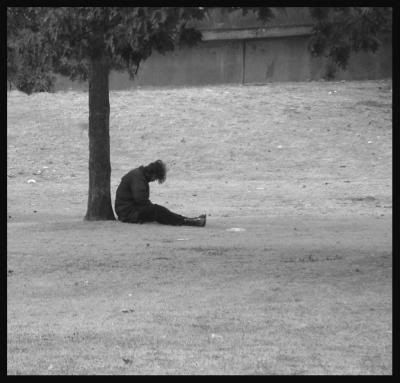
That young, idealistic girl who read the story immediately put on the mask. I’ve worn the mask for years, trying to become the perfect Mormon girl.

I don’t know what I’m doing wrong. The face beneath has not grown to fit. The mask was comfortable for a while; especially when I was a SAHM of eight, fulfilling callings in the Church and pouring all of my energy into keeping the family going. But as far as helping me become more like Christ, the mask has been a miserable failure. Pretending to be kind and sweet to all I meet has not made me more kind. Pretending to be obedient, humble and submissive has made me a hypocrite.

Now the mask is popping off with a vengeance. (Picture Jim Carrey in reverse: me trying to hold the mask on my face, the mask throwing me every which way trying to pull itself off.) I know the mask’s days are numbered. But I’m afraid to show my true face. I haven’t seen it for so long. Is that true face an ugly, warted monstrosity? Is it a failure to live up to the commitments I made and become a truly Christlike person? Please don’t discount this possibility. This is the point of view of all who are dear to me and I halfway believe it. But somewhere deep down I wonder if my true self might be nice to look at. It might be nice to live with. It isn’t what I was aiming for, but it might be all I have.

Tuesday, November 28, 2006

I Put on Black

I put on black,
My head I bow.
You like me now.
You like me now.

I put away my chartreuse scarf,
And colored things I used to wear.
My second piercings now are bare,
I gel down my unruly hair.

I do not have a lot to say.
My makeup now is quite subdued.
I seem to cook a lot of food,
I don’t go swimming in the nude.

I nod and murmur when I should,
I shut my mouth, my thoughts I still,
My questions and my quirks I kill--
My secret longings none can fill.

The ward is suddenly so kind.
I’m not as different now, you see!
A call has been extended me
To teach Relief Society.

Sedately I walk down the aisle,
The Bishop’s wife sits by my side,
She nods at me; you smile with pride,
I feel a tearing deep inside.

I clean the toilets and the hall,
Read stories to my sweet sunbeams.
We never argue now, it seems.
I wonder where I put my dreams.

Your temple marriage now is safe,
You hold my hand that wears the ring.
I never dance, I never sing,
You would not notice such a thing.

I’m all in black,
I’ve kept my vow,
You like me now,
You like me now.

But this is what
You do not see:
I don’t like me,
I don’t like me.

Tuesday, November 14, 2006

What Kind of "Fold" is This?

(Posted at Exponent 2 blog--go there to see some interesting comments!)

The other day I had a rude comment on my blog by an anonymous poster. This poster berated me for my opinions and urged me to “come back to the fold.” I continue to be surprised that the perspectives I present on my blog and in my comments on other blogs are perceived to be so apostate. I realize that my viewpoint is probably not mainstream, but I don’t know why bloggers reading my posts immediately assume that I am not a member in good standing.

As far as I can ascertain, the following opinions of mine are those which have drawn the most acrimony:
1. I don’t believe Church leaders are infallible.
This is something I taught to people on my mission. I don’t believe I’m doctrinally incorrect here. I see leaders as people much like myself who are doing the best they can and will occasionally make mistakes. When mistakes are made, I see no problem discussing them in a respectful manner, without covering them up or pretending they don’t exist.
2. Faithful endowed women hold some type of “priestesshood” which we do not understand completely at this time. Latter-day revelation goes so far as to tell us that we have a Heavenly Mother, but goes no farther. Perhaps we will not be able to increase our understanding very much by discussing the matter, but we can harm no one by our speculations, hopes, dreams, poetry, or attempts to move toward a theological understanding of the feminine.
3. The Church’s official stand in regards to politics is strict neutrality. We are reminded of this over the pulpit on each and every election day. Members are free to hold any political position that they deem righteous and in accord with their personal integrity. As members of the Church, we should be able to maintain any political position, and though others certainly may disagree heatedly, they should not call into question our Church standing due to our political views.
4. Certain practices in the Church are “policy” related rather than doctrinal. An example of this might be that we don’t allow guitars in the chapel. Withholding the priesthood from blacks is a policy which is no longer practiced today. Who we give welfare help to or who should be excommunicated are both policy related issues and may vary in different wards throughout the Church. It is usually a mistake to attempt to attach doctrine to those things which are policy related.

After receiving criticism from the anonymous poster, I responded by outlining my level of activity in the Church. But I felt angry that I needed to justify myself on my own blog. What kind of “fold” ostracizes good members who may be pied, spotted, straked or just a little different? How do people who actually are less active ever gain the courage to come back to a “fold” which is so intolerant of diversity, or for that matter, sin?

I address this to you who consider themselves part of “the fold.” Do you think these opinions place me outside of the pale of true Mormonism? Are my opinions simply diverse, or are they dangerous and subversive? You are welcome to browse my blog

Sunday, November 12, 2006

Counterpoint--A Place At the Table

The most difficult and poignant session at the Counterpoint Conference dealt with the question: “Is there a place for our gay brothers and sisters in the eternal family?” Though it wasn’t mentioned at the conference, Carol Lynn Pearson’s recent book “No More Goodbyes: Circling the Wagons Around Our Gay Loved Ones” was on my mind. I had just read the press release announcing the book with this quote by Rabbi Harold Kushner:

“Thank you, Carol Lynn Pearson, for reminding us that the task of any religion is to teach us whom we’re required to love, not whom we’re entitled to hate.”

I wish all of you could have met these eminently lovable children of God who addressed us at the conference.

Tina Hatch intelligently and emotionally described her attempt to integrate Mind/Body/Spirit. She explained that truth production in Western thought is centered on white, male, middle-class, institutional point of view. Differences are misunderstood and feared. She has found through much struggle and spiritual confirmation that happiness is possible outside of the traditional hetero experience. Said Tina, “I am whole the way I am. God created me and told me I am good.”

Hugo Olaiz spoke about the position of the LDS Church on homosexuality. He claimed that the position they have taken in the Proclamation is very recent. He said that it is not based on the teachings of Joseph Smith, but rather a tactical effort to combat homosexuality. Hugo nonetheless believes that leaders are more willing to admit there are genetic factors. He says there is no need to rewrite our theology, but calls for the following actions:
1. Call them what they are.
2. Stop endorsing support groups promoting changing orientation
3. Stop condemning same-sex families.

Kathryn Steffensen, the mother of a gay man, found little support when her son came out as gay. “When he came out of the closet, we went into the closet.” Kathryn says that there need to be more positive gay role models. She founded Family Fellowship to meet a need for support. She decided in her journey never to overtly challenge the institutional Church—they have the power to keep people out of the Church. Instead she vows: “we’re going to make the world better for you.”

LeGrand Olsen bore a powerful testimony of his spiritual convictions. He discovered he was gay in spite of his strong witness of the Church. “There is no peaceful dealing with this,” he lamented.

Another Speaker gave a personal account of her experiences as a lesbian in the Church. She and her partner have been excluded from many family events. They have made a place at their table for all who desire friendship. She sees no similar inclusion for gays in the Mormon Church.

I am glad to see a few slow changes in policy toward gay members of the Church. No longer do leaders excommunicate members who come out as gay simply for their orientation. Some few gay members hold callings in their wards. I realize that change has been very slow. I wonder if Carol Lynn Pearson’s new book will be as widely read as Goodbye I Love You, and if it will stimulate the changes that she hopes it will.

Wednesday, November 8, 2006

Counterpoint and Excommunication

I never finished blogging about the Counterpoint Conference—life got in the way—but I intend to finish. It just won’t be as fresh news as it could have been. One portion of the Conference that stirred me was the keynote speaker, Gay Blanchard. Gay was awarded the “Eve Award,” a recognition by the organizers of the Mormon Women’s Forum which honors those who have made contributions to enrich the lives of Mormon women that may not be noticed by the community as a whole.

Gay, a sweet white haired woman in her eighties, stay-at-home mom, wife, musician and playwright, began at midlife to diverge doctrinally with her local leaders on the subject of the Atonement. As I’ve been following along with some of the discussions lately occurring on Atonement Theory, I realize that the Mormon Church does not teach a comprehensive Atonement Theory. In fact, there has been considerable latitude in the doctrine that LDS leaders have espoused along these lines. Apparently, Gay began to reject a salvation by works paradigm.

From some of her writings available on the internet, I obtained this quote by Gay: “the whole purpose of the Law of Obedience is to convince us that we can't keep all the contradictory rules required of us by religious leaders over the centuries. Trying to do so is truly an education. We grow in our understanding of ourselves and of others; we assume responsibilities; we learn about the gospel. If we are awake, we learn painfully our many limitations. We work and work and work at trying to perfect ourselves one thing at a time, at trying to make ourselves worthy, at trying to work out our salvation. But we do not progress into higher law.” Gay says that for most Mormons “their journey stops here: working at trying to be obedient to the whole letter of the law.” Once we discover that we are unable to keep all of the commandments, we become open to experience a mighty change of heart and begin to rely on the grace of Christ to save us. This sounds not so different than some recent LDS authors, notably Steven Robinson. However, several decades ago, these thoughts were not so acceptable.

Because of Gay’s teachings on this subject, she was excommunicated from the Church. The decision was later appealed and changed to a disfellowshipping. However, much damage has been done to Gay and her family through this action. Of a large family, only one of her children continues to be active in the Church.

Lavina Fielding Anderson and I discussed this briefly in the hallway after Gay’s speech. “It might be easy for me to remain active in the Church after an excommunication,” she said. “But it’s different for the children. I don’t think I could stand a Church that did that to my mother.”

I grew up in a church that did not excommunicate or disfellowship its members. I find it a difficult policy to accept. Why does our Church feel the need to cut off members who continue to desire to belong? Even if there is sin, or doctrinal misunderstanding, it seems to me that these things would be corrected more easily from within than from without. I would prefer to leave it as the Lord’s prerogative to cut the sinner off from his presence.

I would love to hear some of my readers’ thoughts on excommunication.